Kirjojen hintavertailu. Mukana 12 363 183 kirjaa ja 12 kauppaa.

Kirjahaku

Etsi kirjoja tekijän nimen, kirjan nimen tai ISBN:n perusteella.

11 kirjaa tekijältä Joyce Appleby

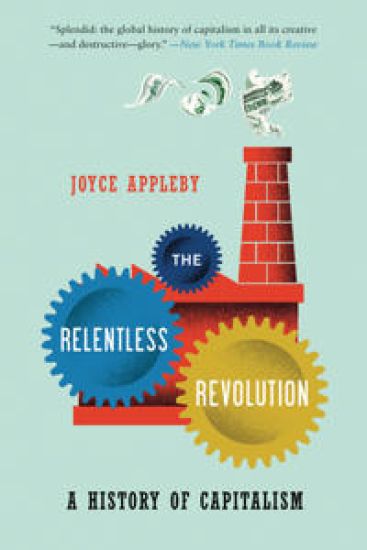
The Relentless Revolution

The Relentless Revolution

Joyce Appleby

WW Norton Co
2011
nidottu
With its deep roots and global scope, the capitalist system seems universal and timeless. The framework for our lives, it is a source of constant change, sometimes measured and predictable, sometimes drastic, out of control. Yet what is now ubiquitous was not always so. Capitalism was an unlikely development when it emerged from isolated changes in farming, trade, and manufacturing in early-modern England. Astute observers began to notice these changes and register their effects. Those in power began to harness these new practices to the state, enhancing both. A system generating wealth, power, and new ideas arose to reshape societies in a constant surge of change. Approaching capitalism as a culture, as a historical development that was by no means natural or inevitable, Joyce Appleby gives us a fascinating introduction to this most potent creation of mankind from its origins to its present global reach.
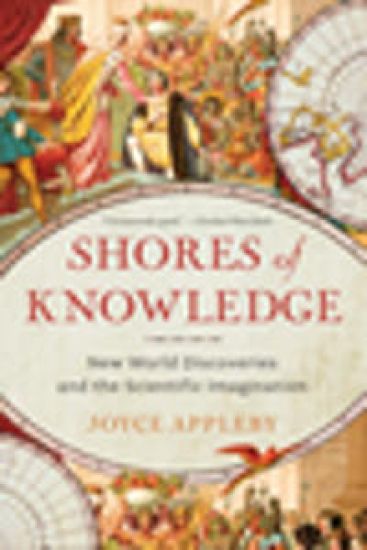
Shores of Knowledge

Shores of Knowledge

Joyce Appleby

WW Norton Co
2014
nidottu
When Columbus first returned to Europe from the Caribbean, he presented King Ferdinand and Queen Isabella with exotic parrots, tropical flowers and bits of gold. The search for riches spurred Columbus and others to voyage the oceans with similar ambitions and these seafarers continued to return with mysterious specimens encountered in the New World. Curiosity began to percolate through Europe. The Church, long fearful of challenges to its authority, could no longer suppress the mantra "Dare to know!" Recounting the triumphs and mishaps of these explorers, Joyce Appleby’s book follows the naturalists, both famous and obscure, whose investigations of the world’s fauna and flora fuelled the rise of science and technology that propelled Western Europe towards modernity.
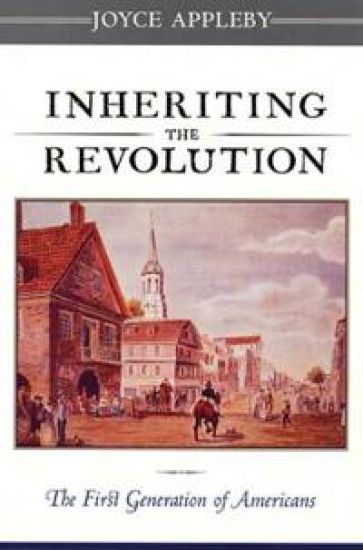
Inheriting the Revolution

Inheriting the Revolution

Joyce Appleby

The Belknap Press
2001
nidottu
Born after the Revolution, the first generation of Americans inherited a truly new world--and, with it, the task of working out the terms of Independence. Anyone who started a business, marketed a new invention, ran for office, formed an association, or wrote for publication was helping to fashion the world's first liberal society. These are the people we encounter in Inheriting the Revolution, a vibrant tapestry of the lives, callings, decisions, desires, and reflections of those Americans who turned the new abstractions of democracy, the nation, and free enterprise into contested realities.Through data gathered on thousands of people, as well as hundreds of memoirs and autobiographies, Joyce Appleby tells myriad intersecting stories of how Americans born between 1776 and 1830 reinvented themselves and their society in politics, economics, reform, religion, and culture. They also had to grapple with the new distinction of free and slave labor, with all its divisive social entailments; the rout of Enlightenment rationality by the warm passions of religious awakening; the explosion of small business opportunities for young people eager to break out of their parents' colonial cocoon. Few in the nation escaped the transforming intrusiveness of these changes. Working these experiences into a vivid picture of American cultural renovation, Appleby crafts an extraordinary--and deeply affecting--account of how the first generation established its own culture, its own nation, its own identity.The passage of social responsibility from one generation to another is always a fascinating interplay of the inherited and the novel; this book shows how, in the early nineteenth century, the very idea of generations resonated with new meaning in the United States.
Liberalism and Republicanism in the Historical Imagination
Like dye cast into water, liberal assumptions color everything American, from ideas about human nature to fears about big government. Not the dreaded “L” word of the 1988 presidential campaign, liberalism in its historical context emerged from the modern faith in free inquiry, natural rights, economic liberty, and democratic government. Expressed in the nation-building acts of revolution and constitution-writing, liberalism both structured and limited Americans’ sense of reality for two centuries.The nation’s scholars were unable to break away from liberalism’s pervasive hold on the American mind until the last generation—when they recovered the lost world of classical republicanism. Ornate, aristocratic, prescriptive, and concerned with the common good, this form of republicanism held sway among the founding fathers before the triumph of liberal thought, with its simple, egalitarian, rational, and individualistic emphasis. The two concepts, as Joyce Appleby shows, posed choices for eighteenth-century thinkers much as they have divided twentieth-century scholars.Entering one of the liveliest debates in the scholarly world about our ideological roots, Appleby follows the labyrinthine controversies that these two perspectives have generated in their day and in ours. In doing so, she addresses the tensions that remain to be resolved in the democratic societies of the late twentieth century—the complex relations between individual and community, personal liberty and the common good, aspiration and practical wisdom.
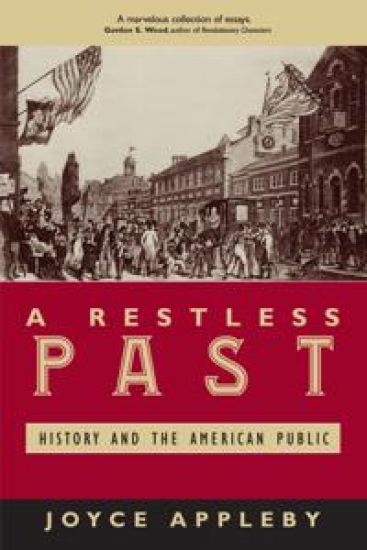
A Restless Past

A Restless Past

Joyce Appleby

Rowman Littlefield Publishers
2007
nidottu
At a time when public commemorations and remembrances often develop into battlefields of contested meanings, historians play an even greater role in shaping the way the American public sees and understands its past. Distinguished historian Joyce Appleby has been at the forefront of many of the recent debates about historians and the public's history. In this engaging work, she brings together her most important reflections on the historian's craft and its importance. A Restless Past carefully examines the ways in which the dynamic events of the second half of the twentieth century have significantly altered the way historians approach the past and highlights the incredible power they hold in shaping a national identity. Through the considerable ideological shifts of the last half century, historians have responded by asking new questions about those who preceded us and created powerful identities for those who had been long ignored.
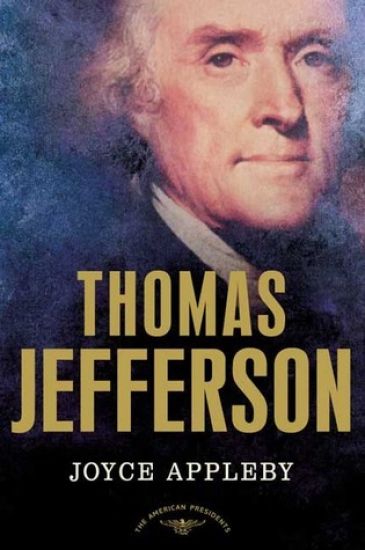
Thomas Jefferson

Thomas Jefferson

Joyce Appleby

TIMES BOOKS
2003
sidottu
An illuminating analysis of the man whose name is synonymous with American democracy Few presidents have embodied the American spirit as fully as Thomas Jefferson. He was the originator of so many of the founding principles of American democracy. Politically, he shuffled off the centralized authority of the Federalists, working toward a more diffuse and minimalist leadership. He introduced the bills separating church and state and mandating free public education. He departed from the strict etiquette of his European counterparts, appearing at state dinners in casual attire and dispensing with hierarchical seating arrangements. Jefferson initiated the Lewis and Clark expedition and seized on the crucial moment when Napoleon decided to sell the Louisiana Territory, thus extending the national development. In this compelling examination, distinguished historian Joyce Appleby captures all of the richness of Jefferson's character and accomplishments.
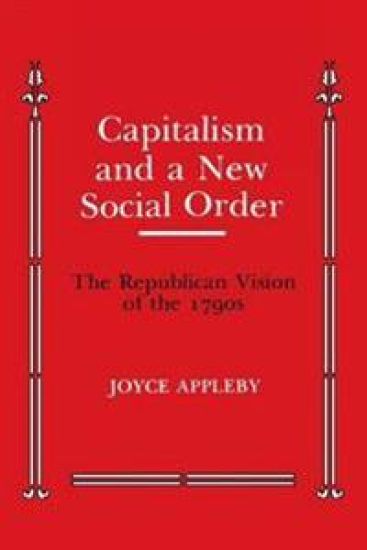
Capitalism and a New Social Order

Capitalism and a New Social Order

Joyce Appleby

New York University Press
1984
pokkari
Examines the vision of Jeffersonian Republicans and their impact on early American politics In 1800 the Jeffersonian Republicans, decisive victors over what they considered elitist Federalism, seized the potential for change in the new American nation. They infused in it their vision of a society of economically progressive, politically equal, and socially liberated individuals. This book examines the fusion of ideas and circumstances which made possible this triumph of America's first popular political movement. When the Federalists convened in New York to form the "more perfect union" promised by the new United Sates Constitution, they expected to build a strong central government led by the revolutionary members of the old colonial elite. This expectation was dashed by the emergence of a vigorous opposition led by Thomas Jefferson but manned by a new generation of popular politicians: interlopers, émigrés, polemicists—what the Federalists called the "mushroom candidates." They turned the 1790s into an age of passion by raising basic questions about the characters of the American experiment in government. When the Federalists defenders of traditional European notions of order and authority came under attack, they sought to discredit the radical beliefs of the Jeffersonians. Although the ideas that fueled the Jeffersonian opposition came from several strains of liberal and libertarian thought, it was the specific prospect of an expanding commercial agriculture that gave substance to their conviction that Americans might divorce themselves from the precepts of the past. Thus, capitalism figured prominently in the Jeffersonian social vision. Aroused by the Federalists' efforts to bind the nation's wealthy citizens to a strengthened central government, the Jeffersonians unified ordinary men in the southern and middle states, mobilizing on the national level the power of the popular vote. Their triumph in 1800 represented a new sectional alliance as well as a potent fusion of morality and materialism.
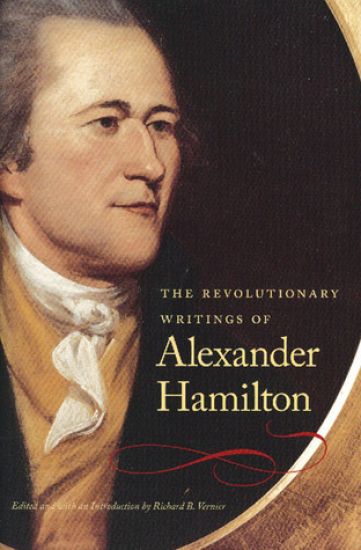
Revolutionary Writings of Alexander Hamilton

Revolutionary Writings of Alexander Hamilton

Joyce Appleby

Liberty Fund Inc
2008
nidottu
Alexander Hamilton's thought has, for over two hundred years, been noted for its deviations from American revolutionary Whig orthodoxy. From a conventional Whig at the beginning of his career, Hamilton developed a Federalist viewpoint that liberty depended above all on the creation of a powerful central government. In this collection, we find the seeds of this development, as Hamilton's early optimistic confidence in the triumph of American Whig principles begin to give way, under the influence of his experience during the Revolution, to his mature Federalism.
Telling the Truth about History

Telling the Truth about History

Joyce Appleby; Lynn Hunt; Margaret Jacob

WW Norton Co
1995
nidottu
This text examines the problem of historical truth. Seeking the roots of contemporary historical study in the Enlightenment, the authors argue that a model of historical research, based on neutrality and objectivity, served historians well until World War II. After that post-modernism suggested history could not reveal the truth about the past and the rise of social history produced a great amount of statistics which effectively swamped the search for historical truth. Accepting that much of history teaching has been flawed, the authors nevertheless argue for an affirmation of historical knowledge against the doubts of the sceptics and the relativists, guiding the reader through the complex areas of political correctness and multiculturalism.
Encyclopedia of Women in American History

Encyclopedia of Women in American History

Joyce Appleby; Eileen Chang; Joanne Goodwin

Routledge
2002
muu
This illustrated encyclopedia examines the unique influence and contributions of women in every era of American history, from the colonial period to the present. It not only covers the issues that have had an impact on women, but also traces the influence of women's achievements on society as a whole. Divided into three chronologically arranged volumes, the set includes historical surveys and thematic essays on central issues and political changes affecting women's lives during each period. These are followed by A-Z entries on significant events and social movements, laws, court cases and more, as well as profiles of notable American women from all walks of life and all fields of endeavor. Primary sources and original documents are included throughout.
The Intellectual Origins of Jeffersonian Democracy

The Intellectual Origins of Jeffersonian Democracy

Douglass G. Adair; Joyce Appleby

Lexington Books
2000
nidottu
The Intellectual Origins of Jeffersonian Democracy, available for the first time in this Lexington Books edition, is Douglass Adair's first major work of historical inquiry. Adair was a mentor to many of the nation's leading scholars and has long been admired for his original and profound observations about the founding of the American republic. Written in 1943, The Intellectual Origins of Jeffersonian Democracy has been praised widely as the seminal analysis of the origins of American democracy. The passage of time has not dulled Adair's arguments; instead, his critique of economic determinism, his emphasis on the influence of ideology on the Founders, and his belief in the importance of civic virtue and morality to good republican government have become ever more critical to our conception of American history. With judicious prose and elegant insights, Adair explores the classical and modern European heritage of liberalism, and he raises fundamental questions about the nature of democratic government. This book is for any serious reader interested in American intellectual history, political thought, and the founding of the republic.