Jesus remains a popular figure in contemporary culture and Allison remains one of our best interpreters. He speaks around the U.S.A. in a variety of venues on matters related to the study of the Historical Jesus. In his new book, he focuses on the historical Jesus and eschatology, concluding that the Jesus was not a Hellenistic wonder worker or teacher of pious morality but an apocalyptic prophet. In the opening chapter Allison astutely and engagingly captures the history of the search for the historical Jesus. He observes that many contemporary readings of Jesus shift the focus away from traditional theological, Christological, and eschatological concerns. In provocative fashion, he takes on not only the Jesus Seminar but also other Jesus interpreters such as N.T. Wright and Marcus Borg.
Jesus remains a popular figure in contemporary culture and Allison remains one of our best interpreters. He speaks around the U.S.A. in a variety of venues on matters related to the study of the Historical Jesus. In his new book, he focuses on the historical Jesus and eschatology, concluding that the Jesus was not a Hellenistic wonder worker or teacher of pious morality but an apocalyptic prophet. In the opening chapter Allison astutely and engagingly captures the history of the search for the historical Jesus. He observes that many contemporary readings of Jesus shift the focus away from traditional theological, Christological, and eschatological concerns. In provocative fashion, he takes on not only the Jesus Seminar but also other Jesus interpreters such as N.T. Wright and Marcus Borg.
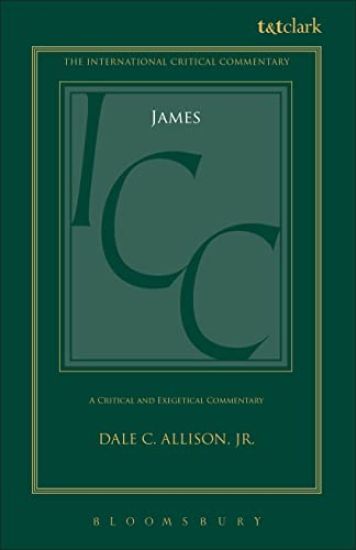
For over 100 years the International Critical Commentary has had a special place amongst works on the Bible. This new volume on James brings together all the relevant aids to exegesis - linguistic, textual, archaeological, historical, literary and theological - to enable the scholar to have a complete knowledge and understanding of this old testament book. Allison incorporates new evidence available in the field and applies new methods of studies. No uniform theological or critical approach to the text is taken.
'How should this massive work of scholarship be assessed? The three volumes stand as one of the major commentaries on the Gospel of Matthew in which all future interpreters of the Gospel will find a source of fruitful dialogue and helpful ideas. It is a "must have", both in libraries and in footnotes. Davies and Allison are to be thoroughly commended on the fruits of their considerable toil.' Robert K. McIver, Seminary Studies
The earliest traditions around the narrative of Jesus’ resurrection are considered in this landmark work by Dale C. Allison, Jr, drawing together the fruits of his decades of research into this issue at the very core of Christian identity. Allison returns to the ancient sources and earliest traditions, charting them alongside the development of faith in the resurrection in the early church and throughout Christian history. Beginning with historical-critical methodology that examines the empty tomb narratives and early confessions, Allison moves on to consider the resurrection in parallel with other traditions and stories, including Tibetan accounts of saintly figures being assumed into the light, in the chapter “Rainbow Body”. Finally, Allison considers what might be said by way of results or conclusions on the topic of resurrection, offering perspectives from both apologetic and sceptical viewpoints. In his final section of “modest results” he considers scholarly approaches to the resurrection in light of human experience, adding fresh nuance to a debate that has often been characterised in overly simplistic terms of “it happened” or “it didn't”.
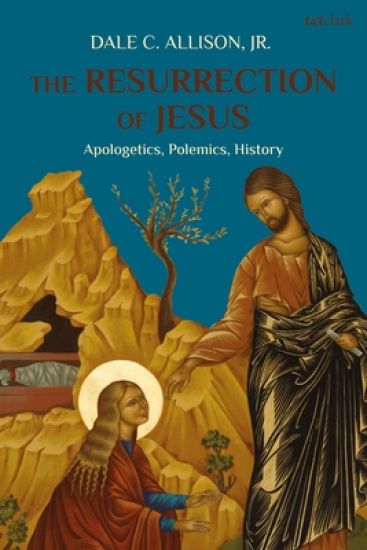
The earliest traditions around the narrative of Jesus’ resurrection are considered in this landmark work by Dale C. Allison, Jr, drawing together the fruits of his decades of research into this issue at the very core of Christian identity. Allison returns to the ancient sources and earliest traditions, charting them alongside the development of faith in the resurrection in the early church and throughout Christian history. Beginning with historical-critical methodology that examines the empty tomb narratives and early confessions, Allison moves on to consider the resurrection in parallel with other traditions and stories, including Tibetan accounts of saintly figures being assumed into the light, in the chapter “Rainbow Body”. Finally, Allison considers what might be said by way of results or conclusions on the topic of resurrection, offering perspectives from both apologetic and sceptical viewpoints. In his final section of “modest results” he considers scholarly approaches to the resurrection in light of human experience, adding fresh nuance to a debate that has often been characterised in overly simplistic terms of “it happened” or “it didn't”.
For over 100 years the International Critical Commentary has had a special place amongst works on the Bible. This new volume on James brings together all the relevant aids to exegesis - linguistic, textual, archaeological, historical, literary and theological - to enable the scholar to have a complete knowledge and understanding of this old testament book. Allison incorporates new evidence available in the field and applies new methods of studies. No uniform theological or critical approach to the text is taken.
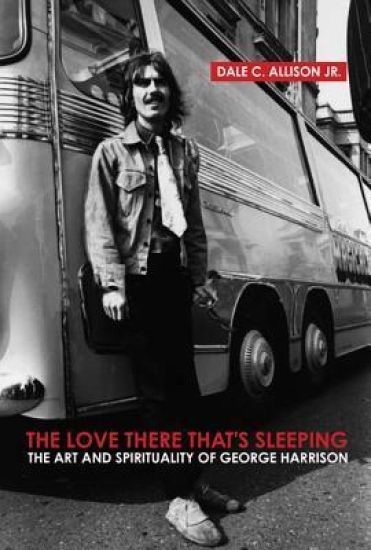
From his days as the "quiet Beatle" - a tag he quite disliked - to his immensely successful and critically admired solo career, George Harrison produced one of the most memorable bodies of music in modern times. His "Something" and "Here Comes the Sun" can certainly lay claim to being the best offerings on The Beatles' Abbey Road, while his 1970 album "All Things Must Pass" introduced new musical styles to rock and roll. Harrison was the pioneer in making mainstream rock a vehicle for religious convictions. In this respect, he is a forerunner of bands such as U2 and Creed. People often criticized him for being preachy or didactic. Reviewers over the years exhibited either an anxious disinclination to say much about his evangelistic lyrics or showed a condescending tendency to dismiss them. His devotional language was not their language. They regularly thought him sanctimonious and full of irrelevant religious platitudes. Allison's book views Harrison's religious bent as his most interesting trait. Harrison should be admired for having something distinctive to say, and for saying it while knowing that many would not understand and that others who might understand might not be sympathetic. He had the courage of his convictions, to sing to the public what he sang to himself in his heart. Allison traces Harrison's religious pilgrimage from Liverpool Roman Catholicism to a brand of philosophical Hinduism. He sorts through Harrison's musical corpus - through its mixed bag of fragmentary feelings, religious poetry, secular love songs, perceptions of the world, and anxieties about life, to interpret what matters most to Harrison. In short, this is a book about Harrison's religious sentiments as they surface in his songs.
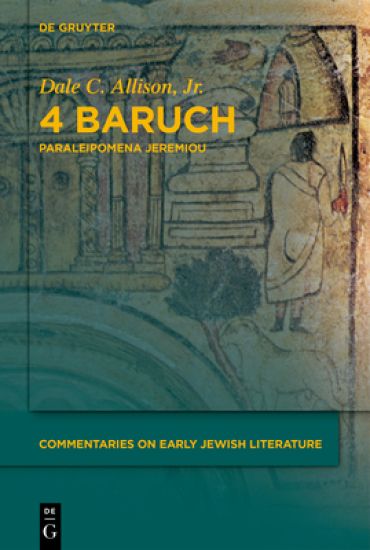
This is the first full-scale, verse-by-verse commentary on 4 Baruch. The pseudepigraphon, written in the second century, is in large measure an attempt to address the situation following the destruction of the temple in 70 CE by recounting legends about the first destruction of the temple, the Babylonian captivity, and the return from exile. 4 Bruch is notable for its tale about Jeremiah's companion, Abimelech, who sleeps through the entire exilic period. This tale lies behind the famous Christian legend of the Seven Sleepers of Ephesus and is part of the genealogy of Washington Irving's "Rip Van Winkle." Allison's commentary draws upon an exceptionally broad range of ancient sources in an attempt to clarify 4 Baruch's original setting, compositional history, and meaning.