Kirjojen hintavertailu. Mukana 11 627 670 kirjaa ja 12 kauppaa.

Kirjahaku

Etsi kirjoja tekijän nimen, kirjan nimen tai ISBN:n perusteella.

6 kirjaa tekijältä Jr. Cohn

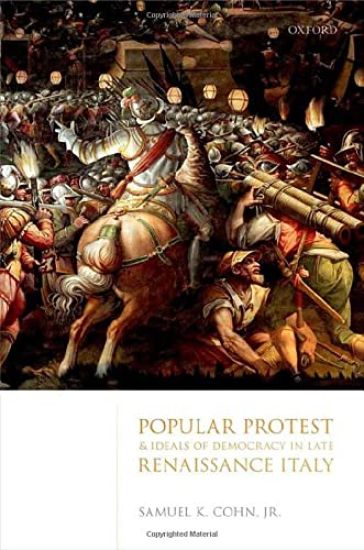
Popular Protest and Ideals of Democracy in Late Renaissance Italy
Popular Protest and Ideals of Democracy in Late Renaissance Italy is the first study to analyse popular protest across the Italian peninsula and the Venetian colonies during the early modern period, 1494 to 1559. Drawing on over 100 contemporary chronicles and diaries, the fifty-eight volumes of Marin Sanudo's diplomatic dispatches, mercantile letters, and commentary, and 586 collective supplications scattered through archival sources from towns and villages in the Grand duchy of Milan, Samuel K. Cohn, Jr. places these incidents and their patterns in comparative perspectives, first with the late medieval heyday of popular revolt and then with regions north of the Alps. Cohn finds new developments during the early modern period such as an increase in women rebels, mutinies of soldiers, and new tactics of revolts such as shop closures, peaceful demonstrations of strength, and use of religious processions for discussions of tactics and strategies for obtaining logistic advantage. At the same time, these protests show convergences with the medieval Italian past, with leaders coming almost exclusively from the ranks of nonelites, religious ideology playing a surprisingly minor role, and the majority of revolts centring overwhelming in towns and cities. Finally, this study demonstrates that democracies do not just die under the duress of military occupation and growing powers of autocratic regimes. Ideals of representation and equality not only persisted; they could emerge in new forms and with greater sophistication.
Epidemics

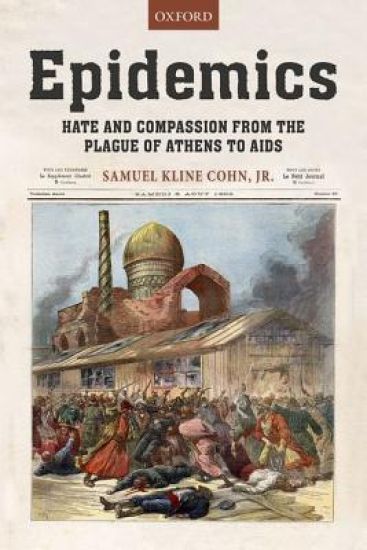
Epidemics

Jr. Cohn

Oxford University Press
2018
sidottu
By investigating thousands of descriptions of epidemics reaching back before the fifth-century-BCE Plague of Athens to the distrust and violence that erupted with Ebola in 2014, Epidemics challenges a dominant hypothesis in the study of epidemics, that invariably across time and space, epidemics provoked hatred, blaming of the 'other', and victimizing bearers of epidemic diseases, particularly when diseases were mysterious, without known cures or preventive measures, as with AIDS during the last two decades of the twentieth century. However, scholars and public intellectuals, especially post-AIDS, have missed a fundamental aspect of the history of epidemics. Instead of sparking hatred and blame, this study traces epidemics' socio-psychological consequences across time and discovers a radically different picture: that epidemic diseases have more often unified societies across class, race, ethnicity, and religion, spurring self-sacrifice and compassion.
Cultures of Plague

Cultures of Plague

Jr. Cohn

Oxford University Press
2009
sidottu
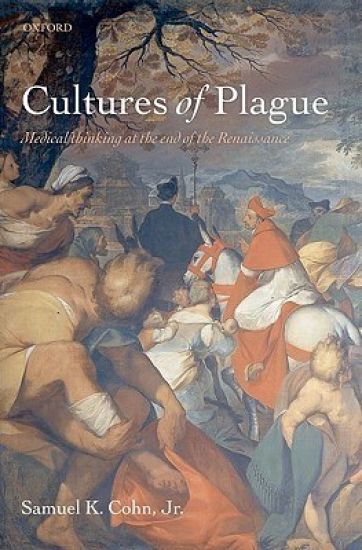
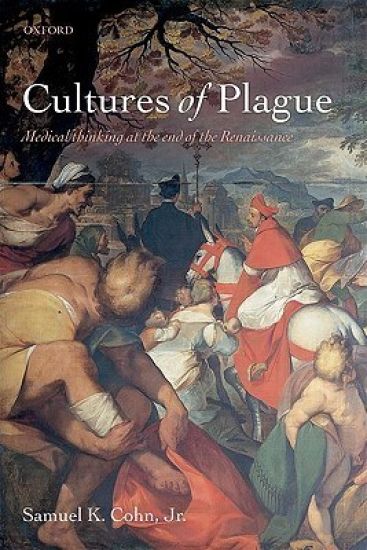
Cultures of Plague opens a new chapter in the history of medicine. Neither the plague nor the ideas it stimulated were static, fixed in a timeless Galenic vacuum over five centuries, as historians and scientists commonly assume. As plague evolved in its pathology, modes of transmission, and the social characteristics of its victims, so too did medical thinking about plague develop. This study of plague imprints from academic medical treatises to plague poetry highlights the most feared and devastating epidemic of the sixteenth-century, one that threatened Italy top to toe from 1575 to 1578 and unleashed an avalanche of plague writing. From erudite definitions, remote causes, cures and recipes, physicians now directed their plague writings to the prince and discovered their most 'valiant remedies' in public health: strict segregation of the healthy and ill, cleaning streets and latrines, addressing the long-term causes of plague-poverty. Those outside the medical profession joined the chorus. In the heartland of Counter-Reformation Italy, physicians along with those outside the profession questioned the foundations of Galenic and Renaissance medicine, even the role of God. Assaults on medieval and Renaissance medicine did not need to await the Protestant-Paracelsian alliance of seventeenth-century in northern Europe. Instead, creative forces planted by the pandemic of 1575-8 sowed seeds of doubt and unveiled new concerns and ideas within that supposedly most conservative form of medical writing, the plague tract. Relying on health board statistics and dramatized with eyewitness descriptions of bizarre happenings, human misery, and suffering, these writers created the structure for plague classics of the eighteenth century, and by tracking the contagion's complex and crooked paths, they anticipated trends of nineteenth-century epidemiology.
Cultures of Plague

Cultures of Plague

Jr. Cohn

Oxford University Press
2011
nidottu
Cultures of Plague opens a new chapter in the history of medicine. Neither the plague nor the ideas it stimulated were static, fixed in a timeless Galenic vacuum over five centuries, as historians and scientists commonly assume. As plague evolved in its pathology, modes of transmission, and the social characteristics of its victims, so too did medical thinking about plague develop. This study of plague imprints, from academic medical treatises to plague poetry, highlights the most feared and devastating epidemic of the sixteenth-century, one that threatened Italy top to toe from 1575 to 1578 and unleashed an avalanche of plague writing. From erudite definitions, remote causes, cures and recipes, physicians now directed their plague writings to the prince and discovered their most 'valiant remedies' in public health: strict segregation of the healthy and ill, cleaning streets and latrines, addressing the long-term causes of plague-poverty. Those outside the medical profession joined the chorus. In the heartland of Counter-Reformation Italy, physicians, along with those outside the profession, questioned the foundations of Galenic and Renaissance medicine, even the role of God. Assaults on medieval and Renaissance medicine did not need to await the Protestant-Paracelsian alliance of seventeenth-century in northern Europe. Instead, creative forces planted by the pandemic of 1575-8 sowed seeds of doubt and unveiled new concerns and ideas within that supposedly most conservative form of medical writing, the plague tract. Relying on health board statistics and dramatized with eyewitness descriptions of bizarre happenings, human misery, and suffering, these writers created the structure for plague classics of the eighteenth century, and by tracking the contagion's complex and crooked paths, they anticipated trends of nineteenth-century epidemiology.
The Black Death Transformed

The Black Death Transformed

Jr. Cohn

Hodder Arnold
2003
nidottu
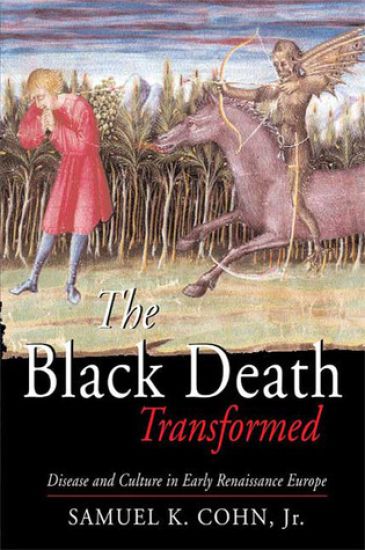
The Black Death in Europe, from its arrival in 1347-52 through successive waves into the early modern period, has been seriously misunderstood. It is clear from the compelling evidence presented in this revolutionary account that the Black Death was almost any disease other than the rat-based bubonic plague whose bacillus was discovered in 1894. Since the late nineteenth century, the rat and flea have stood wrongly accused as the agents of transmission and historians and scientists have uncritically imposed the epidemiology of modern plague on the past. Unshackled from this misconception, The Black Death Transformed turns to its subject afresh, using sources spread across a huge geographical tract, from Lisbon to Uzbekistan, Sicily to Scotland: more than 40,000 death documents (from last wills and testaments to the earliest surviving burial records), over 400 chronicles, 250 plague tracts, 50 saints' lives, merchant letters, and much more. These sources confirm the terror of the medieval plague, the rapidity of its spread (unlike modern plague), and the utter despondency left in the wake of its first strike. But they also point to significant differences between medieval and modern plague, none more significant than the ability of humans to acquire natural immunity to the former but not the latter.
Paradoxes of Inequality in Renaissance Italy

Paradoxes of Inequality in Renaissance Italy

Jr. Cohn

Cambridge University Press
2021
pokkari
This Element explores the longest spell that can be computed from quantifiable fiscal records when the gap between rich and poor narrowed. It was the post-Black-Death century, c. 1375 to c. 1475. Paradoxically, with economic equality and prosperity on the rise, peasants, artisans and shopkeepers suffered losses in political representation and status within cultural spheres. Threatened by growing economic equality after the Black Death, elites preserved and then enhanced their political, social, and cultural distinction predominantly through noneconomic means and within political and cultural spheres. By investigating the interactions between three 'elements'-economics, politics, and culture-this Element presents new facets in the emergence of early Renaissance society in Italy.