Kirjojen hintavertailu. Mukana 11 627 469 kirjaa ja 12 kauppaa.

Kirjahaku

Etsi kirjoja tekijän nimen, kirjan nimen tai ISBN:n perusteella.

7 kirjaa tekijältä Juan E. De Castro

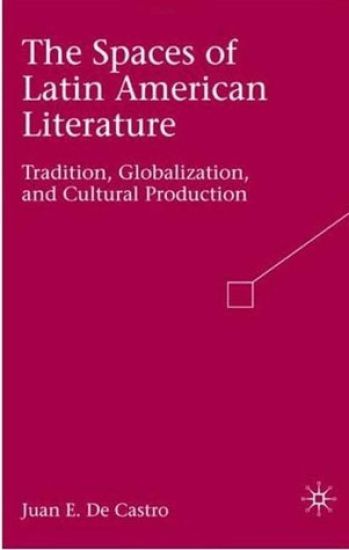
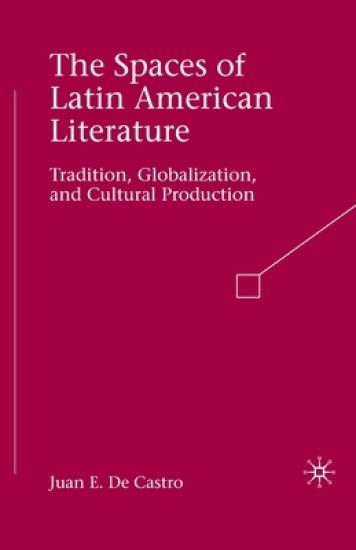
The Spaces of Latin American Literature

The Spaces of Latin American Literature

Juan E. De Castro

Palgrave Macmillan
2008
sidottu
The Spaces of Latin American Literature: Tradition, Globalization, and Cultural Production examines how Latin American writers, artists, and intellectuals have negotiated their relationship with Western culture from the colony to the present. De Castro looks at writers and intellectual polemics that serve as markers of the region's cultural evolution. Among the writers and artists studied are Sor Juana Inés de la Cruz, Rubén Darío, Jorge Luis Borges, Caetano Veloso, and Alberto Fuguet. This book proposes an analysis of the region's literature rooted in its specific cultural, political, and economic locations.
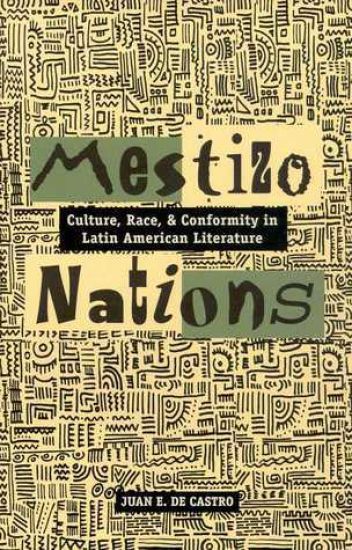
Mestizo Nations

Mestizo Nations

Juan E. De Castro

University of Arizona Press
2002
sidottu
Nationality in Latin America has long been entwined with questions of racial identity. Just as American-born colonial elites grounded their struggle for independence from Spain and Portugal in the history of Amerindian resistance, constructions of nationality were based on the notion of the fusion of populations heterogeneous in culture, race, and language. But this rhetorical celebration of difference was framed by a real-life pressure to assimilate into cultures always defined by Iberian American elites. In Mestizo Nations, Juan De Castro explores the construction of nationality in Latin American and Chicano literature and thought during the nineteenth and twentieth centuries. Focusing on the discourse of mestizaje which proposes the creation of a homogenous culture out of American Indian, black, and Iberian elements he examines a selection of texts that represent the entire history and regional landscape of Latin American culture in its Western, indigenous, and neo-African traditions from Independence to the present. Through them, he delineates some of the ambiguities and contradictions that have beset this discourse. Among texts considered are the Indianist novel Iracema by the nineteenth-century Brazilian author Jose de Alencar; the Tradiciones peruanas, Peruvian Ricardo Palma's fictionalizations of national difference; and historical and sociological essays by the Peruvian Marxist Jose Carlos Mariategui and the Brazilian intellectual Gilberto Freyre. And because questions raised by this discourse are equally relevant to postmodern concerns with national and transnational heterogeneity, De Castro also analyzes such recent examples as the Cuban dance band Los Van Van's use of Afrocentric lyrics; Richard Rodriguez's interpretations of North American reality; and points of contact and divergence between Jose Maria Arguedas's novel The Fox from Up Above and the Fox from Down Below and writings of Gloria Anzaldua and Julia Kristeva.By updating the concept of mestizaje as a critical tool for analyzing literary text and cultural trends incorporating not only race, culture, and nationality but also gender, language, and politics De Castro shows the implications of this Latin American discursive tradition for current critical debates in cultural and area studies. Mestizo Nations contains important insights for all Latin Americanists as a tool for understanding racial relations and cultural hybridization, creating not only an important commentary on Latin America but also a critique of American life in the age of multiculturalism.
Mario Vargas Llosa

Mario Vargas Llosa

Juan E. De Castro

University of Arizona Press
2011
sidottu
An examination of the Peruvian novelist, polemical champion of the free market, and eventual winner of a Nobel Prize for literature, this biography argues that understanding Vargas Llosa's political thought is of more than biographical interest - it is a key to understanding the social and cultural shifts that have taken place not only in Peru but throughout Latin America.
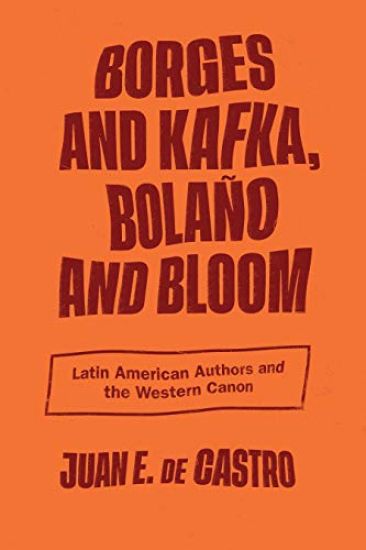
Borges and Kafka, Bolaño and Bloom

Borges and Kafka, Bolaño and Bloom

Juan E. De Castro

Vanderbilt University Press
2022
nidottu
At a time in which many in the United States see Spanish America as a distinct and, for some, threatening culture clearly differentiated from that of Europe and the US, it may be of use to look at the works of some of the most representative and celebrated writers from the region to see how they imagined their relationship to Western culture and literature. In fact, while authors across stylistic and political divides—like Gabriela Mistral, Jorge Luis Borges, or Gabriel García Márquez—see their work as being framed within the confines of a globalized Western literary tradition, their relationship, rather than epigonal, is often subversive.Borges and Kafka, Bolaño and Bloom is a parsing not simply of these authors' reactions to a canon, but of the notion of canon writ large and the inequities and erasures therein. It concludes with a look at the testimonial and autobiographical writings of Rigoberta Menchú and Lurgio Gavilán, who arguably represent the trajectory of Indigenous testimonial and autobiographical writing during the last forty years, noting how their texts represent alternative ways of relating to national and, on occasion, Western cultures. This study is a new attempt to map writers' diverse ways of thinking about locality and universality from within and without what is known as the canon.
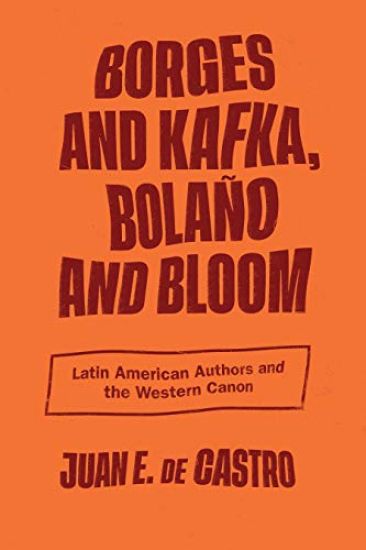
Borges and Kafka, Bolaño and Bloom

Borges and Kafka, Bolaño and Bloom

Juan E. De Castro

Vanderbilt University Press
2022
sidottu
At a time in which many in the United States see Spanish America as a distinct and, for some, threatening culture clearly differentiated from that of Europe and the US, it may be of use to look at the works of some of the most representative and celebrated writers from the region to see how they imagined their relationship to Western culture and literature. In fact, while authors across stylistic and political divides—like Gabriela Mistral, Jorge Luis Borges, or Gabriel García Márquez—see their work as being framed within the confines of a globalized Western literary tradition, their relationship, rather than epigonal, is often subversive.Borges and Kafka, Bolaño and Bloom is a parsing not simply of these authors' reactions to a canon, but of the notion of canon writ large and the inequities and erasures therein. It concludes with a look at the testimonial and autobiographical writings of Rigoberta Menchú and Lurgio Gavilán, who arguably represent the trajectory of Indigenous testimonial and autobiographical writing during the last forty years, noting how their texts represent alternative ways of relating to national and, on occasion, Western cultures. This study is a new attempt to map writers' diverse ways of thinking about locality and universality from within and without what is known as the canon.
The Spaces of Latin American Literature

The Spaces of Latin American Literature

Juan E. De Castro

Palgrave Macmillan
2008
nidottu
The Spaces of Latin American Literature: Tradition, Globalization, and Cultural Production examines how Latin American writers, artists, and intellectuals have negotiated their relationship with Western culture from the colony to the present. De Castro looks at writers and intellectual polemics that serve as markers of the region's cultural evolution. Among the writers and artists studied are Sor Juana Inés de la Cruz, Rubén Darío, Jorge Luis Borges, Caetano Veloso, and Alberto Fuguet. This book proposes an analysis of the region's literature rooted in its specific cultural, political, and economic locations.
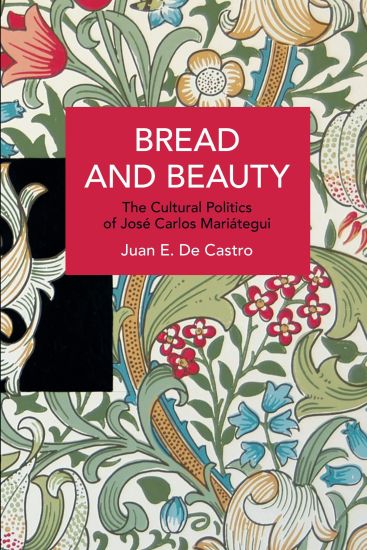
Bread and Beauty

Bread and Beauty

Juan E. De Castro

Haymarket Books
2021
pokkari
Influenced by anarchism and especially by anarcho-syndicalist Georges Sorel, the political praxis of Peruvian activist and scholar José Carlos Mariátegui (1894-1930) deviated from the policies mandated by the Comintern. Mariátegui saw only new subjectivities as capable of making a revolution that would not recreate bourgeois or fascist structures. For Mariátegui, a new society required a new culture. He therefore not only founded the Peruvian Socialist Party, but also created Amauta, a magazine that brought together the writings of the political and cultural avant-gardes. This landmark book both examines Mariátegui’s views on the political valence of cultural habits and products and assesses the cultural underpinnings of the political proposals found in his writings and actions.