Juan Valera y Alcal -Galiano (Cabra, C rdoba, 18 de octubre de 1824 - Madrid, 18 de abril de 1905) fue un diplom tico, pol tico y gran escritor espa ol con una abundante obra literaria que abarca la novela, el cuento y el teatro.
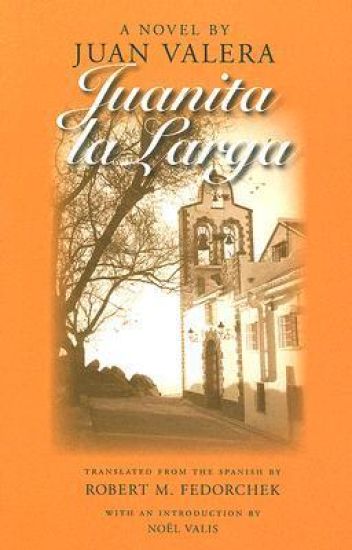
Juanita La Larga (1896), the third of Juan Valera's eponymous novels with a female protagonist, unfolds in a small town in nineteenth-century Spain and tells the story of a young girl's romance with a wealthy widower many years her senior. In addition to their substantial difference in years and class, the lovers must contend with the indignation of his imperious married daughter, the public rebuke of a churchman, and the strictures of society. As the novel opens, readers are introduced to Juanita in the exuberance of youth. We witness her maturation into a young woman and along the way we watch as she learns to deal with humiliation, anger, jealousy, and a pride that makes for bittersweet moments. Juanita reveals a cunning personality that is complemented by a dogged determination and an iron will; once she realizes what she wants in life neither the fear of reprisal nor the prospect of ostracism deters her. Other well-conceived, well-delineated characters are Juana, Juanita's mother and village do-it-all; Dona Ines, the haughty, sanctimonious daughter of the widower Don Paco who falls head over heels in love with Juanita and wants to marry her; Don Alvaro Roldan, Dona Ines's dissolute husband; and Don Policarpo, the town druggist. This charming work appears here for the first time in English and is elegantly translated by Robert M. Fedorchek. ""Juanita la Larga"" gives Valera an opportunity to describe, in loving detail, life in an Andalusian hamlet: its social levels, political intrigues, religious observances, rustic amenities, and hearty fare. But above all it offers a vibrant picture of Juanita, a worthy sister to other Valera heroines like Pepita of ""Pepita Jimenez"" (1874) and Luz of ""Dona Luz"" (1879).
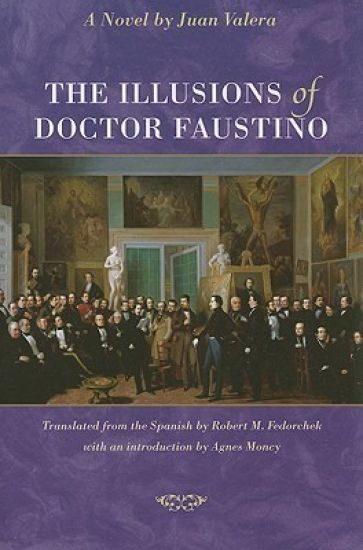
Juan Valera's ""The Illusions of Doctor Faustino"" (Las ilusiones del doctor Faustino) came out in 1875, one year after the resounding success of his ""Pepita Jimenez"". One of the author's contemporaries, the critic Manuel de la Revilla, considered it among the most important novels of his time and compared it to Flaubert's ""L'Education"" sentimentale on account of the negative influence of Romanticism on the protagonist's character and life.Don Faustino Lopez de Mendoza, scion of an illustrious but impoverished family of the highest nobility, believes himself destined for great accomplishments in the literary world, sees himself as a poet of the first rank, and immerses himself in grand, if not grandiose, illusions.While living in a provincial Andalusian town and dreaming of triumphing in Madrid's artistic circles, Faustino embarks on a discovery of love, anguishes over his impecunious state, and engages in endless self-analysis. Love - or, at all events, a monetarily advantageous marriage - seems to go hand in glove with turning his illusions and dreams into triumphs and realities.He falls for Costanza and is rejected by her; he falls for Maria and she eludes him; he thinks he falls for Rosita then callously scorns her after meeting up again with Maria, who flees from him after a night of lovemaking. Reduced to financial ruin by a revengeful Rosita, Faustino betakes himself to the Spanish capital. Many years later all three women, as well as his daughter Irene (by Maria), converge in Madrid, and how he extricates himself from each relationship and meets his sad end constitutes the denouement of this searching novel that depicts the deleterious effects of the Romantic malaise that swept through western Europe in the early part of the nineteenth century.