Kirjojen hintavertailu. Mukana 12 459 402 kirjaa ja 12 kauppaa.

Kirjahaku

Etsi kirjoja tekijän nimen, kirjan nimen tai ISBN:n perusteella.

9 kirjaa tekijältä Judie Newman

Fictions of America

Fictions of America

Judie Newman

Routledge
2007
sidottu
The Internet has had a huge impact on channels of communication and information, reaching across time and space to connect the world through globalisation. In this Internet-led world, story links to story, windows open on new stories and no overall authority establishes priority. This sense of globalisation has raised many questions for contemporary American Novelists, primarily the usefulness or redundancy of narrative and its potentially adaptive function. What are the right stories for such a broadband world? How do contemporary American novelists respond to issues such as the influence of the multinational corporation and its predecessors, human rights Imperialism, the literary work as a marketable commodity, translation as betrayal, data overload, and the implosion of the virtual into the biosphere? Is globalisation inevitable – or is it a fiction which fiction turns into reality? Fictions of America explores these questions and looks at the ways in which India, China and Africa can be said to have underwritten American culture, how literature has been marketed globally, and how novelists have answered back to power with resistant fictions. Judie Newman examines a wide range of fiction from the mid nineteenth to the twenty-first century including the transnational adoption narrative, short story, historical novel, slave narrative, international bestseller and Western to illustrate her argument. Looking closely at authors such as Bharati Mukherjee, John Updike, Emily Prager, Hannah Crafts, Zora Neale Hurston, David Bradley, Peter Høeg, and Cormac McCarthy, Fictions of America provides a bold response to the crucial questions raised by globalisation.

Fictions of America

Fictions of America

Judie Newman

Routledge
2007
nidottu
The Internet has had a huge impact on channels of communication and information, reaching across time and space to connect the world through globalisation. In this Internet-led world, story links to story, windows open on new stories and no overall authority establishes priority. This sense of globalisation has raised many questions for contemporary American Novelists, primarily the usefulness or redundancy of narrative and its potentially adaptive function. What are the right stories for such a broadband world? How do contemporary American novelists respond to issues such as the influence of the multinational corporation and its predecessors, human rights Imperialism, the literary work as a marketable commodity, translation as betrayal, data overload, and the implosion of the virtual into the biosphere? Is globalisation inevitable – or is it a fiction which fiction turns into reality? Fictions of America explores these questions and looks at the ways in which India, China and Africa can be said to have underwritten American culture, how literature has been marketed globally, and how novelists have answered back to power with resistant fictions. Judie Newman examines a wide range of fiction from the mid nineteenth to the twenty-first century including the transnational adoption narrative, short story, historical novel, slave narrative, international bestseller and Western to illustrate her argument. Looking closely at authors such as Bharati Mukherjee, John Updike, Emily Prager, Hannah Crafts, Zora Neale Hurston, David Bradley, Peter Høeg, and Cormac McCarthy, Fictions of America provides a bold response to the crucial questions raised by globalisation.
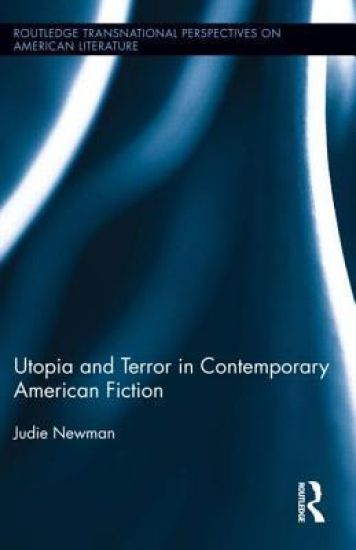
Utopia and Terror in Contemporary American Fiction
This book examines the quest for/failure of Utopia across a range of contemporary American/transnational fictions in relation to terror and globalization through authors such as Susan Choi, André Dubus, Dalia Sofer, and John Updike. While recent critical thinkers have reengaged with Utopia, the possibility of terror — whether state or non-state, external or homegrown — shadows Utopian imaginings. Terror and Utopia are linked in fiction through the exploration of the commodification of affect, a phenomenon of a globalized world in which feelings are managed, homogenized across cultures, exaggerated, or expunged according to a dominant model. Narrative approaches to the terrorist offer a means to investigate the ways in which fiction can resist commodification of affect, and maintain a reasoned but imaginative vision of possibilities for human community. Newman explores topics such as the first American bestseller with a Muslim protagonist, the links between writer and terrorist, the work of Iranian-Jewish Americans, and the relation of race and religion to Utopian thought.
Nadine Gordimer (Routledge Revivals)
International in her appeal, Nadine Gordimer is an original and accomplished novelist whose works have found literary and popular recognition. In this critical study, first published in 1988 and the first by a woman, Judie Newman discusses Gordimer’s novels, including A Sport of Nature. Gordimer’s writing is both political committed and formally innovative, confronting subject matter of great contemporary interest and at the same time seeking out narrative forms that combine European and indigenous culture. Her novels are sensitive to their context, while also offering an important contribution to postmodernist reassessments of narrative poetics, and a challenge to European conceptions of the novel. Judie Newman places particular emphasis on Gordimer’s searching investigation of the relation of gender to genre, and explores other major concerns such as the crisis of liberal values, the nature of historical consciousness, racism, sexual politics, and the psychopathology of power. Her study combines close literary analysis with a wide-ranging exploration of ideas, showing clearly how the artist can contribute to contemporary debate.
Nadine Gordimer (Routledge Revivals)
International in her appeal, Nadine Gordimer is an original and accomplished novelist whose works have found literary and popular recognition. In this critical study, first published in 1988 and the first by a woman, Judie Newman discusses all Gordimer’s novels, including A Sport of Nature. Gordimer’s writing is both political committed and formally innovative, confronting subject matter of great contemporary interest and at the same time seeking out narrative forms that combine European and indigenous culture. Her novels are sensitive to their context, while also offering an important contribution to postmodernist reassessments of narrative poetics, and a challenge to European conceptions of the novel. Judie Newman places particular emphasis on Gordimer’s searching investigation of the relation of gender to genre, and explores other major concerns such as the crisis of liberal values, the nature of historical consciousness, racism, sexual politics, and the psychopathology of power. Her study combines close literary analysis with a wide-ranging exploration of ideas, showing clearly how the artist can contribute to contemporary debate.
Utopia and Terror in Contemporary American Fiction
This book examines the quest for/failure of Utopia across a range of contemporary American/transnational fictions in relation to terror and globalization through authors such as Susan Choi, André Dubus, Dalia Sofer, and John Updike. While recent critical thinkers have reengaged with Utopia, the possibility of terror — whether state or non-state, external or homegrown — shadows Utopian imaginings. Terror and Utopia are linked in fiction through the exploration of the commodification of affect, a phenomenon of a globalized world in which feelings are managed, homogenized across cultures, exaggerated, or expunged according to a dominant model. Narrative approaches to the terrorist offer a means to investigate the ways in which fiction can resist commodification of affect, and maintain a reasoned but imaginative vision of possibilities for human community. Newman explores topics such as the first American bestseller with a Muslim protagonist, the links between writer and terrorist, the work of Iranian-Jewish Americans, and the relation of race and religion to Utopian thought.
Contemporary Fictions

Contemporary Fictions

Judie Newman

Legenda
2020
sidottu
What does it mean to be contemporary? To write contemporary fiction? In this major collection of twenty-five essays Newman interrogates the value of the concept of "the contemporary" as a cultural and literary category, exploring novels and short fiction by American and postcolonial writers, including Marilynne Robinson, John Updike, Saul Bellow, Grace Paley, Nadine Gordimer, J. G. Farrell, Ruth Prawer Jhabvala, Bharati Mukherjee, Peter H eg, Dalia Sofer and Andr Dubus III, among others. In a sophisticated interrogation of the politics (and sexual politics) of narrative technique, Newman engages with major intellectual currents of the period, drawing upon thinkers such as Michel Serres, Guy Debord, Erving Goffman, Camille Paglia, Marcel Mauss, Julia Kristeva, Mary Douglas, and Eve Kosofsky Sedgwick to analyse fictional representations of the Holocaust, the struggle against apartheid, Vietnam, the 9/11 terrorist attacks, the Iranian revolution and the aftermath of Empire.Judie Newman is Professor Emeritus of American Studies at the University of Nottingham and has published widely in the fields of American and Postcolonial literature.
Contemporary Fictions

Contemporary Fictions

Judie Newman

Legenda
2023
pokkari
What does it mean to be contemporary? To write contemporary fiction? In this major collection of twenty-five essays Newman interrogates the value of the concept of "the contemporary" as a cultural and literary category, exploring novels and short fiction by American and postcolonial writers, including Marilynne Robinson, John Updike, Saul Bellow, Grace Paley, Nadine Gordimer, J. G. Farrell, Ruth Prawer Jhabvala, Bharati Mukherjee, Peter H eg, Dalia Sofer and Andr Dubus III, among others. In a sophisticated interrogation of the politics (and sexual politics) of narrative technique, Newman engages with major intellectual currents of the period, drawing upon thinkers such as Michel Serres, Guy Debord, Erving Goffman, Camille Paglia, Marcel Mauss, Julia Kristeva, Mary Douglas, and Eve Kosofsky Sedgwick to analyse fictional representations of the Holocaust, the struggle against apartheid, Vietnam, the 9/11 terrorist attacks, the Iranian revolution and the aftermath of Empire.Judie Newman is Professor Emeritus of American Studies at the University of Nottingham and has published widely in the fields of American and Postcolonial literature.
Harriet Beecher Stowe: Dred

Harriet Beecher Stowe: Dred

Judie Newman

Keele University Press
1992
nidottu
Stowe's second anti-slavery novel is a primary text for students of literature and history - less well-known but now more pertinent than Uncle Tom's Cabin. This vigorous and compulsive read combines thought-provoking themes, rich characterisation, satire and sentiment.