Kirjojen hintavertailu. Mukana 11 244 527 kirjaa ja 12 kauppaa.

Kirjahaku

Etsi kirjoja tekijän nimen, kirjan nimen tai ISBN:n perusteella.

23 kirjaa tekijältä Judith Flanders
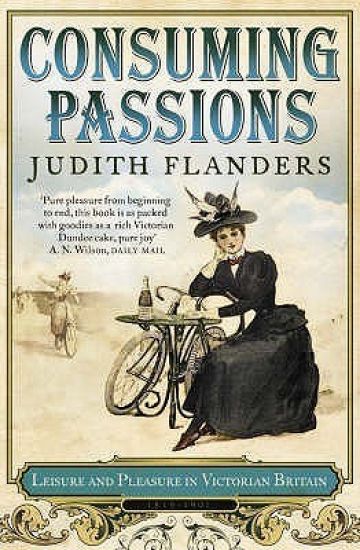
Consuming Passions

Consuming Passions

Judith Flanders

HARPERCOLLINS PUBLISHERS
2007
nidottu
A delightful and fascinating social history of Victorians at leisure, told through the letters, diaries, journals and novels of nineteenth-century men and women, from the author of the bestselling ‘The Victorian House’. Imagine a world where only one in five people owns a book, where just one in ten has a knife or a fork – a world where five people out of every six do not own a cup to hold a hot drink. That was what England was like in the early eighteenth century. Yet by the close of the nineteenth century, the Industrial Revolution had brought with it not just factories, railways, mines and machines but also fashion, travel, leisure and pleasure. Leisure became an industry – a cornucopia of excitement for the masses – and it was spread by newspapers, advertising, promotions and publicity – all of which were eighteenth-century creations. It was Josiah Wedgwood and his colleagues who invented money-back guarantees, free delivery and celebrity endorsements. New technology such as the railways brought audiences to ever-more-elaborate extravaganzas, whether it was theatrical spectaculars with breathtaking pyrotechnics and hundreds of extras – ‘hippodramas' recreating the battle of Waterloo – or the Great Exhibition itself, proudly displaying 'the products of all quarters of the globe' under twenty-two acres of the sparkling 'Crystal Palace'. In ‘Consuming Passions’, the bestselling author of ‘The Victorian House’ explores this dramatic revolution in science, technology and industry – and how a world of thrilling sensation, lavish spectacle and unimaginable theatricality was born.
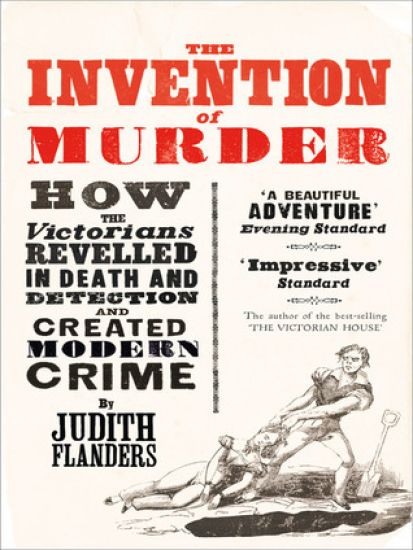
Invention of Murder

Invention of Murder

Judith Flanders

Harpercollins Publishers
2011
pokkari
â??We are a trading community, a commercial people. Murder is doubtless a very shocking offence, nevertheless as what is done is not to be undone, let us make our money out of it.â?? Punch
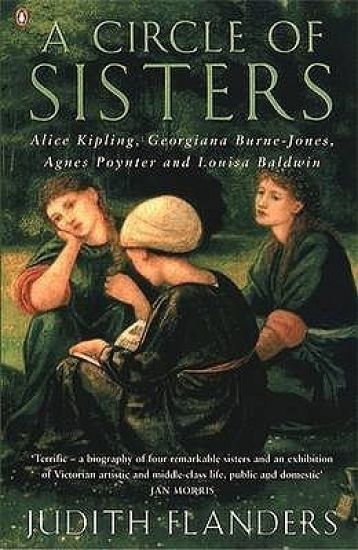
A Circle of Sisters

A Circle of Sisters

Judith Flanders

Penguin Books Ltd
2002
pokkari
The Macdonald sisters -- Alice, Georgiana, Agnes and Louisa -- started life among the ranks of the lower-middle classes, with little prospect of social advancement. But as wives and mothers they made a single family of the poet Rudyard Kipling, the Pre-Raphaelite painter Edward Burne-Jones, Edward Poynter, President of the Royal Academy, and the Prime Minister, Stanley Baldwin. In telling their remarkable story, Judith Flanders displays the fluidity of Victorian society, and explores the life of the family in the 19th century.
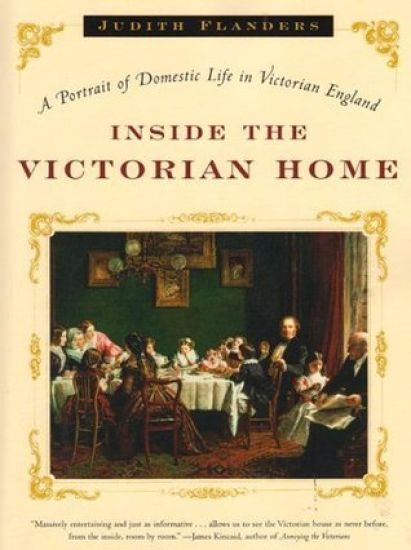
Inside the Victorian Home

Inside the Victorian Home

Judith Flanders

WW Norton Co
2005
pokkari
Takes readers through daily life in a Victorian house on a room-by-room basis, providing detailed descriptions of each area's furnishings and decorations while recounting events that may have transpired in the parlor, master bedroom, scullery, sickroom, and more. By the author of A Circle of Sisters. Reprint. 20,000 first printing.
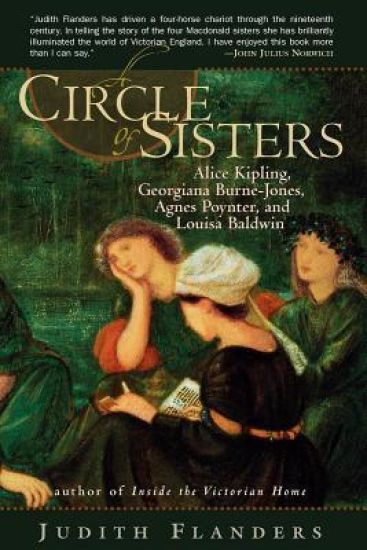
A Circle of Sisters

A Circle of Sisters

Judith Flanders

W. W. Norton Company
2005
pokkari
The Macdonalds were both of their own time and yet our contemporaries. In the personal and social journeys they made they were creatures of an exceptional moment in history, a social drama set in a privileged time and place, while in the ordinary dynamics of their relationships with each other they were us. The dynamism of family life mirrored the times. From the birth of Alice soon after Queen Victoria came to the throne, to their dispersal at the end of a long Edwardian summer, the Macdonalds were a prime example of the fluidity and social mobility that characterized the age.
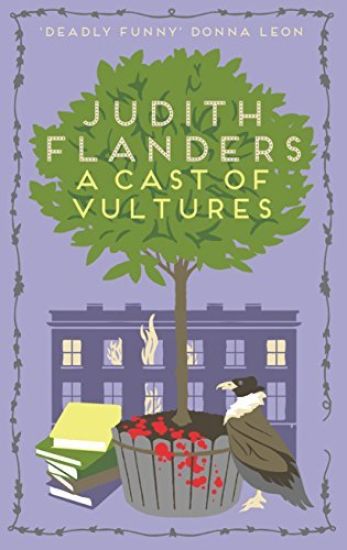
A Cast of Vultures

A Cast of Vultures

Judith Flanders

Allison Busby
2017
nidottu
There was every possibility that I was dead, and my brain hadn't got the memo. Or maybe it was that I wished I were dead. On reflection, that was more likely. Usually sharp-witted editor Sam Clair stumbles through her post-launch-party morning with the hangover to end all hangovers. Before the Nurofen has even kicked in, she finds herself entangled in an elaborate saga of missing neighbours, suspected arson and the odd unidentified body. When the grisly news breaks that the fire has claimed a victim, Sam is already in pursuit. Never has comedy been so deadly as Sam faces down a pair from Thugs 'R' Us, aided by nothing more than a CID boyfriend, a stalwart Goth assistant and a seemingly endless supply of purple-sprouting broccoli.
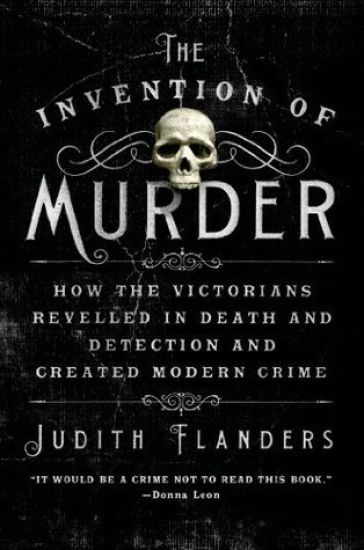
The Invention of Murder: How the Victorians Revelled in Death and Detection and Created Modern Crime
THE NEW YORK TIMES BESTSELLER "Wonderful... Flanders] shines in her readings of literary novels containing criminal and detective elements, such as Oliver Twist, Mary Barton and Tess of the D'Urbervilles, but can be sharp and very funny about the vagaries of melodramatic and sensational plotting." -Wall Street Journal In this fascinating exploration of murder in the nineteenth century, Judith Flanders examines some of the most gripping cases that captivated the Victorians and gave rise to the first detective fiction Murder in Britain in the nineteenth century was rare. But murder as sensation and entertainment became ubiquitous, transformed into novels, into broadsides and ballads, into theatre and melodrama and opera--even into puppet shows and performing dog-acts. Detective fiction and England's new police force developed in parallel, each imitating the other--the pioneers of Scotland Yard gave rise to Dickens's Inspector Bucket, the first fictional police detective, who in turn influenced Sherlock Holmes and, ultimately, even P.D. James and Patricia Cornwell. In this fascinating book, Judith Flanders retells the gruesome stories of many different types of murder--both famous and obscure--from the crimes (and myths) of Sweeney Todd and Jack the Ripper to the tragedies of the murdered Marr family in London's East End; Burke and Hare and their bodysnatching business in Edinburgh; and Greenacre, who transported his dismembered fianc e around town by omnibus. With an irresistible cast of swindlers, forgers, and poisoners, the mad, the bad and the dangerous to know, The Invention of Murder is both a gripping tale of crime and punishment, and history at its most readable.
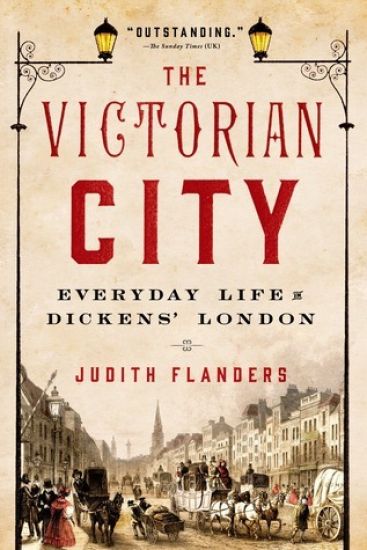
The Victorian City: Everyday Life in Dickens' London

The Victorian City: Everyday Life in Dickens' London

Judith Flanders

St. Martin's Griffin
2015
nidottu
The nineteenth century was a time of unprecedented change, and nowhere was this more apparent than London, which, in only a few decades, grew from a compact Regency town into the largest city the world had ever seen. Technology-railways, street-lighting, and sewers-transformed both the city and the experience of city-living. From the moment Charles Dickens, the century's best-loved novelist and London's greatest observer, arrived in the city in 1822, he obsessively walked its streets, recording its pleasures, curiosities and cruelties. Now, with him, Judith Flanders leads us through the markets, transport systems, rivers, slums, alleys, cemeteries, gin palaces, chop-houses and entertainment emporia of Dickens' London, to reveal the Victorian capital in all its variety, vibrancy, and squalor. From the colorful cries of street-sellers to the uncomfortable reality of travel by omnibus, to the many uses for the body parts of dead horses and the unimaginably grueling working days of hawker children, no detail is too small, or too strange. No one who reads Judith Flanders's meticulously researched, captivatingly written The Victorian City will ever view London in the same light again.
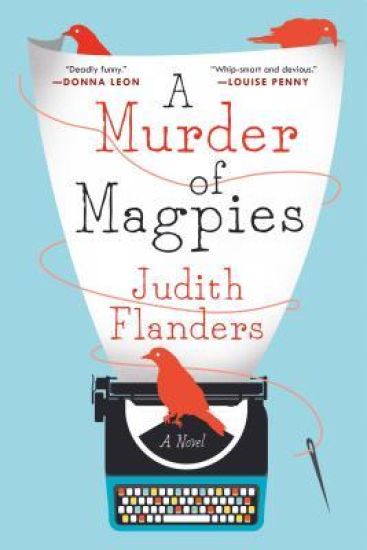
A Murder of Magpies

A Murder of Magpies

Judith Flanders

MINOTAUR BOOKS
2016
nidottu
A whip-smart, impeccably crafted debut mystery, A Murder of Magpies takes readers on a whirlwind tour of London and Paris with an unforgettably original new heroine It's just another day at the office for London book editor Samantha "Sam" Clair. Checking jacket copy for howlers, wondering how to break it to her star novelist that her latest effort is utterly unpublishable, lunch scheduled with gossipy author Kit Lowell, whose new book will dish the juicy dirt on a recent fashion industry scandal. Little does she know the trouble Kit's book will cause-before it even goes to print. When police Inspector Field turns up at the venerable offices of Timmins & Ross, asking questions about a package addressed to Sam, she knows something is wrong. Now Sam's nine-to-five life is turned upside down as she finds herself propelled into a criminal investigation. Someone doesn't want Kit's manuscript published and unless Sam can put the pieces together in time, they'll do anything to stop it. With this deliciously funny debut novel, acclaimed author Judith Flanders introduces readers to an enormously enjoyable, too-clever-for-her-own-good new amateur sleuth, as well Sam's Goth assistant, her effortlessly glamorous mother, and the handsome Inspector Field. A tremendously entertaining read, this page-turning novel from a bright new crime fiction talent is impossible to put down.
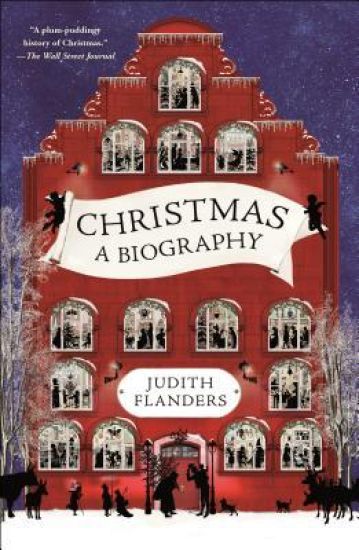
Christmas: A Biography

Christmas: A Biography

Judith Flanders

Thomas Dunne Book for St. Martin's Griffin
2019
nidottu
A critically acclaimed New York Times bestselling author explores the Christmas holiday, from the original festival through present day traditions. Christmas has always been a magical time. Or has it? Thirty years after the first recorded Christmas, one archbishop was already complaining that his flock was spending the day, not in worship, but in dancing and feasting to excess. By 1616, the playwright Ben Jonson was nostalgically remembering the Christmases of the old days, certain that they had been better then. Other elements of Christmas are much newer--who would have thought gift-wrap was a novelty of the twentieth century? That the first holiday parade was neither at Macy's, nor even in the USA? Some things, however, never change. The first known gag holiday gift book, The Boghouse Miscellany, was advertised in the 1760s "for gay Gallants, and good companions", while in 1805, the leaders of the Lewis and Clark expedition exchanged--what else?--presents of underwear and socks. Christmas is all things to all people: a religious festival, a family celebration, a period of eating and drinking. In Christmas, bestselling author and acclaimed social historian Judith Flanders casts a sharp eye on its myths, legends and history, deftly moving from the origins of the holiday in the Roman empire, through the first appearance of Christmas trees in Central Europe, to what might be the origins of Santa Claus--in Switzerland--to draw a picture of the season as it has never been seen before.
Rites of Passage

Rites of Passage

Judith Flanders

PAN MACMILLAN
2024
sidottu
'Nobody knows more about everyday life in Victorian Britain than Judith Flanders' - Douglas Robert-Fairhurst, author of Metamorphosis and The Turning PointIn Rites of Passage, acclaimed historian Judith Flanders deconstructs the intricate, fascinating, and occasionally – to modern eyes – bizarre customs that grew up around death and mourning in Victorian Britain.Through stories from the sickbed to the deathbed, from the correct way to grieve and to give comfort to those grieving to funerals and burials and the reaction of those left behind, Flanders illuminates how living in nineteenth-century Britain was, in so many ways, dictated by dying.This is an engrossing, deeply researched and, at times, chilling social history of a period plagued by infant death, poverty, disease, and unprecedented change. In elegant, often witty prose, Flanders brings the Victorian way of death vividly to life.
Rites of Passage

Rites of Passage

Judith Flanders

PAN MACMILLAN
2025
pokkari
'There is no aspect of Victorian death that does not make it into Judith Flanders’s latest investigation into 19th-century life' - The Sunday Times'Flanders writes with sharp intelligence and first-class scholarly attention to detail' - The TelegraphIn Rites of Passage, acclaimed historian Judith Flanders deconstructs the intricate, fascinating, and occasionally – to modern eyes – bizarre customs that grew up around death and mourning in Victorian Britain.Through stories from the sickbed to the deathbed, from the correct way to grieve and to give comfort to those grieving, to funerals and burials and the reaction of those left behind, Flanders illuminates how living in nineteenth-century Britain was, in so many ways, dictated by dying.This is an engrossing, deeply researched and, at times, chilling social history of a period plagued by infant death, poverty, disease, and unprecedented change. In elegant, often witty prose, Flanders brings the Victorian way of death vividly to life.
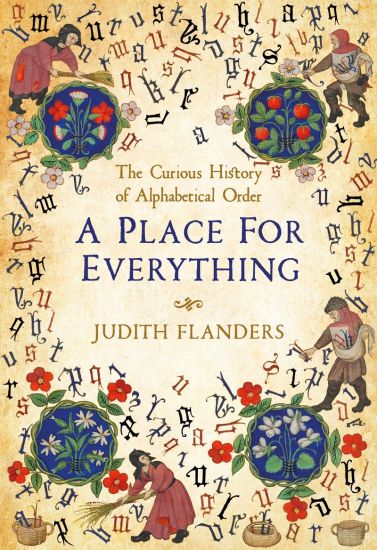
A Place For Everything

A Place For Everything

Judith Flanders

Picador
2020
sidottu
'Marvellous . . . I read it with astonished delight . . . It is equally scholarly and entertaining.' - Jan Morris 'Quirky and compelling.' - The Times Once we've learned it as children, few of us think much of the alphabet and its familiar sing-song order. And yet the order of the alphabet, that simple knowledge that we take for granted, plays a major role in our adult lives. From the school register to the telephone book, from dictionaries and encyclopaedias to library shelves, our lives are ordered from A to Z. Long before Google searches, this magical system of organization gave us the ability to sift through centuries of thought, knowledge and literature, allowing us to sort, to file, and to find the information we have, and to locate the information we need. In A Place for Everything, acclaimed historian Judith Flanders draws our attention to both the neglected ubiquity of the alphabet and the long, complex history of its rise to prominence. For, while the order of the alphabet itself became fixed very soon after letters were first invented, their ability to sort and store and organize proved far less obvious. To many of our forebears, the idea of of organizing things by the random chance of the alphabet rather than by established systems of hierarchy or typology lay somewhere between unthinkable and disrespectful.A Place for Everything fascinatingly lays out the gradual triumph of alphabetical order, from its possible earliest days as a sorting tool in the Great Library of Alexandria in the third century BCE, to its current decline in prominence in our digital age of Wikipedia and Google. Along the way, the reader is enlightened and entertained with a wonderful cast of unknown facts, characters and stories from the great collector Robert Cotton, who denominated his manuscripts with the names of the busts of the Roman emperors surmounting his book cases, to the unassuming sixteenth- century London bookseller who ushered in a revolution by listing his authors by 'sirname' first.
A Place For Everything

A Place For Everything

Judith Flanders

Picador
2021
pokkari
'A delightfully quirky sturdy . . . [Flanders] is a meticulour historian with a taste for the offbeat; the story of the alphabet suits her well . . . Fascinating.' Sunday TimesOnce we've learned it as children, few of us think much of the alphabet and its familiar sing-song order. And yet the order of the alphabet continues to play a major role in our adult lives. From school registers to electoral rolls, from dictionaries and encyclopaedias to library shelves, our lives have been ordered from A to Z. Long before Google searches, this magical system of organization gave us the ability to sort through centuries of thought, knowledge and literature, allowing us to sift, file, and find the information we have, and to locate the information we need.In A Place for Everything, acclaimed historian Judith Flanders fascinatingly lays out the gradual triumph of alphabetical order, from its use as a sorting tool in the Great Library of Alexandria to its current decline in prominence in the digital age. Along the way, the reader encounters a wonderful cast of characters,from the great collector Robert Cotton, who catalogued his manuscripts by the names of the busts of the Roman emperors surmounting his book cases, to the unassuming sixteenth-century London bookseller who ushered in a revolution by listing his authors by 'sirname' first.'One of the many fascinations of Judith Flanders' book is that it reveals what a weird, unlikely creation the alphabet is.' Guardian
Christmas

Christmas

Judith Flanders

Picador
2018
pokkari
Christmas has been all things to all people: a religious festival, a family celebration, a time of eating and drinking. Yet the origins of the customs which characterize the festive season are wreathed in myth.When did turkeys become the plat du jour? Is the commercialization of Christmas a recent phenomenon, or has the emphasis always been on spending? Just who is, or was, Santa Claus? And for how long have we been exchanging presents of underwear and socks?Food, drink and nostalgia for Christmases past seem to be almost as old as the holiday itself, far more central to the story of Christmas than religious worship. Thirty years after the first recorded Christmas, in the fourth century, the Archbishop of Constantinople was already warning that too many people were spending the day not in worship, but dancing and eating to excess. By 1616, the playwright Ben Jonson was nostalgically recalling the Christmases of yesteryear, confident that they had been better then.In Christmas: A History, acclaimed social historian and bestselling author Judith Flanders casts a sharp and revealing eye on the myths, legends and history of the season, from the origins of the holiday in the Roman empire to the emergence of Christmas trees in central Europe, to what might just possibly be the first appearance of Santa Claus – in Switzerland! – to draw a picture of the season as it has never been seen before.
A Place for Everything: The Curious History of Alphabetical Order
From a New York Times bestselling historian, the "truly revelatory" (Wall Street Journal) story of how the alphabet ordered our worldA Place for Everything is the first-ever history of alphabetization, from the Library of Alexandria to Wikipedia. Once we've learned our ABCs as children, few of us ever think of them again, but alphabetical order plays a material role in our adult lives. From school registers to electoral rolls, from dictionaries and encyclopedias to library shelves, the alphabet has ordered our lives, often invisibly. Yet the birth of alphabetization was a constant struggle: Medieval clergy felt that its use would upend the divine order of creation; elite institutions like Harvard and Yale long ranked students by the social status of their parents, rather than ordering them from A to Z. But eventually alphabetical order triumphed.With wry humor, historian Judith Flanders offers a fascinating history of how the alphabet ordered our world.
A Place for Everything: The Curious History of Alphabetical Order
From a New York Times-bestselling historian comes the story of how the alphabet ordered our world. A Place for Everything is the first-ever history of alphabetization, from the Library of Alexandria to Wikipedia. The story of alphabetical order has been shaped by some of history's most compelling characters, such as industrious and enthusiastic early adopter Samuel Pepys and dedicated alphabet champion Denis Diderot. But though even George Washington was a proponent, many others stuck to older forms of classification -- Yale listed its students by their family's social status until 1886. And yet, while the order of the alphabet now rules -- libraries, phone books, reference books, even the order of entry for the teams at the Olympic Games -- it has remained curiously invisible. With abundant inquisitiveness and wry humor, historian Judith Flanders traces the triumph of alphabetical order and offers a compendium of Western knowledge, from A to Z. A Times (UK) Best Book of 2020