Kirjojen hintavertailu. Mukana 11 342 427 kirjaa ja 12 kauppaa.

Kirjahaku

Etsi kirjoja tekijän nimen, kirjan nimen tai ISBN:n perusteella.

5 kirjaa tekijältä Judith Johnston

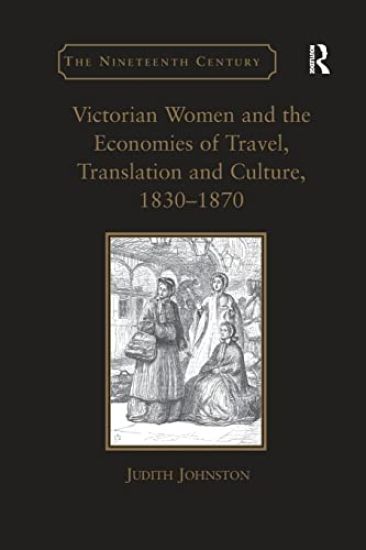
Victorian Women and the Economies of Travel, Translation and Culture, 1830–1870
Both travel and translation involve a type of journey, one with literal and metaphorical dimensions. Judith Johnston brings together these two richly resonant modes of getting from here to there as she explores their impact on culture with respect to the work of Victorian women. Using the metaphor of the published journey, whether it involves actual travel or translation, Johnston focusses particularly on the relationships of various British women with continental Europe. At the same time, she sheds light on the possibility of appropriation and British imperial enhancement that such contact produces. Johnston's book is in part devoted to case studies of women such as Sarah Austin, Mary Busk, Anna Jameson, Charlotte Guest, Jane Sinnett and Mary Howitt who are representative of women travellers, translators and journalists during a period when women became increasingly robust participants in the publishing industry. Whether they wrote about their own travels or translated the foreign language texts of other writers, Johnston shows, women were establishing themselves as actors in the broad business of culture. In widening our understanding of the ways in which gender and modernity functioned in the early decades of the Victorian age, Johnston's book makes a strong case for a greater appreciation of the contributions nineteenth-century women made to what is termed the knowledge empire.
Anna Jameson

Anna Jameson

Judith Johnston

Routledge
2016
nidottu
Anna Brownwell Jameson (1794-1869) was a central figure in the London world of letters and art in the early Victorian period, and an important feminist writer. Her friends included such figures as Harriet Martineau, Lady Byron, Robert Browning and Elizabeth Barrett Browning. This study considers her life and works, using a different Jameson work as the central focus of each chapter. The author considers the particular non-fiction discourse in which the work is written, as well as such issues as gender and colonialism. Arranged chronologically, the book also charts the growth and development of a determined feminism in the vital years of the early Victorian period, and compares Jameson to her contemporaries.
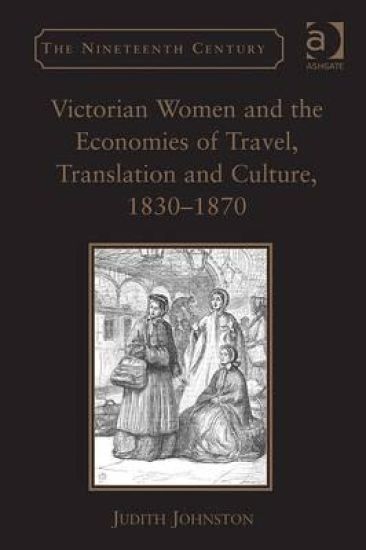
Victorian Women and the Economies of Travel, Translation and Culture, 1830–1870
Both travel and translation involve a type of journey, one with literal and metaphorical dimensions. Judith Johnston brings together these two richly resonant modes of getting from here to there as she explores their impact on culture with respect to the work of Victorian women. Using the metaphor of the published journey, whether it involves actual travel or translation, Johnston focusses particularly on the relationships of various British women with continental Europe. At the same time, she sheds light on the possibility of appropriation and British imperial enhancement that such contact produces. Johnston's book is in part devoted to case studies of women such as Sarah Austin, Mary Busk, Anna Jameson, Charlotte Guest, Jane Sinnett and Mary Howitt who are representative of women travellers, translators and journalists during a period when women became increasingly robust participants in the publishing industry. Whether they wrote about their own travels or translated the foreign language texts of other writers, Johnston shows, women were establishing themselves as actors in the broad business of culture. In widening our understanding of the ways in which gender and modernity functioned in the early decades of the Victorian age, Johnston's book makes a strong case for a greater appreciation of the contributions nineteenth-century women made to what is termed the knowledge empire.
Anna Jameson

Anna Jameson

Judith Johnston

Ashgate Publishing Limited
1997
sidottu
Anna Brownwell Jameson (1794-1869) was a central figure in the London world of letters and art in the early Victorian period, and an important feminist writer. Her friends included such figures as Harriet Martineau, Lady Byron, Robert Browning and Elizabeth Barrett Browning. This study considers her life and works, using a different Jameson work as the central focus of each chapter. The author considers the particular non-fiction discourse in which the work is written, as well as such issues as gender and colonialism. Arranged chronologically, the book also charts the growth and development of a determined feminism in the vital years of the early Victorian period, and compares Jameson to her contemporaries.
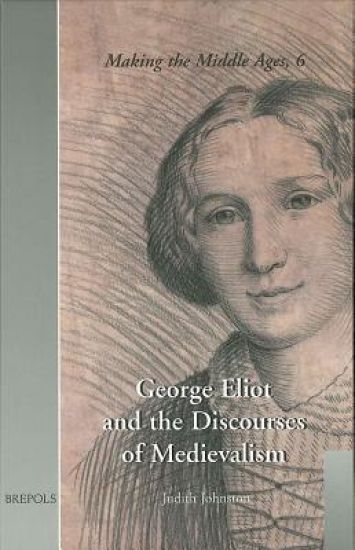
George Eliot and the Discourses of Medievalism
In George Eliot's last two novels, Middlemarch (1871-72) and Daniel Deronda (1876), she abandons the realism she had explored and articulated so carefully, most famously in Adam Bede, 'a faithful account of men and things', for an unprecedented return to 'cloud-borne angels, ...] prophets, sibyls, and heroic warriors'. This study addresses Eliot's exploitation of Victorian medievalism by considering the way in which she utilizes the discourses of medievalism, both for their potential for subversiveness and their potential for mediation, to affirm that change is possible socially, culturally, and politically, in her modern contemporary world. The various medieval discourses are revealed as interstices within what initially appears to be a continuation of the realism of her earlier novels. They permit political and cultural readings of a different, and often unexpected, kind to the realist bourgeois values of novels like Adam Bede, and to a lesser extent, Felix Holt. These political and cultural readings reveal a more determined, more obvious feminist and socialist polemic in her two last and possibly greatest novels.