Kirjojen hintavertailu. Mukana 11 244 527 kirjaa ja 12 kauppaa.

Kirjahaku

Etsi kirjoja tekijän nimen, kirjan nimen tai ISBN:n perusteella.

5 kirjaa tekijältä Judith M. Bennett

Women in the Medieval English Countryside

Women in the Medieval English Countryside

Judith M. Bennett

Oxford University Press Inc
1987
sidottu
In this book, Judith Bennett addresses the gap in our knowledge of medieval country women by examining how their lives differed from those of rural men. Drawing on her study of an English manor in the early-fourteenth century, she finds that rural women were severely restricted in their public roles and rights primarily because of their household status as dependents of their husbands, rather than because of a notion of female inferiority. Adolescent women and widows, by virtue of their unmarried status, enjoyed greater legal and public freedom than did their married counterparts.
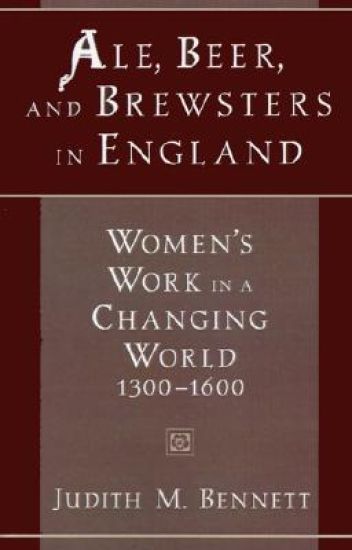
Ale, Beer and Brewsters in England

Ale, Beer and Brewsters in England

Judith M. Bennett

Oxford University Press Inc
1997
sidottu
Women brewed and sold most of the ale drunk in medieval England, but after 1350, men slowly took over the trade. By 1600, most brewers in London--as well as in many towns and villages--were male, not female. Drawing on a wide variety of sources--such as literary and artistic materials, court records, accounts, and administrative orders--Judith Bennett vividly describes how brewsters (that is, female brewers) slowly left the trade. She tells a story of commercial growth, gild formation, changing technologies, innovative regulations, and finally, enduring ideas that linked brewsters with drunkenness and disorder. Examining this instance of seemingly dramatic change in women's status, Bennett argues that it included significant elements of continuity. Women might not have brewed in 1600 as often as they had in 1300, but they still worked predominantly in low-status, low-skilled, and poorly remunerated tasks. Using the experiences of brewsters to rewrite the history of women's work during the rise of capitalism, Ale, Beer, and Brewsters in England offers a telling story of the endurance of patriarchy in a time of dramatic economic change.
Ale, Beer and Brewsters in England

Ale, Beer and Brewsters in England

Judith M. Bennett

Oxford University Press Inc
1999
nidottu
Women brewed and sold most of the ale drunk in medieval England, but after 1350, men slowly took over the trade. By 1600, most brewers in London--as well as in many towns and villages--were male, not female. Drawing on a wide variety of sources--such as literary and artistic materials, court records, accounts, and administrative orders--Judith Bennett vividly describes how brewsters (that is, female brewers) slowly left the trade. She tells a story of commercial growth, gild formation, changing technologies, innovative regulations, and finally, enduring ideas that linked brewsters with drunkenness and disorder. Examining this instance of seemingly dramatic change in women's status, Bennett argues that it included significant elements of continuity. Women might not have brewed in 1600 as often as they had in 1300, but they still worked predominantly in low-status, low-skilled, and poorly remunerated tasks. Using the experiences of brewsters to rewrite the history of women's work during the rise of capitalism, Ale, Beer, and Brewsters in England offers a telling story of the endurance of patriarchy in a time of dramatic economic change.
History Matters

History Matters

Judith M. Bennett

UNIVERSITY OF PENNSYLVANIA PRESS
2007
pokkari
Written for everyone interested in women's and gender history, History Matters reaffirms the importance to feminist theory and activism of long-term historical perspectives. Judith M. Bennett, who has been commenting on developments in women's and gender history since the 1980s, argues that the achievement of a more feminist future relies on a rich, plausible, and well-informed knowledge of the past, and she asks her readers to consider what sorts of feminist history can best advance the struggles of the twenty-first century. Bennett takes as her central problem the growing chasm between feminism and history. Closely allied in the 1970s, each has now moved away from the other. Seeking to narrow this gap, Bennett proposes that feminist historians turn their attention to the intellectual challenges posed by the persistence of patriarchy. She posits a "patriarchal equilibrium" whereby, despite many changes in women's experiences over past centuries, women's status vis-À-vis that of men has remained remarkably unchanged. Although, for example, women today find employment in occupations unimaginable to medieval women, medieval and modern women have both encountered the same wage gap, earning on average only three-fourths of the wages earned by men. Bennett argues that the theoretical challenge posed by this patriarchal equilibrium will be best met by long-term historical perspectives that reach back well before the modern era. In chapters focused on women's work and lesbian sexuality, Bennett demonstrates the contemporary relevance of the distant past to feminist theory and politics. She concludes with a chapter that adds a new twist-the challenges of textbooks and classrooms-to viewing women's history from a distance and with feminist intent. A new manifesto, History Matters engages forthrightly with the challenges faced by feminist historians today. It argues for the radical potential of a history that is focused on feminist issues, aware of the distant past, attentive to continuities over time, and alert to the workings of patriarchal power.
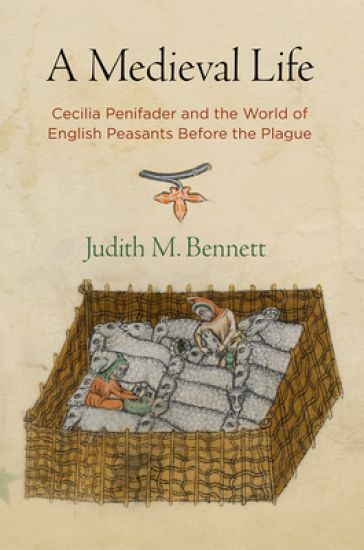
A Medieval Life

A Medieval Life

Judith M. Bennett

University of Pennsylvania Press
2020
pokkari
A Medieval Life offers a biography of one woman, a portrait of her world, and an introduction to historical method. A Medieval Life offers a biography of one woman, a portrait of her world, and an introduction to historical method. Written in a clear and accessible style, it reworks a well-loved book to provide an entirely new resource for students, teachers, and general readers. Like Cecilia Penifader, most people in the Middle Ages were peasants, humble people living socially below the knights, bishops, and kings who figure so large in history books. Judith M. Bennett shows that peasants, too, made history. She explores how peasant lives were closely entangled with the lives and interests of those more privileged, looking at manors as well as villages; parishes, faith, and ritual practices; royal taxes and justice; economy and trade; famine and disease. By moving out from Cecilia's perspective, the book explores the ties and tensions that bound all medieval people-poor as well as rich-into a medieval society. The book also provides a primer on the fact-finding and interpretative debates that are at the heart of the historian's craft. Each chapter includes a new section on how medievalists today are studying such topics as puberty, morals, courtship, and climate change. The illustrations, taken from the famous Luttrell Psalter, provide a coherent, rich, and interpretatively complex visual program. And the final chapter explores some of the different ways in which historians, for better and for worse, have understood medieval society.