Kirjojen hintavertailu. Mukana 11 342 296 kirjaa ja 12 kauppaa.

Kirjahaku

Etsi kirjoja tekijän nimen, kirjan nimen tai ISBN:n perusteella.

8 kirjaa tekijältä Judith M. Brown

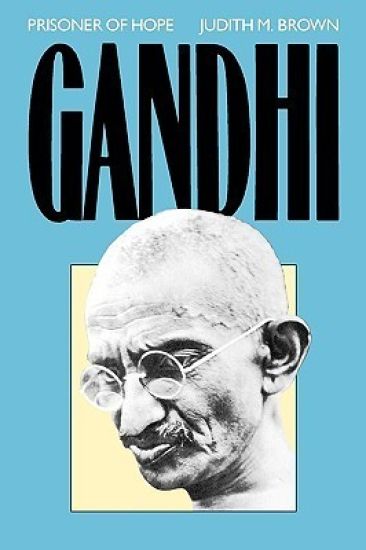
Gandhi

Gandhi

Judith M. Brown

Yale University Press
1991
pokkari
The definitive biography of one of this century’s most important—and controversial—figures. Drawing on sources only recently made available, Judith M. Brown sketches a fresh and surprising portrait of Gandhi within the context of his time, in which the Indian leader emerges as neither a plaster saint nor a wily politician, but as a complex man whose actions followed honorably from his convictions. "This is the best biography of Gandhi so far and deserves to be read by everyone interested in him and in modern India."—Bhikhu Parekh, New Statesman and Society "Judith Brown has written the most systematic, balanced, and clear biography of Gandhi I have yet seen."—Howard Spodek, Annals of the American Academy of Political and Social Science "In fascinating detail, Brown chronicles the fate of nonviolent tactics in South Africa and, after 1915, in India, where Gandhi—now clad in loincloth and sandals—quickly became a patriotic hero."—Jim Miller, Newsweek "It is a superb book, elegantly written, and I would recommend it to anyone who wants to know more about Gandhi as well as the social context which helped to mould him as a man and a politician."—Tariq Ali, Guardian "This is as fine an exposition of Gandhi’s religious beliefs as we are likely to get. … [Brown] has clearly established herself as [Gandhi’s] leading interpreter to her generation."—Antony Copley, History Today Judith M. Brown is Beit Professor of the History of the British Commonwealth at Oxford University.
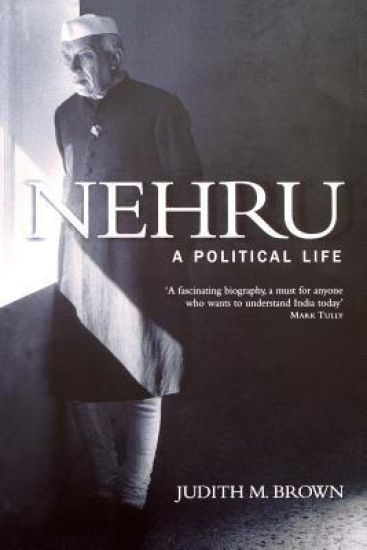
Nehru

Nehru

Judith M. Brown

Yale University Press
2005
pokkari
The first Prime Minister of India after independence from British rule, Jawaharlal Nehru (1889-1964) was a major architect of India as a nation state. His dedication to politics led to imprisonment, a deeply disturbed family life, and eventually to nearly two decades in power. This compelling biography depicts the phases of Nehru's life and shows how each phase reflected ongoing developments in Indian politics. Drawing on new sources Judith M. Brown offers the most complete and penetrating account of Nehru yet written. The book also provides an array of insights into the complexity of constructing a new nation state in the aftermath of imperial rule. 'Brown's fine biography shows vividly how much the subcontinent and its first leader have in common.' Philip Ziegler, 'Literary Review' 'an absorbing, scrupulously researched and convincing assessment of one of the most important political figures of the 20th century.' Katherine Frank, 'New Statesman' 'A superb book, Judith Brown catches the spirit of Nehru's times as well as his own tribulations and achievements.' Wm. Roger Louis, University of Texas at Austin Judith M. Brown is Beit Professor of Commonwealth History, University of Oxford, and professorial fellow of Balliol College, Oxford.
Gandhi and Civil Disobedience

Gandhi and Civil Disobedience

Judith M. Brown

Cambridge University Press
2008
pokkari
Mahatma Gandhi's lengthy Indian career was of central importance in the development of Indian politics and the changing relationship of the British raj and its subjects. But the extent of his political influence and his role varied considerably at different times. This book is an analysis, based on new material, of the phase between 1928 and 1934 when Gandhi was leader of a continental campaign of civil disobedience against the Raj. During this time Gandhi emerged from the comparative political quiescence which had followed his initial rise to prominence in 1920 as architect of a campaign of non-cooperation with the Raj. He resumed a crucial role as leader of the Congress movement against the British. At the peak of his political influence he negotiated a 'pact' with the Viceroy by which the civil disobedience campaign – most graphically illustrated in the famous Salt March to Dandi – was suspended.
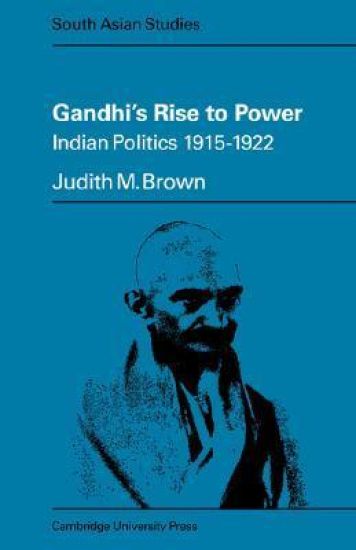
Gandhi's Rise to Power

Gandhi's Rise to Power

Judith M. Brown

Cambridge University Press
1974
pokkari
Dr Brown presents a political study of the first clearly defined period in Mahatma Gandhi's Indian career, from 1915 to 1922. The period began with Gandhi's return from South Africa as a stranger to Indian politics, witnessed his dramatic assertion of leadership in the Indian National Congress of 1920 and ended with his imprisonment by the British after the collapse of his all-India civil disobedience movement against the raj. Focusing on Gandhi, this book nevertheless investigates the changing nature of Indian politics. It aims to study precisely what Gandhi did, on whom he relied for support, how he interacted with other nationalist leaders and how he saw his own role in Indian public life. Unlike the usual interpretation of Gandhi's rise to power as based on a charismatic appeal to the Indian masses, this study argues that his influence depended on a capacity to generate a network of lesser leaders, or subcontractors, who would organise their constituencies for him, whether these were caste, communal or economic groups or whole areas.
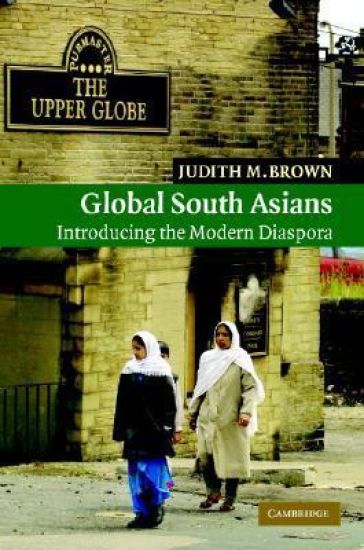
Global South Asians

Global South Asians

Judith M. Brown

Cambridge University Press
2006
pokkari
By the end of the twentieth century some nine million people of South Asian descent had left India, Bangladesh or Pakistan and settled in different parts of the world, forming a diverse and significant modern diaspora. In the early nineteenth century, many left reluctantly to seek economic opportunities which were lacking at home. This is the story of their often painful experiences in the diaspora, how they constructed new social communities overseas and how they maintained connections with the countries and the families they had left behind. It is a story compellingly told by one of the premier historians of modern South Asia, Judith Brown, whose particular knowledge of the diaspora in Britain and South Africa gives her insight as a commentator. This is a book which will have a broad appeal to general readers as well as to students of South Asian and colonial history, migration studies and sociology.
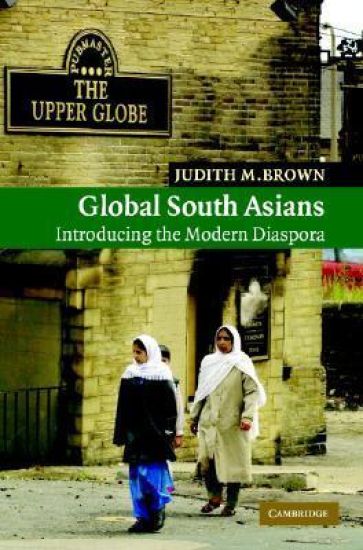
Global South Asians

Global South Asians

Judith M. Brown

Cambridge University Press
2006
sidottu
By the end of the twentieth century some nine million people of South Asian descent had left India, Bangladesh or Pakistan and settled in different parts of the world, forming a diverse and significant modern diaspora. In the early nineteenth century, many left reluctantly to seek economic opportunities which were lacking at home. This is the story of their often painful experiences in the diaspora, how they constructed new social communities overseas and how they maintained connections with the countries and the families they had left behind. It is a story compellingly told by one of the premier historians of modern South Asia, Judith Brown, whose particular knowledge of the diaspora in Britain and South Africa gives her insight as a commentator. This is a book which will have a broad appeal to general readers as well as to students of South Asian and colonial history, migration studies and sociology.
Nehru

Nehru

Judith M. Brown

Longman
2000
nidottu
Judith Brown explores Nehru as a figure of power and provides an assessment of his leadership at the head of a newly independent India with no tradition of democratic politics.
Nehru

Nehru

Judith M. Brown

Routledge
2017
sidottu
Judith Brown explores Nehru as a figure of power and provides an assessment of his leadership at the head of a newly independent India with no tradition of democratic politics.