Kirjojen hintavertailu. Mukana 11 244 527 kirjaa ja 12 kauppaa.

Kirjahaku

Etsi kirjoja tekijän nimen, kirjan nimen tai ISBN:n perusteella.

7 kirjaa tekijältä Judith Mayne

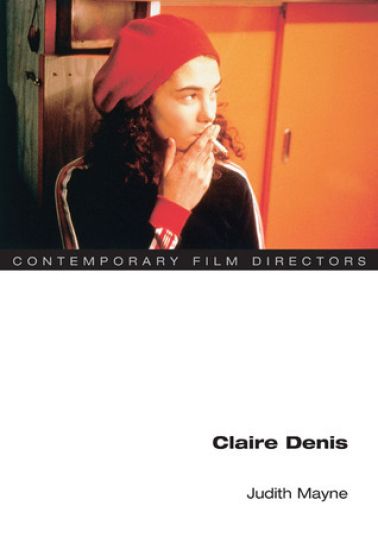
Claire Denis

Claire Denis

Judith Mayne

University of Illinois Press
2005
nidottu
Widely regarded as one of the most innovative and passionate filmmakers working in France today, Claire Denis has continued to make beautiful and challenging films since the 1988 release of her first feature, Chocolat. Judith Mayne's comprehensive study traces Denis's career and discusses her major feature films in rich detail. Born in Paris but raised in West Africa, Denis explores in her films the legacies of French colonialism and the complex relationships between sexuality, gender, and race. From the adult woman who observes her past as a child in Cameroon to the Lithuanian immigrant who arrives in Paris and watches a serial killer to the disgraced French Foreign Legionnaire attempting to make sense of his past, the subjects of Denis's films continually revisit themes of watching, bearing witness, and making contact, as well as displacement, masculinity, and the migratory subject.
The Woman at the Keyhole

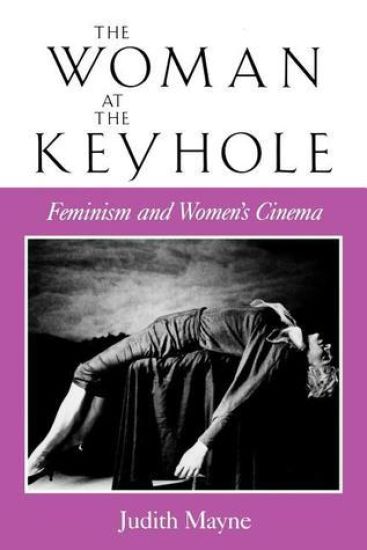
The Woman at the Keyhole

Judith Mayne

Indiana University Press
1990
pokkari
"[The Woman at the Keyhole is one] of the most significant contributions to feminist film theory sin ce the 1970s." —SubStance " . . . this intelligent, eminently readable volume puts women's filmmaking on the main stage. . . . serves at once as introduction and original contribution to the debates structuring the field. Erudite but never obscure, effectively argued but not polemical, The Woman at the Keyhole should prove to be a valuable text for courses on women and cinema." —The Independent When we imagine a "woman" and a "keyhole," it is usually a woman on the other side of the keyhole, as the proverbial object of the look, that comes to mind. In this work the author is not necessarily reversing the conventional image, but rather asking what happens when women are situated on both sides of the keyhole. In all of the films discussed, the threshold between subject and object, between inside and outside, between virtually all opposing pairs, is a central figure for the reinvention of cinematic narrative.
Directed by Dorothy Arzner

Directed by Dorothy Arzner

Judith Mayne

Indiana University Press
1995
pokkari
Dorothy Arzner was the exception in Hollywood film history—the one woman who succeeded as a director, in a career that spanned three decades. In Part One, Dorothy Arzner's film career—her work as a film editor to her directorial debut, to her departure from Hollywood in 1943—is documented, with particular attention to Arzner's roles as "star-maker" and "woman's director." In Part Two, Mayne analyzes a number of Arzner's films and discusses how feminist preoccupations shape them, from the women's communities central to Dance, Girl, Dance and The Wild Party to critiques of the heterosexual couple in Christopher Strong and Craig's Wife. Part Three treats Arzner's lesbianism and the role that desire between women played in her career, her life, and her films.
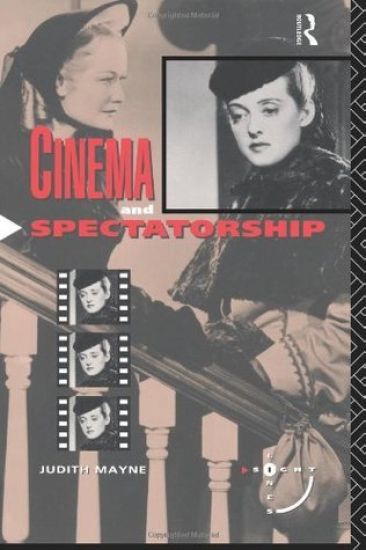
Cinema and Spectatorship

Cinema and Spectatorship

Judith Mayne

Routledge
1993
nidottu
Cinema and Spectatorship is the first book to focus entirely on the history and role of the spectator in contemporary film studies. While 1970s film theory insisted on a distinction betweeen the cinematic subject and film-goers, Judith Mayne suggests that a very real friction between "subjects" and "viewers" is in fact central to the study of spectatorship.In the book's first section Mayne examines three theoretical models of spectatorship: the perceptual, the institutional and the historical, while the second section focuses on case studies which crystallize many of the issues already discussed, concentrating on textual analysis, the `disrupting genre', `star-gazing' and finally the audience itself. Case studies incude the place of the spectator in the textual analysis of individual films such as The Picture of Dorian Gray; the construction of Bette Davis' star persona; fantasies of race and film viewing in Field of Dreams and Ghost; and gay and lesbian audiences as "critical" audiences. The book provides a very thorough and accessible overview of this complex, fragmented and often controversial area of film theory.
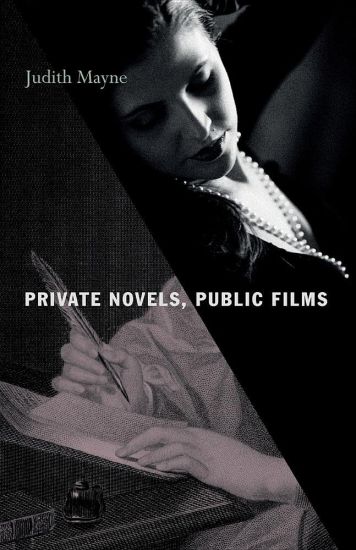
Private Novels, Public Films

Private Novels, Public Films

Judith Mayne

University of Georgia Press
2016
pokkari
The modern association of the word private with the individual, and the word public with the social did not occur until the emergence of capitalism separated family life from the workplace, creating the fundamental oppositions between home and business, female and male, and rest and labor that have defined life in industrialized societies through our time.Comparing the ways novels and films articulate middle-class culture, Judith Mayne reveals how both forms of narrative function as an encounter between private and public life, engaging the crucial relationships of a dualistic world—between men and women; between social classes; between readers or viewers and texts.Unlike past studies of the novel and film that have tried to establish one art form as superior to the other or have limited their analysis to the ways that novels have been translated into film, Private Novels, Public Films is a comparative study of the relationship between two forms of narrative and spheres of private and public life across different periods of history.
Cinema and Spectatorship

Cinema and Spectatorship

Judith Mayne

Routledge
2016
sidottu
Cinema and Spectatorship is the first book to focus entirely on the history and role of the spectator in contemporary film studies. While 1970s film theory insisted on a distinction betweeen the cinematic subject and film-goers, Judith Mayne suggests that a very real friction between "subjects" and "viewers" is in fact central to the study of spectatorship.In the book's first section Mayne examines three theoretical models of spectatorship: the perceptual, the institutional and the historical, while the second section focuses on case studies which crystallize many of the issues already discussed, concentrating on textual analysis, the `disrupting genre', `star-gazing' and finally the audience itself. Case studies incude the place of the spectator in the textual analysis of individual films such as The Picture of Dorian Gray; the construction of Bette Davis' star persona; fantasies of race and film viewing in Field of Dreams and Ghost; and gay and lesbian audiences as "critical" audiences. The book provides a very thorough and accessible overview of this complex, fragmented and often controversial area of film theory.