Kirjojen hintavertailu. Mukana 11 244 527 kirjaa ja 12 kauppaa.

Kirjahaku

Etsi kirjoja tekijän nimen, kirjan nimen tai ISBN:n perusteella.

13 kirjaa tekijältä Judith Roof

A Lure of Knowledge

A Lure of Knowledge

Judith Roof

Columbia University Press
1991
sidottu
Lesbianism in literature has been dealt with rather indirectly in the past. Editors have led readers to the "artistry" of a work containing lesbianism, emphasizing instead the literary history and historical context of the work rather than the representations of lesbianism. The editor for Colette's The Pure and the Impure, for instance, affirms that Colette has a knowledge of a "strange sisterhood," but assures readers she has never strayed from the "normal." In the groundbreaking A Lure of Knowledge, Judith Roof demonstrates that representations of lesbian sexuality occupy specific locations or positions in the arguments, subject matter, and rhetoric of Western European and American literary criticism. She examines the political context of representations: how lesbian sexuality is used as a signifier an why it appears when and where it does. Roof argues that attempts to depict or explain lesbian sexuality spur anxieties about knowledge and identity. In reaction to and denial of these anxieties, lesbian sexuality is represented in film, literature, theory, and criticism as foreplay, as simulated heterosexuality, as erotic excess, as joking inauthenticity, as artful compromise, or as masculine mask in a specific repertoire of neutralization and evasion. Challenging the heterosexism of film theory and feminist theory, this book analyzes the rhetorical use of lesbian sexuality. Roof explores a range of discourses, from the woks of such authors as Anais Nin, Olga Broumas, Julia Kristeva, Jane Rule, Luce Iriguray, and Sigmund Freud, to films such as Emmanuelle, Desert Hearts, Entre Nous, and I've Heard the Mermaids Singing, to professional tennis.
A Lure of Knowledge

A Lure of Knowledge

Judith Roof

Columbia University Press
1993
pokkari
Lesbianism in literature has been dealt with rather indirectly in the past. Editors have led readers to the "artistry" of a work containing lesbianism, emphasizing instead the literary history and historical context of the work rather than the representations of lesbianism. The editor for Colette's The Pure and the Impure, for instance, affirms that Colette has a knowledge of a "strange sisterhood," but assures readers she has never strayed from the "normal." In the groundbreaking A Lure of Knowledge, Judith Roof demonstrates that representations of lesbian sexuality occupy specific locations or positions in the arguments, subject matter, and rhetoric of Western European and American literary criticism. She examines the political context of representations: how lesbian sexuality is used as a signifier an why it appears when and where it does. Roof argues that attempts to depict or explain lesbian sexuality spur anxieties about knowledge and identity. In reaction to and denial of these anxieties, lesbian sexuality is represented in film, literature, theory, and criticism as foreplay, as simulated heterosexuality, as erotic excess, as joking inauthenticity, as artful compromise, or as masculine mask in a specific repertoire of neutralization and evasion. Challenging the heterosexism of film theory and feminist theory, this book analyzes the rhetorical use of lesbian sexuality. Roof explores a range of discourses, from the woks of such authors as Anais Nin, Olga Broumas, Julia Kristeva, Jane Rule, Luce Iriguray, and Sigmund Freud, to films such as Emmanuelle, Desert Hearts, Entre Nous, and I've Heard the Mermaids Singing, to professional tennis.
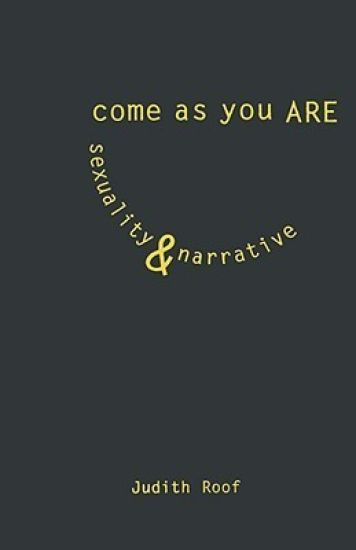
Come as You Are

Come as You Are

Judith Roof

Columbia University Press
1996
sidottu
Roof's ambitious, wide-ranging book links narrative theory, theories of sexuality, and gay and lesbian theory to explore the place of homosexuality, and specifically the lesbian, in the tradition of western narrative. According to Freud, perversions are the necessary obstacles in a heroic plot of normal heterosexual development; and homosexuality is the nineteenth century's classic case of perversion. Roof builds on Freud to illustrate that a structural understanding of narrative enforces a heterosexual paradigm, a sense of meaning that provides psychological stability for the reader. Looking at film, television, and lesbian novels, Roof explores how ideas of narrative and sexuality inform, determine, and reproduce one another. She identifies the paradigmatic lesbian story, its unvarying repetition, and how it might be recast. Understanding identification as a narrative practice, and narrative as typically heterosexual and reproductive, Roof shows how sexuality and narrative must be disentangled to alter oppressive social practices.Come As You Are marks a significant contribution to lesbian and gay studies, psychoanalytic theory, and feminism.
Come as You Are

Come as You Are

Judith Roof

Columbia University Press
1996
pokkari
Roof's ambitious, wide-ranging book links narrative theory, theories of sexuality, and gay and lesbian theory to explore the place of homosexuality, and specifically the lesbian, in the tradition of western narrative. According to Freud, perversions are the necessary obstacles in a heroic plot of normal heterosexual development; and homosexuality is the nineteenth century's classic case of perversion. Roof builds on Freud to illustrate that a structural understanding of narrative enforces a heterosexual paradigm, a sense of meaning that provides psychological stability for the reader. Looking at film, television, and lesbian novels, Roof explores how ideas of narrative and sexuality inform, determine, and reproduce one another. She identifies the paradigmatic lesbian story, its unvarying repetition, and how it might be recast. Understanding identification as a narrative practice, and narrative as typically heterosexual and reproductive, Roof shows how sexuality and narrative must be disentangled to alter oppressive social practices.Come As You Are marks a significant contribution to lesbian and gay studies, psychoanalytic theory, and feminism.
All about Thelma and Eve

All about Thelma and Eve

Judith Roof

University of Illinois Press
2002
nidottu
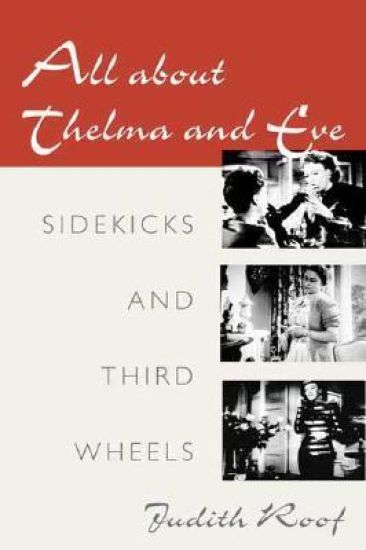
Inviting us to "wallow in the middle," Judith Roof offers a fresh, inventive look at female comic secondary characters who, though never on center stage, play an indispensable role in enriching and complicating the course of the narrative. Paying attention to these characters shows that narrative is not always as straight as it might seem. Focusing on such superb comic seconds as Eve Arden, Thelma Ritter, Rosalind Russell, and Whoopi Goldberg, Roof explores what is queer about the middle--in the sense of eccentric and in terms of desire--and how that queerness functions as a part of and an antidote to narrative. Shrewd, pragmatic, self-denying, perceptive, outspoken, and witty, these female characters are able to cross the bounds of social groupings, gender expectations, and propriety, presenting possibilities that threaten the "fitting ends" of narrative closure: norms such as heterosexuality, production, reproduction, knowledge, and victory. Roof characterizes female seconds as modern-day versions of the Shakespearean fool, able to speak the truth without being punished for it. Discussing films ranging from Mildred Pierce, Auntie Mame, and Rear Window to Stage Door, Sister Act, and The Associate, she shows how Hollywood's recasting of the wise servant figure as female, unattached, and lower class reflects more general cultural anxieties about the role of women, gender confusion, race, and class distinctions. She also tracks changes in the form and function of the minor and middle from the stylized, hierarchical economy of classical Hollywood film to the expanded, serial variety fitted to 1990s commodity culture. A meticulous, playful rereading of Hollywood classics from the margins, All about Thelma and Eve registers both delight in these female characters and discernment of their integral role in unseating narrative and other norms.
Reproductions of Reproduction

Reproductions of Reproduction

Judith Roof

Routledge
1996
sidottu
Reproductions of Reproduction is about the loss of the paternal metaphor and how the ensuing scramble to relocate it has set off a series of representational crises. Examining the sudden popularity of such figures as cyborgs, bodybuilders, and vampires; shifts in legislation about abortion, paternity and copyright; the transition to a digital-based society; the emergence of lesbian and gay studies; the growing infatuation with hyper-realistic patterns in television, this book argues that each of these manifestations represents an attempt to resituate the paternal metaphor. While this shift affects our understandings of everything from narratives to law to time, it also suggests a point of potential political intervention, allowing us to identify the full implications of these changes.
Reproductions of Reproduction

Reproductions of Reproduction

Judith Roof

Routledge
1996
nidottu
Reproductions of Reproduction is about the loss of the paternal metaphor and how the ensuing scramble to relocate it has set off a series of representational crises. Examining the sudden popularity of such figures as cyborgs, bodybuilders, and vampires; shifts in legislation about abortion, paternity and copyright; the transition to a digital-based society; the emergence of lesbian and gay studies; the growing infatuation with hyper-realistic patterns in television, this book argues that each of these manifestations represents an attempt to resituate the paternal metaphor. While this shift affects our understandings of everything from narratives to law to time, it also suggests a point of potential political intervention, allowing us to identify the full implications of these changes.
The Poetics of DNA

The Poetics of DNA

Judith Roof

University of Minnesota Press
2007
nidottu
How has DNA come to be seen as a cosmic truth, representative of all life, potential for all cures, repository for all identity, and end to all stories? In The Poetics of DNA, Judith Roof examines the rise of this powerful symbol and the implications of its ascendancy for the ways we think-about ourselves, about one another, and about the universe. Descriptions of DNA, Roof argues, have distorted ideas and transformed nucleic acid into the answer to all questions of life. This hyperbolized notion of DNA, inevitably confused or conflated with the “gene,” has become a vector through which older ways of thinking can merge with the new, advancing long-discredited and insidious ideas about such things as eugenics and racial selection and influencing contemporary debates, particularly the popular press obsession with the “gay gene.” Through metaphors of DNA, she contends, racist and homophobic ideology is masked as progressive science. Grappling with twentieth-century intellectual movements as well as contemporary societal anxieties, The Poetics of DNA reveals how descriptions of DNA and genes typify a larger set of epistemological battles that play out not only through the assumptions associated with DNA but also through less evident methods of magical thinking, reductionism, and pseudoscience. For the first time, Roof exposes the ideology and cultural consequences of DNA and gene metaphors to uncover how, ultimately, they are paradigms used to recreate prejudices. Judith Roof is professor of English and film studies at Michigan State University. She is the author of several books, including All about Thelma and Eve: Sidekicks and Third Wheels.
What Gender Is, What Gender Does

What Gender Is, What Gender Does

Judith Roof

University of Minnesota Press
2016
nidottu
What Gender Is, What Gender Does provides a forceful new paradigm for considering genders. With depth and insight, Judith Roof argues that genders are much more than binary. And they are constantly morphing: they are conscious and unconscious, simultaneously conventional and idiosyncratic. At any moment, more than one gender dynamic is at work in any individual.Roof’s interpretation of genders isn’t content with either biological duality or endlessly open performativity, and what results is a nuanced and surprising representation of gender-an account that captures the complexities of lived experience as well as lived ideology. For Roof, genders are interacting sets of operations that link individual desires to multiple, shifting manifestations of sociocultural positioning and self-presentation. Thus, “to gender” is to signal, mask, suggest, mislead, and simplify the uncontainable chaos of desires characteristic of subjects but roundly contained by society.Drawing illustrative material from contemporary popular culture productions, including My Big Fat Greek Wedding, Spider-Man, Shrek, Shallow Hal, Sex and the City, Bridesmaids, Bond films, and “bromance” movies, What Gender Is, What Gender Does demonstrates how the persistent conflation of gender and sexual difference is, on the one hand, a simple taxonomic urge and, on the other, a cover that offers the security of identity in place of the frustrations and fears of the real asymmetries of personal power dynamics.
The Comic Event

The Comic Event

Judith Roof

Bloomsbury Academic USA
2018
sidottu
The Comic Event approaches comedy as dynamic phenomenon that involves the gathering of elements of performance, signifiers, timings, tones, gestures, previous comic bits, and other self-conscious structures into an “event” that triggers, by virtue of a “cut,” an expected/unexpected resolution.Using examples from mainstream comedy, The Comic Event progresses from the smallest comic moment—jokes, bits—to the more complex—caricatures, sketches, sit-coms, parody films, and stand-up routines. Judith Roof builds on side comments from Henri Bergson’s short treatise “Laughter,” Sigmund Freud’s Jokes and Their Relation to the Unconscious, and various observations from Aristotle to establish comedy as a complex, multifaceted practice. In seeing comedy as a gathering event that resolves with a “cut,” Roof characterizes comedy not only by a predictable unpredictability occasioned by a sudden expected/unexpected insight, but also by repetition, seriality, self-consciousness, self-referentiality, and an ourobouric return to a previous cut. This theory of comedy offers a way to understand the operation of a broad array of distinct comic occasions and aspects of performance in multiple contexts.
The Comic Event

The Comic Event

Judith Roof

Bloomsbury Academic USA
2019
nidottu
The Comic Event approaches comedy as dynamic phenomenon that involves the gathering of elements of performance, signifiers, timings, tones, gestures, previous comic bits, and other self-conscious structures into an “event” that triggers, by virtue of a “cut,” an expected/unexpected resolution.Using examples from mainstream comedy, The Comic Event progresses from the smallest comic moment—jokes, bits—to the more complex—caricatures, sketches, sit-coms, parody films, and stand-up routines. Judith Roof builds on side comments from Henri Bergson’s short treatise “Laughter,” Sigmund Freud’s Jokes and Their Relation to the Unconscious, and various observations from Aristotle to establish comedy as a complex, multifaceted practice. In seeing comedy as a gathering event that resolves with a “cut,” Roof characterizes comedy not only by a predictable unpredictability occasioned by a sudden expected/unexpected insight, but also by repetition, seriality, self-consciousness, self-referentiality, and an ourobouric return to a previous cut. This theory of comedy offers a way to understand the operation of a broad array of distinct comic occasions and aspects of performance in multiple contexts.
Tone

Tone

Judith Roof

Bloomsbury Academic USA
2020
sidottu
Tone is often decisive in whether we love or dislike a story, novel, or even critical essay. Yet literary critics rarely treat tone as a necessary or important element of literary style or critique. There are surprisingly few analyses of what tone is, how texts produce tone, or the ways tone--as an essential element of narration--contributes to character, story, mood, and voice. Tone’s 24 micro-chapters offer a playful, eclectic, and fast-paced guide into the creation of tone in a variety of modern and contemporary works of literature by such varied writers as Hemingway, Woolf, and Sedaris, as well as in criticism, advertising, and machine-authored texts. Judith Roof shows how tone is a crucial element in all writing, as it produces the illusion of a telling voice; creates a sense of character, personality, and attitude; inflects events recounted; anticipates certain directions and possibilities; and creates an ambiance that simultaneously produces, enables, and shapes narratives and characters. Tone gives us a lively and original way to rethink the practice of literary criticism.
Tone

Tone

Judith Roof

Bloomsbury Academic USA
2020
nidottu
Tone is often decisive in whether we love or dislike a story, novel, or even critical essay. Yet literary critics rarely treat tone as a necessary or important element of literary style or critique. There are surprisingly few analyses of what tone is, how texts produce tone, or the ways tone--as an essential element of narration--contributes to character, story, mood, and voice. Tone’s 24 micro-chapters offer a playful, eclectic, and fast-paced guide into the creation of tone in a variety of modern and contemporary works of literature by such varied writers as Hemingway, Woolf, and Sedaris, as well as in criticism, advertising, and machine-authored texts. Judith Roof shows how tone is a crucial element in all writing, as it produces the illusion of a telling voice; creates a sense of character, personality, and attitude; inflects events recounted; anticipates certain directions and possibilities; and creates an ambiance that simultaneously produces, enables, and shapes narratives and characters. Tone gives us a lively and original way to rethink the practice of literary criticism.