Kirjojen hintavertailu. Mukana 11 244 527 kirjaa ja 12 kauppaa.

Kirjahaku

Etsi kirjoja tekijän nimen, kirjan nimen tai ISBN:n perusteella.

5 kirjaa tekijältä Judith Warner

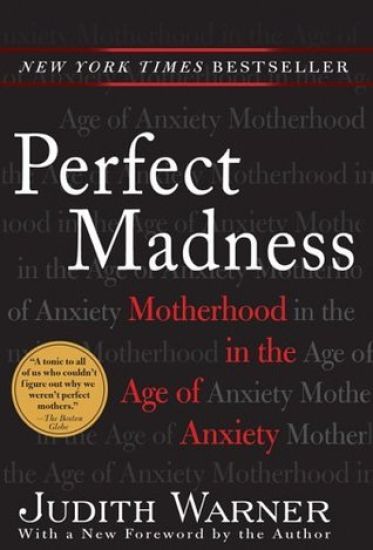
Perfect Madness

Perfect Madness

Judith Warner

Ebury Press
2006
pokkari
By moving personally between the worlds of stay-at-home and working motherhood, interviewing numerous women and reading what our popular culture and politicians had to offer on the subject of motherhood in our time, the author comes to a stark conclusion: that what is happening in the culture of motherhood is nothing less than perfect madness.
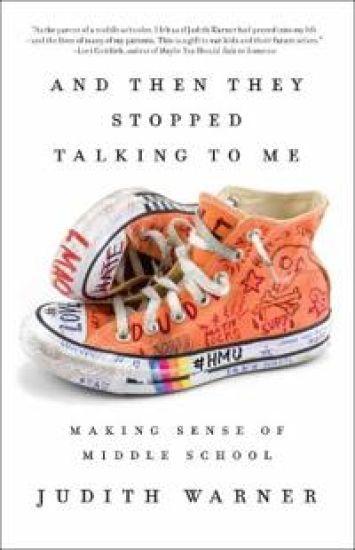
And Then They Stopped Talking to Me

And Then They Stopped Talking to Me

Judith Warner

Crown Publications
2021
nidottu
Through the stories of kids and parents in the middle school trenches, a New York Times bestselling author reveals why these years are so painful, how parents unwittingly make them worse, and what we all need to do to grow up. "As the parent of a middle schooler, I felt as if Judith Warner had peered into my life--and the lives of many of my patients. This is a gift to our kids and their future selves."--Lori Gottlieb, author of Maybe You Should Talk to Someone The French have a name for the uniquely hellish years between elementary school and high school: l' ge ingrat, or "the ugly age." Characterized by a perfect storm of developmental changes--physical, psychological, and social--the middle school years are a time of great distress for children and parents alike, marked by hurt, isolation, exclusion, competition, anxiety, and often outright cruelty. Some of this is inevitable; there are intrinsic challenges to early adolescence. But these years are harder than they need to be, and Judith Warner believes that adults are complicit. With deep insight and compassion, Warner walks us through a new understanding of the role that middle school plays in all our lives. She argues that today's helicopter parents are overly concerned with status and achievement--in some ways a residual effect of their own middle school experiences--and that this worsens the self-consciousness, self-absorption, and social "sorting" so typical of early adolescence. Tracing a century of research on middle childhood and bringing together the voices of social scientists, psychologists, educators, and parents, Warner's book shows how adults can be moral role models for children, making them more empathetic, caring, and resilient. She encourages us to start treating middle schoolers as the complex people they are, holding them to high standards of kindness, and helping them see one another as more than "jocks and mean girls, nerds and sluts." Part cultural critique and part call to action, this essential book unpacks one of life's most formative periods and shows how we can help our children not only survive it but thrive.
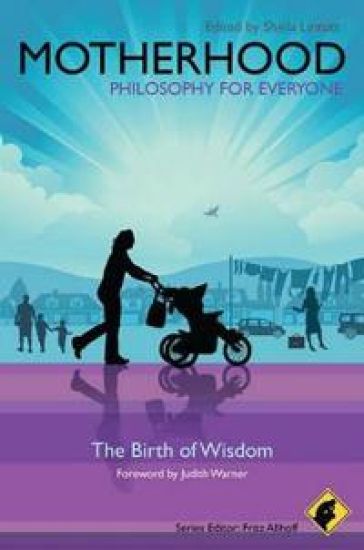
Motherhood - Philosophy for Everyone

Motherhood - Philosophy for Everyone

Judith Warner

Wiley-Blackwell (an imprint of John Wiley Sons Ltd)
2010
nidottu
MOTHERHOOD PHILOSOPHY FOR EVERYONE If you have ever wondered what makes a “good” or a “bad” mother, or if mothers are always right in thinking their babies are beautiful, or indeed, whether mother always knows best, look no further. Without a single nag, Motherhood – Philosophy for Everyone covers these salient philosophical issues, and more, including: The anticipation of impending parenthood compared with the realityShould we tell the occasional lie to our children?What does the Bible actually say about the virgin birth?If we were able to turn our children off, would and should we be tempted by this option?The experience of lesbian motheringThe unexpected challenges and complications of being a mother “As in any group of thinkers, some mothers are more ambitiously reflective than others, either out of temperamental thoughtfulness, moral and political concerns, or, most often, because they have serious problems with their children. However, maternal thinking is no rarity. Maternal work itself demands that mothers think…” From Maternal Thinking: Toward A Politics of Peace, Sara Ruddick
Perfect Madness: Motherhood in the Age of Anxiety
A lively and provocative look at the modern culture of motherhood and at the social, economic, and political forces that shaped current ideas about parenting What is wrong with this picture? That's the question Judith Warner asks in this national bestseller after taking a good, hard look at the world of modern parenting--at anxious women at work and at home and in bed with unhappy husbands. When Warner had her first child, she was living in Paris, where parents routinely left their children home, with state-subsidized nannies, to join friends in the evening for dinner or to go on dates with their husbands. When she returned to the States, she was stunned by the cultural differences she found toward how people think about effective parenting--in particular, assumptions about motherhood. None of the mothers she met seemed happy; instead, they worried about the possibility of not having the perfect child, panicking as each developmental benchmark approached. Combining close readings of mainstream magazines, TV shows, and pop culture with a thorough command of dominant ideas in recent psychological, social, and economic theory, Perfect Madness addresses our cultural assumptions, and examines the forces that have shaped them. Working in the tradition of classics like Betty Friedan's The Feminine Mystique and Christopher Lasch's The Culture of Narcissism, and with an awareness of a readership that turned recent hits like The Bitch in the House and Allison Pearson's I Don't Know How She Does It into bestsellers, Warner offers a context in which to understand parenting culture and the way we live, as well as ways of imagining alternatives--actual concrete changes--that might better our lives.
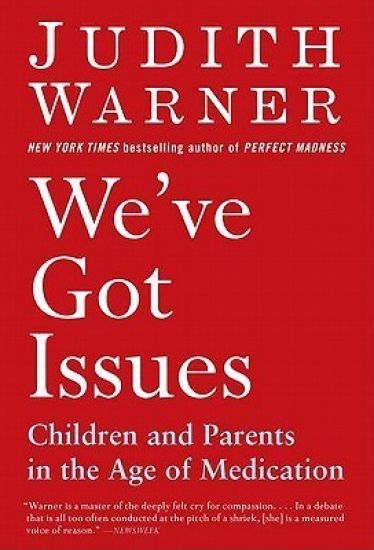
We've Got Issues

We've Got Issues

Judith Warner

Riverhead Books,U.S.
2011
pokkari
A bold, brilliant, and provocative look at childhood medication by "New York Times" bestselling author Judith Warner In "Perfect Madness: Motherhood in the Age of Anxiety," the bestselling author and former "New York Times" columnist Judith Warner explained what's gone wrong with the culture of parenting, and her conclusions sparked a national debate on how women and society view motherhood. Her new book, "We've Got Issues: Children and Parents in the Age of Medication," will generate the same kind of controversy, as she tackles a subject that's just as contentious and important: Are parents and physicians too quick to prescribe medication to control our children's behavior? Are we using drugs to excuse inept parents who can't raise their children properly? What Warner discovered from the extensive research and interviewing she did for this book is that passion on both sides of the issue "is ideological and only tangentially about real children," and she cuts through the jargon and hysteria to delve into a topic that for millions of parents involves one of the most important decisions they'll ever make for their child. Insightful, compelling, and deeply moving, "We've Got Issues" is for parents, doctors, and teachers-anyone who cares about the welfare of today's children.