Kirjojen hintavertailu. Mukana 12 016 292 kirjaa ja 12 kauppaa.

Kirjahaku

Etsi kirjoja tekijän nimen, kirjan nimen tai ISBN:n perusteella.

6 kirjaa tekijältä Judith Wolfe

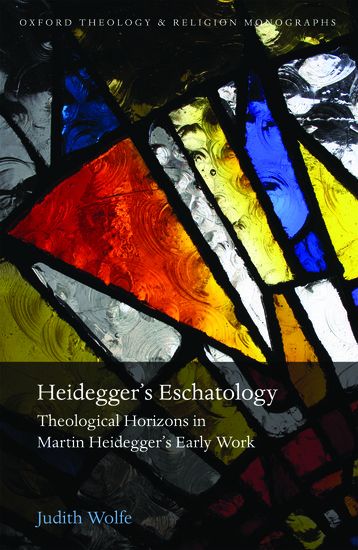
Heidegger's Eschatology

Heidegger's Eschatology

Judith Wolfe

Oxford University Press
2015
nidottu
Heidegger's Eschatology is a ground-breaking account of Heidegger's early engagement with theology, from his beginnings as an anti-Modernist Catholic to his turn towards an undogmatic Protestantism and finally to a resolutely a-theistic philosophical method. The book centres on Heidegger's developing commitment to an eschatological vision, derived from theological sources but reshaped into a central resource for the development of an atheistic phenomenological account of human existence. This vision originated in Heidegger's attempt, in the late 1910s, to formulate a phenomenology of religious life that would take seriously the inherent temporality of human existence. In this endeavour, Heidegger turned to two trends in Protestant scholarship: the discovery of eschatology as a central preoccupation of the Early Church by A. Schweitzer and the 'History of Doctrine' School, and the 'existential' eschatology of Karl Barth and Eduard Thurneysen, indebted to Kierkegaard, Dostoevsky, and Franz Overbeck. His synthesis of such trends within a phenomenological framework (elaborated primarily via readings of Paul and Augustine in his lecture courses of 1921-2) led Heidegger to postulate an existential sense of eschatological unrest as the central characteristic of authentic Christian existence. His description of this expectant restlessness, however, was now inescapably at odds with its Christian sources, since Heidegger's commitment to a phenomenological description of the human situation led him to abstract the 'existential' experience of expectation from its traditional object: the 'blessed hope' for the Kingdom of God. Christian hope thus for Heidegger no longer constitutes, but rather negates 'eschatological' unrest, because such hope projects an end to that unrest, and thus to authentic existence itself. Against the Christian vision, Heidegger therefore develops a systematic 'eschatology without eschaton', paradigmatically expressed as 'being-unto-death'. Judith Wolfe tells the story of his re-conception of eschatology, using a wealth of primary and newly available original-language sources, and offering in-depth analysis of Heidegger's relationship to theological tradition and the theology of his time.

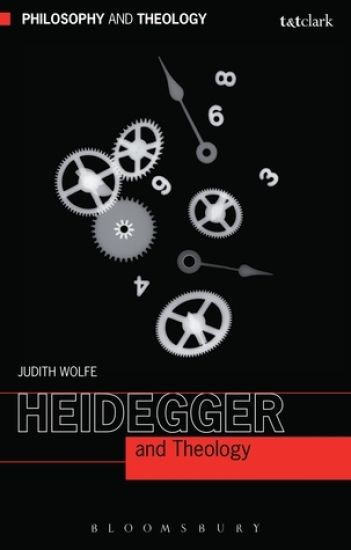
Heidegger and Theology

Heidegger and Theology

Judith Wolfe

T. T.Clark Ltd
2014
sidottu
Martin Heidegger is the 20th century theology philosopher with the greatest importance to theology. A cradle Catholic originally intended for the priesthood, Heidegger's studies in philosophy led him to turn first to Protestantism and then to an atheistic philosophical method. Nevertheless, his writings remained deeply indebted to theological themes and sources, and the question of the nature of his relationship with theology has been a subject of discussion ever since. This book offers theologians and philosophers alike a clear account of the directions and the potential of this debate. It explains Heidegger's key ideas, describes their development and analyses the role of theology in his major writings, including his lectures during the National Socialist era. It reviews the reception of Heidegger's thought both by theologians in his own day (particularly in Barth and his school as well as neo-Scholasticism) and more recently (particularly in French phenomenology), and concludes by offering directions for theology's possible future engagement with Heidegger's work.
Heidegger and Theology

Heidegger and Theology

Judith Wolfe

T. T.Clark Ltd
2014
nidottu
Martin Heidegger is the 20th century theology philosopher with the greatest importance to theology. A cradle Catholic originally intended for the priesthood, Heidegger's studies in philosophy led him to turn first to Protestantism and then to an atheistic philosophical method. Nevertheless, his writings remained deeply indebted to theological themes and sources, and the question of the nature of his relationship with theology has been a subject of discussion ever since. This book offers theologians and philosophers alike a clear account of the directions and the potential of this debate. It explains Heidegger's key ideas, describes their development and analyses the role of theology in his major writings, including his lectures during the National Socialist era. It reviews the reception of Heidegger's thought both by theologians in his own day (particularly in Barth and his school as well as neo-Scholasticism) and more recently (particularly in French phenomenology), and concludes by offering directions for theology's possible future engagement with Heidegger's work.
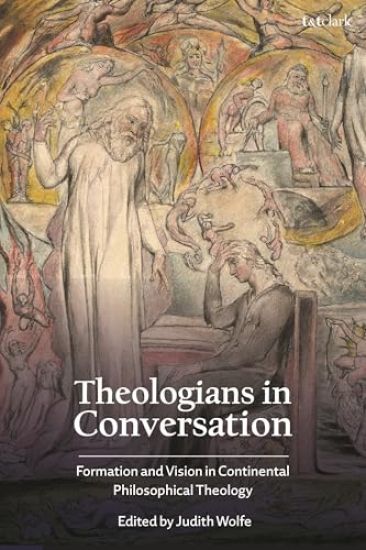
Theologians in Conversation: Formation and Vision in Continental Philosophical Theology
In this astounding collection of interviews, the leading philosophical theologians of our time answer questions about their own formation and their vision of the field. They focus particularly on the philosophical voices that contributed most to their own development, and on how these voices shaped their understanding of what philosophical theology can achieve and how. They suggest important research questions that philosophical theologians should engage over the next few years, and describe significant methods or approaches that might support such engagement. The book is both a moving collection of personal memoirs and a crisp snapshot of philosophical theology in the early 21st century. It will help theologians, philosophers, and intellectual historians understand how we got here and where we might be heading, as they are asked what research questions should be addressed in the future. In doing so, they muse on the typical failure modes in philosophical theology and divulge who were the most important philosophical voices to them.
Theologians in Conversation: Formation and Vision in Continental Philosophical Theology
In this astounding collection of interviews, the leading philosophical theologians of our time answer questions about their own formation and their vision of the field. They focus particularly on the philosophical voices that contributed most to their own development, and on how these voices shaped their understanding of what philosophical theology can achieve and how. They suggest important research questions that philosophical theologians should engage over the next few years, and describe significant methods or approaches that might support such engagement. The book is both a moving collection of personal memoirs and a crisp snapshot of philosophical theology in the early 21st century. It will help theologians, philosophers, and intellectual historians understand how we got here and where we might be heading, as they are asked what research questions should be addressed in the future. In doing so, they muse on the typical failure modes in philosophical theology and divulge who were the most important philosophical voices to them.
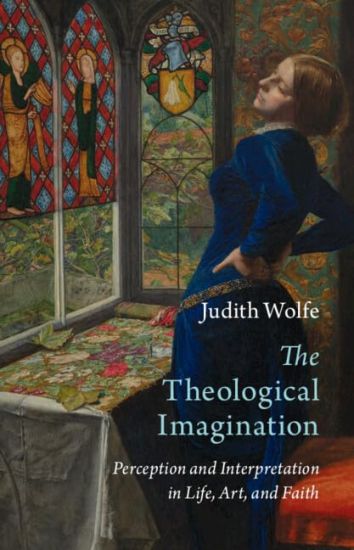
The Theological Imagination

The Theological Imagination

Judith Wolfe

Cambridge University Press
2024
sidottu
How can we live truthfully in a world riddled with ambiguity, contradiction, and clashing viewpoints? We make sense of the world imaginatively, resolving ambiguous and incomplete impressions into distinct forms and wholes. But the images, objects, words, and even lives of which we make sense in this way always have more or other possible meanings. Judith Wolfe argues that faith gives us courage both to shape our world creatively, and reverently to let things be more than we can imagine. Drawing on complementary materials from literature, psychology, art, and philosophy, her remarkable book demonstrates that Christian theology offers a potent way of imagining the world even as it brings us to the limits of our capacity to imagine. In revealing the significance of unseen depths – of what does not yet make sense to us, and the incomplete – Wolfe characterizes faith as trust in God that surpasses all imagination.