
Kirjahaku
Etsi kirjoja tekijän nimen, kirjan nimen tai ISBN:n perusteella.
24 kirjaa tekijältä Judy Alter
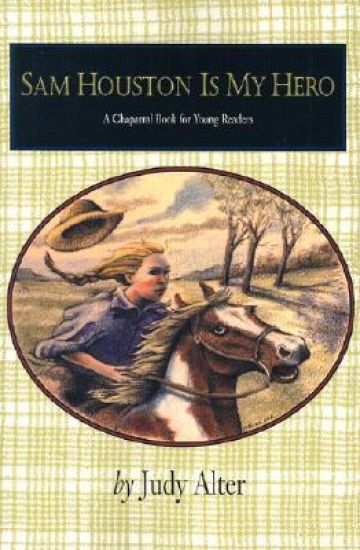
Fourteen-year-old Cat Jennings lives—and works—on a hardscrabble farm outside Bastrop, Texas, with her parents, an older brother Charlie, and three younger children—Holly, Benjie, and Susanna. But her father has gone to fight at the Alamo, and Charlie has left to join him. When Cat learns that the Alamo has fallen with no survivors, she takes off on horseback to ride across South Texas and urge volunteers to join Sam Houston’s army. She soon runs into Johnny Jenkins, who is both her nemesis and her first love. Johnny is on his way to join Houston, even though Cat tells him he’s too young. As she rides from cabin to cabin, Cat meets fascinating characters, like the gentle widow Polly who won’t believe that her son died at the Alamo. And she has near misses with a Mexican brigade and roughnecks who try to kidnap her. Disguised as a boy, she runs into the Texian army—only to find that they are retreating! She also finds Charlie and Johnny with Houston, but when she wants to leave for home, General Houston won’t allow it. So Cat joins the Runaway Scrape and follows Houston and his army to San Jacinto, arguing all the way with Johnny and Charlie, who think Houston is a coward for retreating and cruel for burning the towns he marches through. Cat argues that he is the hero who will save Texas. According to her great-granddaughter, the real Catherine Jennings did make such a ride after her father, Gordon Jennings, was killed at the Alamo. The rest of this story is fiction based on historical research.
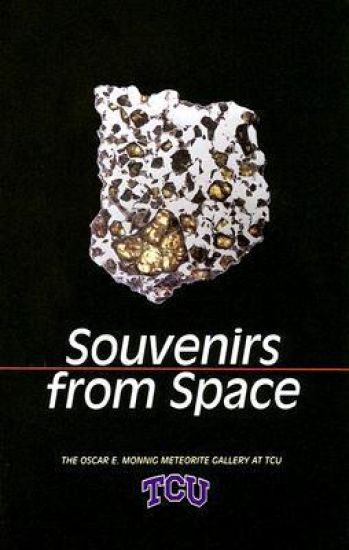
This book, written for young people ages eight to twelve, tells readers in clear terms what meteorites are, where they come from, what kinds there are, how to look for them, and what to look for if you find a rock you think might be a meteorite. It encourages scientific exploration because the truth is anyone can find a meteorite. Souvenirs from Space also tells the story of Fort Worth lawyer Oscar Monnig who became known as the "Meteorite Man from Texas." He spent many years searching for meteorites in Texas and Oklahoma, following stories of meteorites sightings, often running into dead ends, but just as often finding another gem for his collection. In his lifetime, he collected almost 400 meteorites. He donated his collection to the geology department at TCU and provided for the establishment of the Monnig Meteorite Gallery, which is open to the public. Fort Worth school children frequently tour the gallery as part of their science study. Souvenirs from Space is designed for children who visit the gallery, to give them a lasting souvenir of their lesson about meteorites. But it's also for all children interested in astronomy or meteorites. It will make them, too, want to visit the gallery.
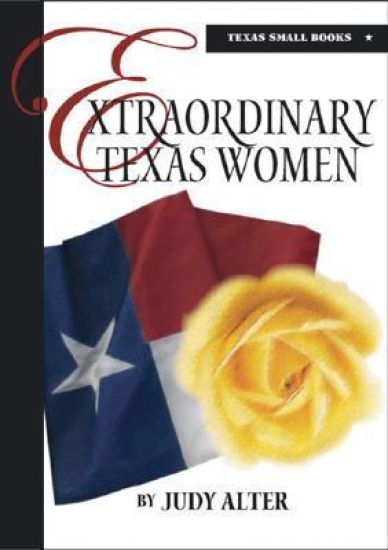
Texas just may be the state in the Union with the strongest masculine image. Our heroes, from cowboys to the Alamo to Stephen F. Austin and Sam Houston, have always been men. But there have also always been women with gumption.The Texas women in these pages have made history in a variety of ways - some outrageous, some inventive, most courageous. They have been crusaders, sports stars, outlaws, entrepreneurs and business leaders, ranchers and cowgirls, philanthropists, artists - and often, characters. They lived outside convention and caught public attention to one degree or another. For some, their greatest accomplishments and most unusual adventures came after they left Texas, but they are still bound to and influenced by a Texas heritage.They're here on these pages - the women you know about, from Emily Morgan (the supposed Yellow Rose of Texas) to Ann Richards and Lady Bird Johnson. But, there are also some you may not know, like Pamelia Mann, who stood up to Sam Houston, and Ninnie Baird who started a chain of bakeries by first selling her homemade bread to neighbors. Read and enjoy!
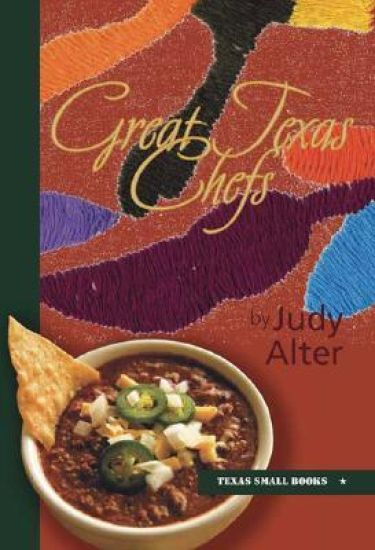
In Texas, ""chef"" covers a wide range of cooking styles. Included here are chefs who are heavily influenced by classical training, but there are also chefs who take Southwestern cuisine to a state of high art, chefs who specialize in Tex-Mex and others who cook the traditional dishes of the interior of Mexico and who bring new innovative touches to Mexican cuisine. There are even winery owners who combine their passion for fine wine with a passion for fine food. And what picture of Texas cooking would be complete without chuck-wagon cooking?This small book is not a comprehensive study of Texas chefs. Because of size limitations, many of the state's best have been omitted with regret. The chefs on these pages were chosen to represent the styles of food available to the discriminating diner. Most but not all have cookbooks available. All but two have restaurants that beckon the Texas palate.
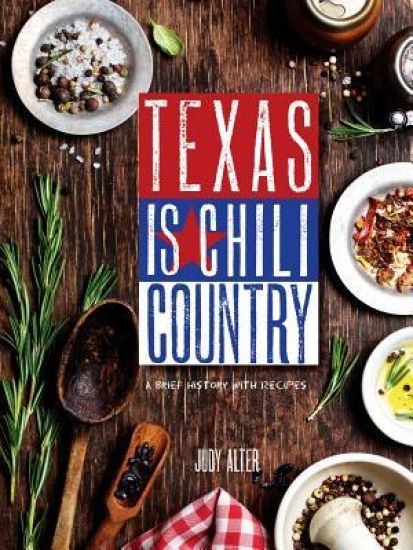
Texans love to eat, and one dish they can’t get enough of is chili—so much so that chili con carne is Texas’s state meal. This seemingly simple staple of Texan identity proves to be anything but, however. Beans or no beans? Beef, pork, or turkey? From a can or from scratch? Texas Is Chili Country is a brief look at the favored fare—its colorful history, its many incarnations, and the ways it has spread both across the country and the world. The history includes chuckwagon chili, the chili queens of San Antonio, the first attempts at canned chili, the development of chili societies and the subsequent rivalries between them, and the rise of chili cook-offs.And what would a book about chili be without recipes? There are no-fat recipes, vegan recipes, and recipes from Mexican-American cooks who have adapted this purely American food. Some have been tried, but many are taken on faith. Recipes are included from state celebrities such as Ladybird Johnson, Governor Ma Ferguson, and chili king Frank X. Tolbert.

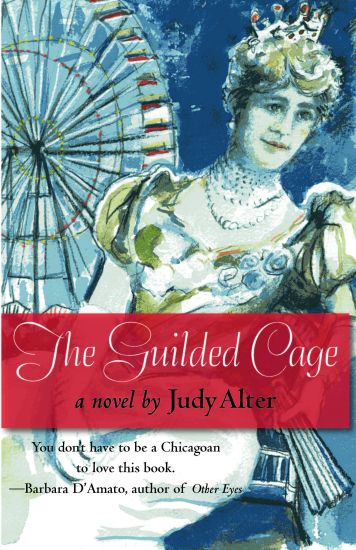
Born to society and a life of privilege, Bertha Honor married Potter Palmer, a wealthy entrepreneur who called her Cissy. Neither dreamed the direction the other's life would take. He built the Palmer House Hotel, still famed today, and became one of the major robber barons of the city, giving generously to causes of which he approved. She put philanthropy into words, going into shanty neighborhoods, inviting factory girls to her home, working at Jane Addams' settlement Hull House, supporting women's causes. It was a time of tremendous change and conflict in Chicago as the city struggled to put its swamp-water beginnings behind it and become a leading urban center. A time of the Great Fire of 1871, the Haymarket Riots, and the triumph of the Columbian Exposition. Potter and Cissy handled these events in diverse ways. Fascinating characters people these pages along with Potter and Cissy-Carter Harrison, frequent mayor of the city; Harry Collins, determined to be a loser; Henry Honor , torn between loyalties to the South and North; Daniel Burnham, architect of the new Chicago-and many others. The Gilded Cage is a fictional exploration of the lives of these people and of the Gilded Age in Chicago history.
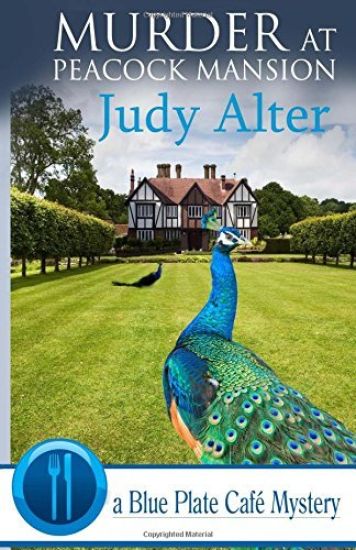
Arson, a bad beating, and a recluse who claims someone is trying to kill her all collide in this third Blue Plate Caf Mystery with Kate Chambers. Torn between trying to save David Clinkscales, her old boss and new lover, and curiosity about Edith Aldridge's story of an attempt on her life, Kate has to remind herself she has a caf to run. She nurses a morose David, whose spirit has been hurt as badly as his body, and tries to placate Mrs. Aldridge, who was once accused of murdering her husband but acquitted. One by one, Mrs. Aldridge's stepchildren enter the picture. Is it coincidence that David is Edith Aldridge's lawyer? Or that she seems to rely heavily on the private investigator David hires? First the peacocks die...and then the people. Everyone is in danger, and no one knows who to suspect
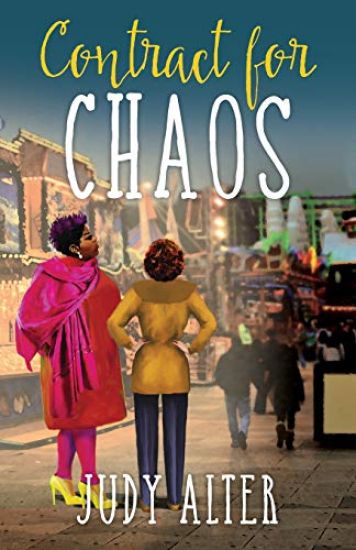
When four young men sign the rental contract on a Fairmount House, realtor Kelly O'Connell has no idea she has just signed a contract for chaos. But the racial tensions sweeping the country erupt in Fort Worth, and her tenants fan the flames. A young black policeman shoots an unarmed white teenage thief who charged him, the chief of police is shot by a sniper, and Kelly's husband, Mike, is appointed interim chief of police. Life changes dramatically for Kelly and her family. Protests, threats, beatings, and graffiti mark daily life in Kelly's beloved city. She must protect her infant, reassure her older daughters, and support Mike as he deals with the racism and dissension creeping through the police force and the city. How can she keep her family safe and stop the hate? Will the mayor's city-wide Celebration of Neighbors calm a city on the edge?

Without formal culinary training, Judy Alter has cooked her way through life, feeling family and friends at everything from casual dinners al fresco to elaborate meals for twenty. An award-winning author and publisher, she jokes she'll come back in another life as a chef.Today Alter finds herself cooking in a four-by-six kitchen where zoning laws forbid built-ins but allow anything that plugs in. So she cooks with a hot plate, a toaster oven, and a large refrigerator/freezer. Given these limitations, she has developed a new approach to food, one that she says lets her get in touch with the food itself. By choice, she does not have an Insta-Pot, an air-fryer, a microwave. Her menu choices are dictated by her cooking facilities-and she loves it. She shares her tiny kitchen tips and recipes, developed over the past couple of years, in Gourmet on a Hot Plate.
Want a French recipe? Irene will teach you to make salad ni oise. Want murder and mayhem? Irene seems to attract both. With one week until her wedding, Henny James is convinced Irene's arrival from France will ruin the biggest day of her life. One week to save Irene from the trouble she brings with her and save the wedding. Recipes included.

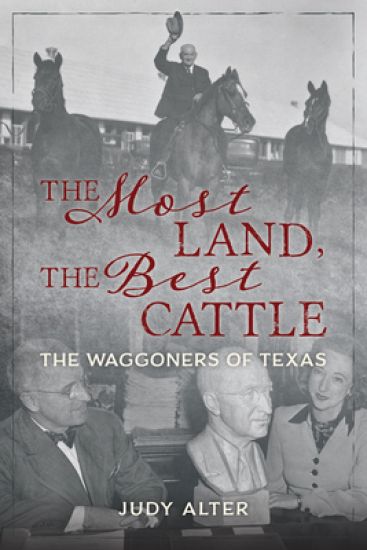
In the 19th century, Daniel Waggoner and his son, W.T. (Tom), put together an empire in North Texas that became the largest ranch under one fence in the nation. The 520,000-plus acres or 800 square miles covers six counties and sits on a large oil field in the Red River Valley of North Texas. Over the years, the estate also owned five banks, three cottonseed oil mills, and a coal company. Headquarters are in an office building in Vernon. Estimated value last quoted was $300 million. The history is colorful. Although Dan seems to have led a fairly low-profile life, W. T. moved to Fort Worth, became a bank director, built two office buildings, ran his cattle on the Big Pasture in Indian Territory (Oklahoma), hosted Teddy Roosevelt at a wolf hunt in the Big Pasture, and sent Quanah Parker to Washington, D.C., for Roosevelt’s inauguration. W. T. had three children including his daughter, Electra, the light of his life. W. T. built a mansion in Fort Worth for her—today the house, the last surviving cattle baron mansion on Fort Worth’s Silk Stocking Row, is open to the public for tours and events. Electra, an international celebrity and extravagant shopper (she once spent $10,000 in one day at Neiman Marcus), died at the age of forty-three. W.T.’s brother Guy had nine wives; his brother E. Paul, partier and horse breeder, was married to the same woman for fifty years and had one daughter, Electra II. Electra II was a both a celebrity and a talented sculptor, best known for a heroic-size state of Will Rogers on his horse, Soapsuds, as well as busts of two presidents and various movie stars. She is said to once have been involved with Cary Grant. After marriage to an executive she settled in a mansion at the ranch and raised two daughters. This book tells the story of the Wagonner women and their need to do something with the restless energy they possessed. The women did not have—or did not choose—ranching as an outlet for their strong personalities. The story is also about the juxtaposition of a love of the land versus the self-indulgent love of money—a common theme among ranch families that led to the dissolution of many.
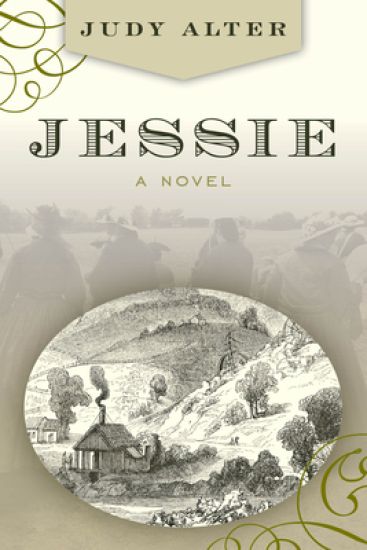
Jessie is the story of Jessie Benton Fremont, wife of explorer and politician John C. Fremont—who was instrumental in opening the west. Jessie helped demonstrate that by joining her husband in California to build a home at the time of the Bear Flag rebellion. Judy Alter’s storytelling and impeccable historical research bring the era of the old west to life while highlighting the life of Jessie Benton Fremont.
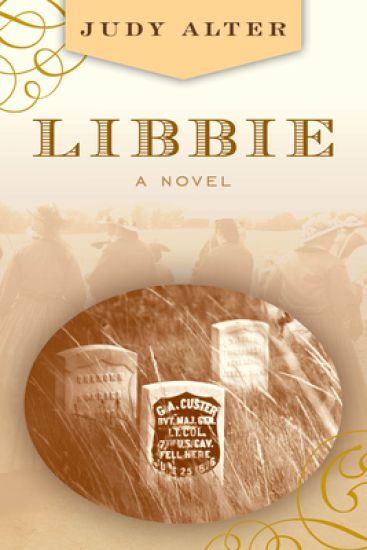
Libbie is the life story of Elizabeth Bacon Custer, wife of George Armstrong Custer. Libbie traveled the west with her famous husband, writing many books about their adventures. Her great achievement came in the years after Little Big Horn, when she burnished the reputation of her husband and his men through extensive public relations efforts. Judy Alter’s storytelling and impeccable historical research bring the era of the old west to life while highlighting the life of Elizabeth Bacon Custer.
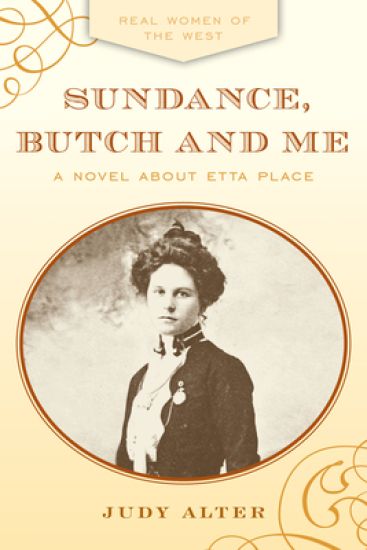
Sundance, Butch & Me tells the story of Etta Place—an outlaw woman whose original identity may never be known. She accompanied the leaders of the Wild Bunch as they ran rampant over the American West, traveled to New York City, and finally fled to South America. Judy Alter’s storytelling and impeccable historical research bring the era of the old west to life while highlighting the life of Etta Place.
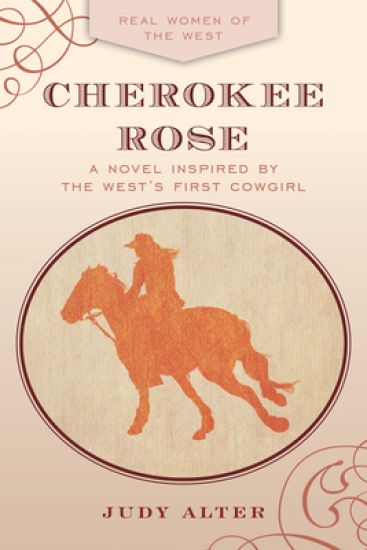
Cherokee Rose tells the story of Rodeo cowgirl Tommy Joe Burns, an Oklahoma girl who earned the praise of Theodore Roosevelt for her daring and bravery as a rough-stock rider in the early years of the 20th century. Judy Alter’s storytelling and impeccable historical research bring the era of the old west to life while highlighting the life of Tommy Joe Burns.

Mattie is the tale of Georgia Arbuckle-Fix, a pioneering doctor on the Western frontier in Nebraska at the end of the 19th and into the early 20th centuries. Judy Alter’s storytelling and impeccable historical research bring the era of the old west to life while highlighting the life of Georgia Arbuckle-Fix.