Kirjojen hintavertailu. Mukana 11 342 296 kirjaa ja 12 kauppaa.

Kirjahaku

Etsi kirjoja tekijän nimen, kirjan nimen tai ISBN:n perusteella.

4 kirjaa tekijältä Judy Rohrer

Staking Claim

Staking Claim

Judy Rohrer

University of Arizona Press
2016
sidottu
In the heart of the Pacific Ocean, Hawai'i exists at a global crosscurrent of indigeneity and race, homeland and diaspora, nation and globalization, sovereignty and imperialism. In order to better understand how settler colonialism works and thus move decolonization efforts forward, Staking Claim analyzes competing claims of identity, belonging, and political status in Hawai'i. Author Judy Rohrer brings together an analysis of racial formation and colonization in the islands through a study of legal cases, contemporary public discourse (local media and literature), and Hawai'i scholarship. Her analysis exposes how racialization works to obscure—with the ultimate goal of eliminating—native Hawaiian indigeneity, homeland, nation, and sovereignty. Staking Claim argues that the dual settler colonial processes of racializing native Hawaiians (erasing their indigeneity), and indigenizing non-Hawaiians, enable the staking of non-Hawaiian claims to Hawai'i. It encourages us to think beyond a settler-native binary by analyzing the ways racializations of Hawaiians and various non-Hawaiian settlers and arrivants bolster settler colonial claims, structures, and white supremacist ideologies.

Staking Claim

Staking Claim

Judy Rohrer

University of Arizona Press
2017
nidottu
In the heart of the Pacific Ocean, Hawai‘i exists at a global crosscurrent of indigeneity and race, homeland and diaspora, nation and globalization, sovereignty and imperialism. In order to better understand how settler colonialism works and thus move decolonization efforts forward, Staking Claim analyzes competing claims of identity, belonging, and political status in Hawai‘i. Author Judy Rohrer brings together an analysis of racial formation and colonization in the islands through a study of legal cases, contemporary public discourse (local media and literature), and Hawai‘i scholarship. Her analysis exposes how racialization works to obscure—with the ultimate goal of eliminating—native Hawaiian indigeneity, homeland, nation, and sovereignty.Staking Claim argues that the dual settler colonial processes of racializing native Hawaiians (erasing their indigeneity), and indigenizing non-Hawaiians, enable the staking of non-Hawaiian claims to Hawai‘i. It encourages us to think beyond a settler-native binary by analyzing the ways racializations of Hawaiians and various non-Hawaiian settlers and arrivants bolster settler colonial claims, structures, and white supremacist ideologies.

Haoles in Hawai'i

Haoles in Hawai'i

Judy Rohrer

University of Hawai'i Press
2010
nidottu
Haoles in Hawai‘istrives to make sense of haole (Hawaiian for “white person”) and “the politics of haole” in current debates about race in Hawai‘i. Recognizing it as a form of American whiteness specific to Hawai‘i, the author (who grew up in Kaua‘i and O‘ahu) argues that haole was forged and reforged over two centuries of colonization and needs to be understood in that context. Haole reminds us that race is about more than skin color as it identifies a certain amalgamation of attitude and behavior that is at odds with Hawaiian and local values and social norms. By situating haole historically and politically, the author asks readers to think about ongoing processes of colonization and possibilities for reformulating the meaning of haole.
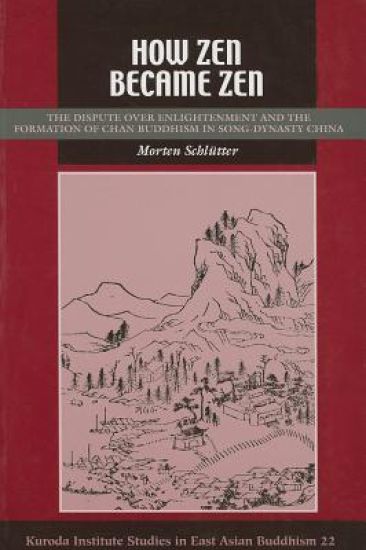
How Zen Became Zen

How Zen Became Zen

Judy Rohrer

University of Hawai'i Press
2010
nidottu
How Zen Became Zen takes a novel approach to understanding one of the most crucial developments in Zen Buddhism: the dispute over the nature of enlightenment that erupted within the Chinese Chan (Zen) school in the twelfth century. The famous Linji (Rinzai) Chan master Dahui Zonggao (1089–1163) railed against "heretical silent illumination Chan" and strongly advocated kanhua (koan) meditation as an antidote. In this fascinating study, Morten Schlütter shows that Dahui’s target was the Caodong (Soto) Chan tradition that had been revived and reinvented in the early twelfth century, and that silent meditation was an approach to practice and enlightenment that originated within this "new" Chan tradition. Schlütter has written a refreshingly accessible account of the intricacies of the dispute, which is still reverberating through modern Zen in both Asia and the West. Dahui and his opponents’ arguments for their respective positions come across in this book in as earnest and relevant a manner as they must have seemed almost nine hundred years ago.Although much of the book is devoted to illuminating the doctrinal and soteriological issues behind the enlightenment dispute, Schlütter makes the case that the dispute must be understood in the context of government policies toward Buddhism, economic factors, and social changes. He analyzes the remarkable ascent of Chan during the first centuries of the Song dynasty, when it became the dominant form of elite monastic Buddhism, and demonstrates that secular educated elites came to control the critical transmission from master to disciple ("procreation" as Schlütter terms it) in the Chan School.