Kirjojen hintavertailu. Mukana 12 095 448 kirjaa ja 12 kauppaa.

Kirjahaku

Etsi kirjoja tekijän nimen, kirjan nimen tai ISBN:n perusteella.

8 kirjaa tekijältä Julia Bricklin

America's Best Female Sharpshooter

America's Best Female Sharpshooter

Julia Bricklin

University of Oklahoma Press
2017
sidottu
Today, most remember ""California Girl"" Lillian Frances Smith (1871-1930) as Annie Oakley's chief competitor in the small world of the Wild West shows' female shooters. But the two women were quite different: Oakley's conservative ""prairie beauty"" persona clashed with Smith's tendency to wear flashy clothes and keep company with the cowboys and American Indians she performed with. This lively first biography chronicles the Wild West showbiz life that Smith led and explores the talents that made her a star. Drawing on family records, press accounts, interviews, and numerous other sources, historian Julia Bricklin peels away the myths that enshroud Smith's fifty-year career. Known as ""The California Huntress"" before she was ten years old, Smith was a professional sharpshooter by the time she reached her teens, shooting targets from the back of a galloping horse in Buffalo Bill Cody's Wild West. Not only did Cody offer $10,000 to anyone who could beat her, but he gave her top billing, setting the stage for her rivalry with Annie Oakley. Being the best female sharpshooter in the United States was not enough, however, to differentiate Lillian Smith from Oakley and a growing number of ladylike cowgirls. So Smith reinvented herself as ""Princess Wenona,"" a Sioux with a violent and romantic past. Performing with Cody and other showmen such as Pawnee Bill and the Miller brothers, Smith led a tumultuous private life, eventually taking up the shield of a forged Indian persona. The morals of the time encouraged public criticism of Smith's lack of Victorian femininity, and the press's tendency to play up her rivalry with Oakley eventually overshadowed Smith's own legacy. In the end, as author Julia Bricklin shows, Smith cared more about living her life on her own terms than about her public image. Unlike her competitors who shot to make a living, Lillian Smith lived to shoot.
America's Best Female Sharpshooter

America's Best Female Sharpshooter

Julia Bricklin

University of Oklahoma Press
2020
nidottu
Today, most remember ""California Girl"" Lillian Frances Smith (1871-1930) as Annie Oakley's chief competitor in the small world of the Wild West shows' female shooters. But the two women were quite different: Oakley's conservative ""prairie beauty"" persona clashed with Smith's tendency to wear flashy clothes and keep company with the cowboys and American Indians she performed with. This lively first biography chronicles the Wild West showbiz life that Smith led and explores the talents that made her a star. Drawing on family records, press accounts, interviews, and numerous other sources, historian Julia Bricklin peels away the myths that enshroud Smith's fifty-year career. Known as ""The California Huntress"" before she was ten years old, Smith was a professional sharpshooter by the time she reached her teens, shooting targets from the back of a galloping horse in Buffalo Bill Cody's Wild West. Not only did Cody offer $10,000 to anyone who could beat her, but he gave her top billing, setting the stage for her rivalry with Annie Oakley. Being the best female sharpshooter in the United States was not enough, however, to differentiate Lillian Smith from Oakley and a growing number of ladylike cowgirls. So Smith reinvented herself as ""Princess Wenona,"" a Sioux with a violent and romantic past. Performing with Cody and other showmen such as Pawnee Bill and the Miller brothers, Smith led a tumultuous private life, eventually taking up the shield of a forged Indian persona. The morals of the time encouraged public criticism of Smith's lack of Victorian femininity, and the press's tendency to play up her rivalry with Oakley eventually overshadowed Smith's own legacy. In the end, as author Julia Bricklin shows, Smith cared more about living her life on her own terms than about her public image. Unlike her competitors who shot to make a living, Lillian Smith lived to shoot.
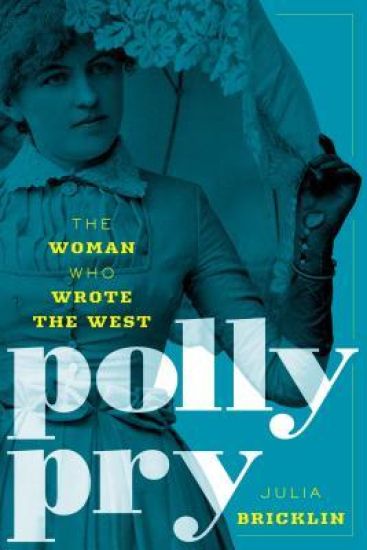
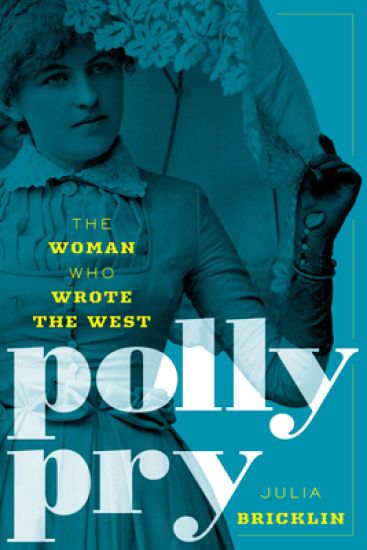
Polly Pry

Polly Pry

Julia Bricklin

TwoDot Books
2018
sidottu
In 1900, the young and beautiful Leonel Ross Campbell became the first female reporter to work for the Denver Post. As the journalist known as Polly Pry, she ruffled feathers when she worked to free a convicted cannibal and when she battled the powerful Telluride miners’ union. She was nearly murdered more than once. And a younger female colleague once said, “Polly Pry did not just report the news, she made it!” If only that young reporter had known how true her words were. Polly Pry got her start not just writing the news but inventing it. In spite of herself, however, Campbell would become a respected journalist and activist later in her career. She would establish herself as a champion for rights of the under served in the early twentieth century, taking up the causes of women, children, laborers, victims and soldiers of war, and prisoners. And she wrote some of the most sensational stories that westerners had ever read, all while keeping the truth behind her success a secret from her colleagues and closest friends and family.
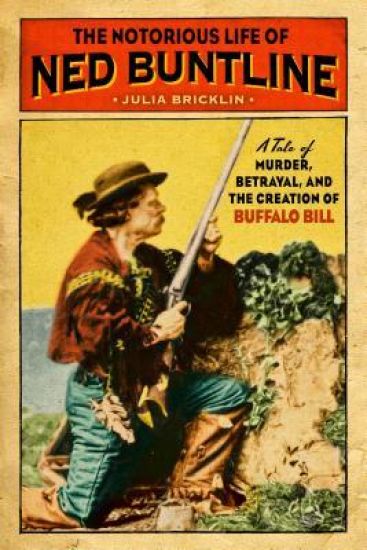
The Notorious Life of Ned Buntline

The Notorious Life of Ned Buntline

Julia Bricklin

Stackpole Books
2020
sidottu
Edward Zane Carroll Judson aka Ned Buntline (1821–1886) was responsible for creating a highly romantic and often misleading image of the American West, albeit one that the masses found irresistible in the mid-to-late nineteenth century. Some scholars estimate that he wrote at least four hundred dime novels over his lifetime, and perhaps as many as six hundred. While he is best known for discovering William Frederick Cody (“Buffalo Bill”) and making the irrepressible scout a star, Judson—by that time—had already lived five lifetimes himself: he had fought Seminole Indians in Florida; started and bankrupted three newspapers; published dozens of successful novels; agitated for the Know-Nothing party; and fought in the Union Army during the Civil War. Along the way, the fiery redheaded, gray-eyed writer lectured extensively about temperance between drinking bouts. He married eight women; seduced at least one other; and cavorted with prostitutes, one of whom beat him physically and legally. It wasn’t until 1869 that, en route home from a temperance speaking tour in California, he met Cody in Nebraska, while trying to make contact with another Western star, “Wild Bill” Hickok. Judson’s time with his last three wives overlapped his time with Cody. Their subsequent fight over Judson’s Civil War pension provides not only a unique glimpse into the mind of a narcissistic genius, but also a panoramic view of America’s past forcibly displayed by white, Protestant manhood. Murder, Betrayal, and Buffalo Bill captures the likeness of a man whose life was a landscape littered with contradictions––a man whose readers often forgave his Jekyll-and-Hyde behavior because of his inventive portrayal of a country trying to subdue the last of its natural landscapes and make sense of its teeming cities. It will be, at last, an open-eyed look at the man who sparked an American legend but whose own scandalous life somehow escaped history's limelight.
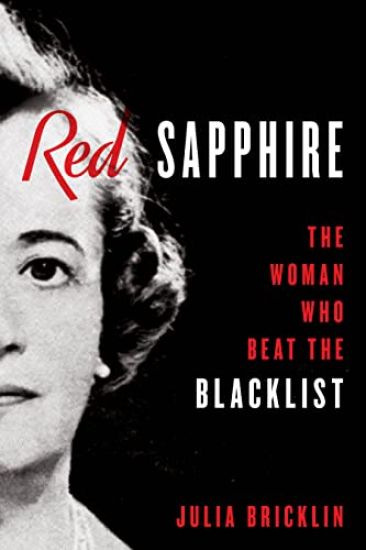
Red Sapphire

Red Sapphire

Julia Bricklin

ROWMAN LITTLEFIELD
2023
sidottu
In 1950, facing artistic and legal persecution by Senator Joe McCarthy because of her listing on Louis Budenz’s list of 400 concealed communists, single mother Hannah Weinstein fled to Europe. There, she built a television studio and established her own production company, Sapphire Films, then surreptitiously hired scores of such blacklisted writers as Waldo Salt, Ian McClellan, Adrian Scott, and Ring Lardner Jr., and “Trojan-horsed” more than three hundred half-hours of programming back to the United States, making a fortune in the process. Before she became one of the more powerful independent production forces in 1950s British television, Hannah Weinstein had a distinguished career as a journalist, publicist, and left-wing political activist. She worked for the New York Herald Tribune from 1927, then began a career in politics when she joined Fiorello H. La Guardia’s New York mayoral campaign in 1937. She also organized the press side of the presidential campaigns of Franklin D. Roosevelt and later (in 1948) of Henry Wallace where she established her own production company, Sapphire Films. With the exception of a French producer, no other woman on the continent was creating television content at this time, and Weinstein was the only one who was head of her own studio. Using declassified FBI and CIA files, interviews, and the personal papers of blacklisted writers and other sources, Red Sapphire will show that for the better part of a decade, Weinstein was a leader in the left’s battle with the right to shape popular culture during the Cold War . . . a battle that she eventually won.
Polly Pry

Polly Pry

Julia Bricklin

Taylor Trade Publishing
2022
pokkari
In 1900, the young and beautiful Leonel Ross Campbell became the first female reporter to work for the Denver Post. As the journalist known as Polly Pry, she ruffled feathers when she worked to free a convicted cannibal and when she battled the powerful Telluride miners’ union. She was nearly murdered more than once. And a younger female colleague once said, “Polly Pry did not just report the news, she made it!” If only that young reporter had known how true her words were. Polly Pry got her start not just writing the news but inventing it. In spite of herself, however, Campbell would become a respected journalist and activist later in her career. She would establish herself as a champion for rights of the under served in the early twentieth century, taking up the causes of women, children, laborers, victims and soldiers of war, and prisoners. And she wrote some of the most sensational stories that westerners had ever read, all while keeping the truth behind her success a secret from her colleagues and closest friends and family.
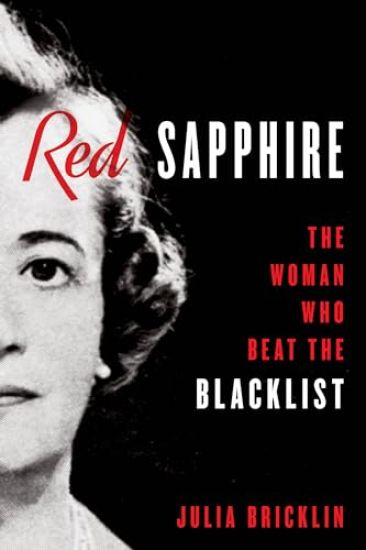
Red Sapphire: The Woman Who Beat the Blacklist
In 1950, facing artistic and legal persecution by Senator Joe McCarthy because of her inclusion on Louis Budenz's list of four hundred concealed communists, single mother Hannah Weinstein fled to Europe. There, she built a television studio and established her own production company, Sapphire Films, then surreptitiously hired scores of such blacklisted writers as Waldo Salt, Ian McLellan Hunter, Adrian Scott, and Ring Lardner Jr., and "Trojan-horsed" democratic ideals back to the United States through more than three hundred half-hours of programming, making a fortune in the process. With the exception of a French producer, no other woman on the continent was creating television content at this time, and Weinstein was the only one who was head of her own studio. Before she became one of the more powerful independent production forces in 1950s British television, Hannah Weinstein had a distinguished career as a journalist, publicist, and left-wing political activist. She worked for the New York Herald Tribune from 1927, then began a career in politics when she joined Fiorello H. La Guardia's New York mayoral campaign in 1937. She also organized the press side of the presidential campaigns of Franklin D. Roosevelt and later (in 1948) of Henry Wallace.Using declassified FBI and CIA files, interviews, and the personal papers of blacklisted writers and other sources, Red Sapphire depicts how for the better part of a decade, Weinstein was a leader in the Left's battle with the Right to shape popular culture during the Cold War . . . a battle that she eventually won.
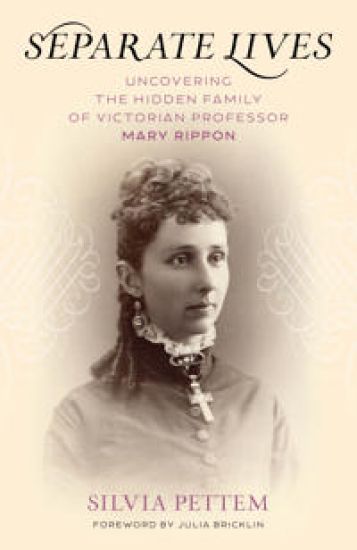
Separate Lives

Separate Lives

Silvia Pettem; Julia Bricklin

ROWMAN LITTLEFIELD
2024
sidottu
Mary Rippon was a pioneer woman educator in the male-dominated world of nineteenth-century academia. As the first female professor at the University of Colorado, she is believed to have been the first woman in the U.S. to teach at a state university. Mary received wide acclaim for her teaching, but Victorian society forced her to lead two very separate lives. "Miss Rippon," as she was always called, was both a professional woman and a mother in an era when these two roles could not be combined. In order to keep her job, she hid her husband and child behind a Victorian veil of secrecy that spanned two continents. Now, for the first time, the full story of the conflicts between this extraordinary woman’s public and private lives is revealed.Readers will follow Mary from her small midwestern hometown to the great centers of culture in Europe. In January 1878, after several years of education in Germany, France, and Switzerland, the soft-spoken twenty-seven-year-old was welcomed at the newly opened University of Colorado in the then-small frontier town of Boulder. The growth of her lengthy career paralleled the early growth of the university, where she worked her way up from first female faculty member to the university's first female professor, eventually chairing the Department of German Language and Literature.The truth of Mary’s separate lives was not revealed until nearly a century later, in 1976, when her elderly grandson revealed to a university librarian that he was Mary’s descendant. In 2006, Mary received a posthumous honorary degree from the University of Colorado, and a scholarship was recently endowed in her name. Silvia Pettem’s carefully researched biography weaves together the story of Mary’s private life with her professional career: not to tarnish Mary's well-deserved reputation, but rather to uncover the human side of a woman whose circumstances clashed with the mores of her times.