Kirjojen hintavertailu. Mukana 12 390 323 kirjaa ja 12 kauppaa.

Kirjahaku

Etsi kirjoja tekijän nimen, kirjan nimen tai ISBN:n perusteella.

9 kirjaa tekijältä Julia Briggs

Virginia Woolf: An Inner Life

Virginia Woolf: An Inner Life

Julia Briggs

Mariner Books
2006
nidottu
Virginia Woolf is one of the most influential figures in twentieth-century literature. She was original, passionate, vivid, dedicated to her art. Yet most writing about her still revolves around her social life and the Bloomsbury set. In this fresh, absorbing book, Julia Briggs puts the writing back at the center of Woolf's life, reads that life through her work, and mines the novels themselves to create a compelling new form of biography. Analyzing Woolf's own commen­tary on the creative process through her letters, diaries, and essays, Julia Briggs has produced a book that is a convincing, moving portrait of an artist, as well as a profound meditation on the nature of creativity.
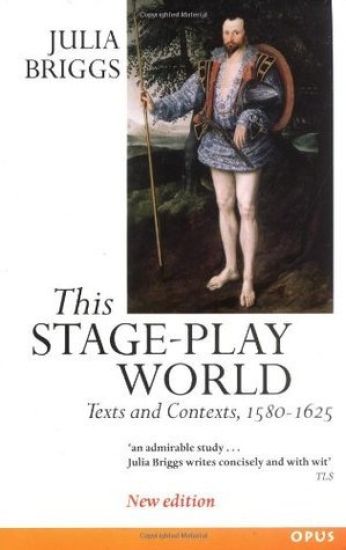
This Stage-Play World

This Stage-Play World

Julia Briggs

Oxford University Press
1997
nidottu
The later years of Elizabeth and the reign of James I were the age of Shakespeare, but the age also of Sidney, Spenser, and Donne, of fellow dramatists Marlowe, Jonson, and Webster, and of the prose writers Nashe, Bacon, and Burton. This book examines the social conditions that produced this uniquely dazzling array of talent, and relates them closely to the literature of the period. Politically, 1580-1625 was a period of comparative stability, but men's lives were constantly threatened by plague, famine, or even casual violence; a sudden population rise added problems of inflation and unemployment. Writers struggling to earn a living needed either to please the court, with its wealthy and influential patrons, or else to score a popular success with London's new theatre-going public. The establishment itself was actively engaged in promoting ideals of order, hierarchy and centralized authority, while religious reformers urged men to heed the promptings of the spirit, and humanist schoolmasters introduced the young to the pagan culture of ancient Rome, its erotic poetry, and its republican sentiments. New ideas were in the air and sceptical, sometimes iconoclastic attitudes were widely expressed: a constant theme in the literature of the age was man's simultaneous greatness and littleness, the dramatic antitheses contained within him and acted out upon what Raleigh called `this stage-play world'. This extensively revised new edition also includes two new chapters which examine the role of women, the family, travellers and `outsiders' within the social and literary contexts of the period. It also contains textual notes and a fully updated bibliography.
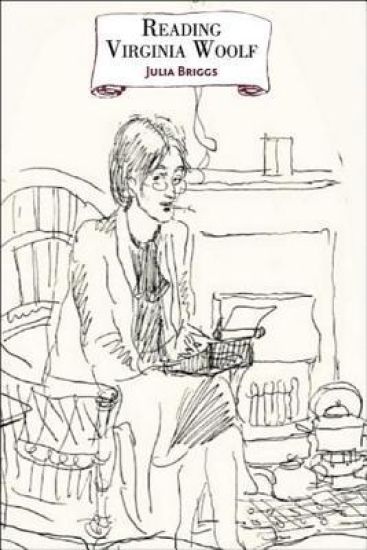
Reading Virginia Woolf

Reading Virginia Woolf

Julia Briggs

Edinburgh University Press
2006
sidottu
The pleasure and excitement of exploring Virginia Woolf's writings is at the heart of this book by a highly respected Woolf critic and biographer. Julia Briggs reconsiders Woolf's work - from some of her earliest fictional experiments to her late short story, 'The Symbol', and from the most to the least familiar of her novels - from a series of highly imaginative and unexpected angles. Individual essays analyse Woolf's neglected second novel, Night and Day and investigate her links with other writers (Byron, Shakespeare), her ambivalent attitudes to 'Englishness' and to censorship, her fascination with transitional places and moments, with the flow of time (and its relative nature), her concern with visions and revision and with printing and the writing process as a whole. We watch Woolf as she typesets an extraordinarily complex high modernist poem (Hope Mirrlees's 'Paris'), and as she revises her novels so that their structures become formally - and even numerologically - significant. A final essay examines the differences between Woolf's texts as they were first published in England and America, and the further changes she occasionally made after publication, changes that her editors have been slow to acknowledge. Julia Briggs brings to these discussions an extensive knowledge of Woolf both as a scholar and as an editor. She records her findings and observations in a lively, graceful and approachable style that will entice readers to delve further and more meaningfully into Woolf's work. Features * Addresses a wide range of familiar and less familiar texts, including Woolf's short stories. * Opens up difficult texts in an inviting style. * Covers aspects of Woolf's work that have been consistently neglected or have never been considered before.
Reading Virginia Woolf

Reading Virginia Woolf

Julia Briggs

Edinburgh University Press
2006
nidottu
The pleasure and excitement of exploring Virginia Woolf's writings is at the heart of this book by a highly respected Woolf critic and biographer. Julia Briggs reconsiders Woolf's work - from some of her earliest fictional experiments to her late short story, 'The Symbol', and from the most to the least familiar of her novels - from a series of highly imaginative and unexpected angles. Individual essays analyse Woolf's neglected second novel, Night and Day and investigate her links with other writers (Byron, Shakespeare), her ambivalent attitudes to 'Englishness' and to censorship, her fascination with transitional places and moments, with the flow of time (and its relative nature), her concern with visions and revision and with printing and the writing process as a whole. We watch Woolf as she typesets an extraordinarily complex high modernist poem (Hope Mirrlees's 'Paris'), and as she revises her novels so that their structures become formally - and even numerologically - significant. A final essay examines the differences between Woolf's texts as they were first published in England and America, and the further changes she occasionally made after publication, changes that her editors have been slow to acknowledge. Julia Briggs brings to these discussions an extensive knowledge of Woolf both as a scholar and as an editor. She records her findings and observations in a lively, graceful and approachable style that will entice readers to delve further and more meaningfully into Woolf's work. Features * Addresses a wide range of familiar and less familiar texts, including Woolf's short stories. * Opens up difficult texts in an inviting style. * Covers aspects of Woolf's work that have been consistently neglected or have never been considered before.
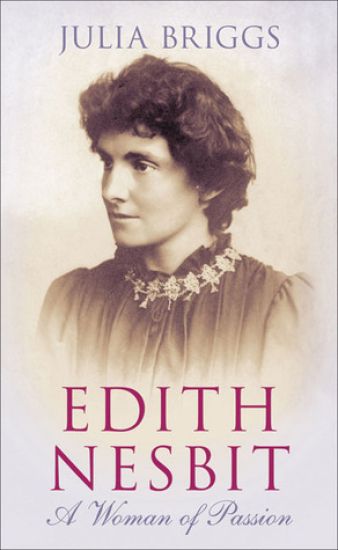
Edith Nesbit

Edith Nesbit

Julia Briggs

The History Press Ltd
2007
nidottu
Edith Nesbit is one of the greatest children's writers of the century. Her readers loved to think of her as a reassuringly aunt-like figure. This biography reveals her as a demanding and adventurous woman who broke all society's rules in her search for love. It also explores the relationship between her life and her fiction.
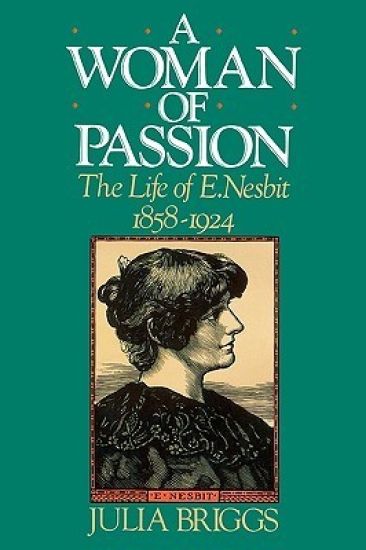
A Woman of Passion

A Woman of Passion

Julia Briggs

New Amsterdam Books
2001
pokkari
In A Woman of Passion, Julia Briggs chronicles the life of author Edith Nesbit who is credited with being the first modern writer for children and the creator of the children's adventure story. Nesbit recorded her life with varying degrees of honesty in verse and prose, and while she seldom wrote entirely openly of her own experiences, she seldom wrote convincingly of anything else. In this fascinating read, Julia Briggs attempts to fill in the gaps of Nesbit's autobiographical material, painting an intriguing portrait of the famous author.
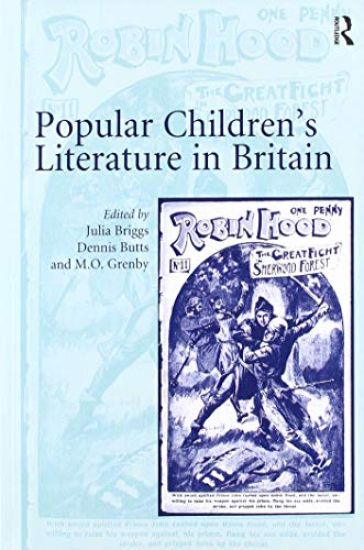
Popular Children’s Literature in Britain

Popular Children’s Literature in Britain

Julia Briggs; Dennis Butts

Routledge
2016
nidottu
The astonishing success of J.K. Rowling and other contemporary children's authors has demonstrated how passionately children can commit to the books they love. But this kind of devotion is not new. This timely volume takes up the challenge of assessing the complex interplay of forces that have created the popularity of children's books both today and in the past. The essays collected here ask about the meanings and values that have been ascribed to the term 'popular'. They consider whether popularity can be imposed, or if it must always emerge from children's preferences. And they investigate how the Harry Potter phenomenon fits into a repeated cycle of success and decline within the publishing industry. Whether examining eighteenth-century chapbooks, fairy tales, science schoolbooks, Victorian adventures, waif novels or school stories, these essays show how historical and publishing contexts are vital in determining which books will succeed and which will fail, which bestsellers will endure and which will fade quickly into obscurity. As they considering the fiction of Angela Brazil, Enid Blyton, Roald Dahl and J.K. Rowling, the contributors carefully analyse how authorial talent and cultural contexts combine, in often unpredictable ways, to generate - and sometimes even sustain - literary success.
Popular Children’s Literature in Britain

Popular Children’s Literature in Britain

Julia Briggs; Dennis Butts

Ashgate Publishing Limited
2008
sidottu
The astonishing success of J.K. Rowling and other contemporary children's authors has demonstrated how passionately children can commit to the books they love. But this kind of devotion is not new. This timely volume takes up the challenge of assessing the complex interplay of forces that have created the popularity of children's books both today and in the past. The essays collected here ask about the meanings and values that have been ascribed to the term 'popular'. They consider whether popularity can be imposed, or if it must always emerge from children's preferences. And they investigate how the Harry Potter phenomenon fits into a repeated cycle of success and decline within the publishing industry. Whether examining eighteenth-century chapbooks, fairy tales, science schoolbooks, Victorian adventures, waif novels or school stories, these essays show how historical and publishing contexts are vital in determining which books will succeed and which will fail, which bestsellers will endure and which will fade quickly into obscurity. As they considering the fiction of Angela Brazil, Enid Blyton, Roald Dahl and J.K. Rowling, the contributors carefully analyse how authorial talent and cultural contexts combine, in often unpredictable ways, to generate - and sometimes even sustain - literary success.