Kirjojen hintavertailu. Mukana 12 357 964 kirjaa ja 12 kauppaa.

Kirjahaku

Etsi kirjoja tekijän nimen, kirjan nimen tai ISBN:n perusteella.

5 kirjaa tekijältä Julia Stein

Shulamith

Shulamith

Julia Stein

West End Press
2002
nidottu
These poems treat the condition of Jewish women in the Bible as a prelude to the trials, misfortunes, and victories of the twentieth century. The Biblical women treated in a modern idiom include Eve, Lilith, Sara, Hagar, Leah, Rachel, Shifra, Miriam, Jael, Delilah, Ruth, the Witch of Endor, Bath She-Ba, Tamar, and Vashti. The link between past and present is Shulamith, 'the singer of all the songs', who comes at last to America. She helps us remember the Jewish women who resisted extermination in the European ghettos and concentration camps, those who continued to struggle against prejudice and persecution in America, and the heroic trade union militants, especially those in the garment industry who fought against sweatshops.

Walker Woman

Walker Woman

Julia Stein

West End Press
2001
nidottu
Here are poems of modern day survival, set in Los Angeles. The woman of the title (from a story by Mary Austin) provides an image for the poet of one who 'came and went about our western world', establishing a saving relationship with the land. The urban poet grapples with the themes of her life: her dying father, never able to use his teaching credentials; her own adjunct teaching position in the L.A. community college system, full of overcrowding, layoffs, and her beautiful immigrant students; the South Central riots, a forest fire, a flood, and an earthquake complicating her labours; her friend a woman climber who dies of a heart attack in the emergency room; her improbable lover who brings plants and flowers, beer and confusion; and always the return to the land.
Symbolism and the exposure of race relations in Amiri Baraka's Dutchman
Essay from the year 2017 in the subject American Studies - Literature, grade: 2,3, University of Mannheim, language: English, abstract: Amiri Baraka was one of the main leaders of the Black Arts Movement and a successful playwright. His play Dutchman was first shown at the Cherry Lane Theatre in New York City in March, 1964 and won the "Village Voice" Obie award. It is an outstanding example of the teachings of this movement by using symbols for race relations and discrimination, which was still present around that time. The focus of this term paper lies on the examination of these symbols as indicators of race relations in regard of the call for change induced by the Black Arts Movement. Therefore, the second chapter will approach Baraka's essay The Revolutionary Theatre and the theory of the formation of the Black Arts Movement. It was a call for violence, destruction and exposure of white suppression. Furthermore, there will be a look at the historical context of this movement. The third chapter will involve an efficient examination of the symbols, which Baraka has included in his play Dutchman in order to expose race relations and racism, which were under the surface. This will be followed by an interpretation of the end of the play in regard to the Black Arts Movement and race relations displayed through symbols. Baraka wanted to motivate African-Americans with this play to stand up for themselves and to create their own identity and culture instead of assimilating into a white, racist society. It represents, without a doubt, a milestone in the fight for equal rights through art.
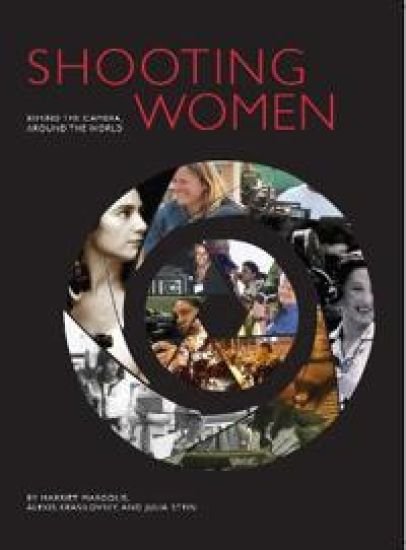
Shooting Women

Shooting Women

Harriet Margolis; Alexis Krasilovsky; Julia Stein

Intellect Books
2015
nidottu
Shooting Women takes readers around the world to explore the lives of camerawomen working in features, TV news, and documentaries. From pioneers like African American camerawoman Jessie Maple Patton who got her job only after suing the union – to China’s first camerawomen – who travelled with Mao – to rural India where women in poverty have learned camerawork as a means of empowerment, Shooting Women reveals a world of women working with courage and skill in what has long been seen as a male field.