Kirjojen hintavertailu. Mukana 12 421 648 kirjaa ja 12 kauppaa.

Kirjahaku

Etsi kirjoja tekijän nimen, kirjan nimen tai ISBN:n perusteella.

44 kirjaa tekijältä Julian Baggini

What's It All About?

What's It All About?

Julian Baggini

Oxford University Press Inc
2010
nidottu
What is the meaning of life? It is a question that has intrigued the great philosophers--and has been hilariously lampooned by Monty Python. Indeed, the whole idea strikes many of us as vaguely pompous and perhaps more than a little absurd. Is there one profound answer, an ultimate purpose behind human existence? Julian Baggini thinks not. Rather, as Baggini argues in What's It All About, meaning can be found in a variety of ways. He succinctly breaks down six answers people commonly suggest when considering what life is all about--helping others, serving humanity, being happy, becoming successful, enjoying each day as if it were your last, and "freeing your mind." By reducing the vague, mysterious question of "meaning" to a series of more specific (if unmysterious) questions about what gives life purpose and value, he shows that the quest for meaning can be personal, empowering, and uplifting. Illustrating his argument with the thoughts of many of the great philosophers and examples drawn from everyday life, Baggini convincingly shows that the search for meaning is personal and within the power of each of us to find.
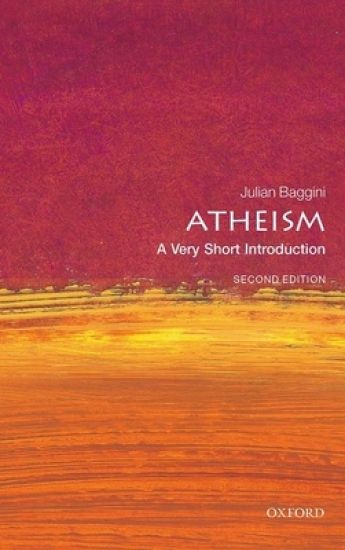
Atheism

Atheism

Julian Baggini

Oxford University Press
2021
nidottu
Atheism is often considered to be a negative or pessimistic belief which is characterized by a rejection of values and purpose and a fierce opposition to religion. This Very Short Introduction sets out to dispel the myths that surround atheism, arguing that most western atheism is so-named only because it exists in a tradition in which theism is the norm. Julian Baggini instead asserts that atheists are typically naturalists, who believe that meaning and morality are possible in a finite, natural world. This second edition includes a new chapter covering the impact and legacy of 'New Atheism', a powerful new movement in atheism in the early twenty first century, driven by books from authors such as Richard Dawkins and Sam Harris, and which is having a profound impact across the Western world. Baggini also considers whether East Asia has been historically atheist, and atheism in recent European history, before exploring the position of atheists around the world today. Throughout, the book presents an intellectual case for atheism that rests as much upon positive arguments for its truth as on negative arguments against religion. Very Short Introductions: Brilliant, Sharp, Inspiring ABOUT THE SERIES: The Very Short Introductions series from Oxford University Press contains hundreds of titles in almost every subject area. These pocket-sized books are the perfect way to get ahead in a new subject quickly. Our expert authors combine facts, analysis, perspective, new ideas, and enthusiasm to make interesting and challenging topics highly readable.
How to Think Like a Philosopher: Twelve Key Principles for More Humane, Balanced, and Rational Thinking
An invitation to the habits of good thinking from philosopher Julian Baggini. By now, it should be clear: in the face of disinformation and disaster, we cannot hot take, life hack, or meme our way to a better future. But how should we respond instead? In How to Think like a Philosopher, Julian Baggini turns to the study of reason itself for practical solutions to this question, inspired by our most eminent philosophers, past and present. Baggini offers twelve key principles for a more humane, balanced, and rational approach to thinking: pay attention; question everything (including your questions); watch your steps; follow the facts; watch your language; be eclectic; be a psychologist; know what matters; lose your ego; think for yourself, not by yourself; only connect; and don't give up. Each chapter is chockful of real-world examples showing these principles at work--from the discovery of penicillin to the fight for trans rights--and how they lead to more thoughtful conclusions. More than a book of tips and tricks (or ways to be insufferably clever at parties), How to Think like a Philosopher is an invitation to develop the habits of good reasoning that our world desperately needs.
How to Think Like a Philosopher: Twelve Key Principles for More Humane, Balanced, and Rational Thinking
An invitation to the habits of good thinking from philosopher Julian Baggini. By now, it should be clear: in the face of disinformation and disaster, we cannot hot take, life hack, or meme our way to a better future. But how should we respond instead? In How to Think like a Philosopher, Julian Baggini turns to the study of reason itself for practical solutions to this question, inspired by our most eminent philosophers, past and present. Baggini offers twelve key principles for a more humane, balanced, and rational approach to thinking: pay attention; question everything (including your questions); watch your steps; follow the facts; watch your language; be eclectic; be a psychologist; know what matters; lose your ego; think for yourself, not by yourself; only connect; and don't give up. Each chapter is chockful of real-world examples showing these principles at work--from the discovery of penicillin to the fight for trans rights--and how they lead to more thoughtful conclusions. More than a book of tips and tricks (or ways to be insufferably clever at parties), How to Think like a Philosopher is an invitation to develop the habits of good reasoning that our world desperately needs.
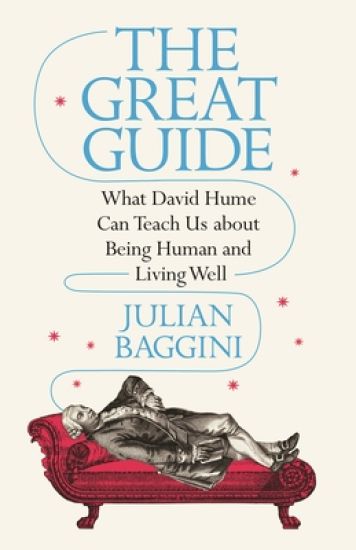
The Great Guide

The Great Guide

Julian Baggini

PRINCETON UNIVERSITY PRESS
2021
sidottu
Invaluable wisdom on living a good life from one of the Enlightenment's greatest philosophersDavid Hume (1711–1776) is perhaps best known for his ideas about cause and effect and his criticisms of religion, but he is rarely thought of as a philosopher with practical wisdom to offer. Yet Hume's philosophy is grounded in an honest assessment of nature—human nature in particular. The Great Guide is an engaging and eye-opening account of how Hume's thought should serve as the basis for a complete approach to life.In this enthralling book, Julian Baggini masterfully interweaves biography with intellectual history and philosophy to give us a complete vision of Hume's guide to life. He follows Hume on his life's journey, literally walking in the great philosopher's footsteps as Baggini takes readers to the places that inspired Hume the most, from his family estate near the Scottish border to Paris, where, as an older man, he was warmly embraced by French society. Baggini shows how Hume put his philosophy into practice in a life that blended reason and passion, study and leisure, and relaxation and enjoyment.The Great Guide includes 145 Humean maxims for living well, on topics ranging from the meaning of success and the value of travel to friendship, facing death, identity, and the importance of leisure. This book shows how life is far richer with Hume as your guide.
The Great Guide

The Great Guide

Julian Baggini

PRINCETON UNIVERSITY PRESS
2022
pokkari
Invaluable wisdom on living a good life from one of the Enlightenment's greatest philosophersDavid Hume (1711–1776) is perhaps best known for his ideas about cause and effect and his criticisms of religion, but he is rarely thought of as a philosopher with practical wisdom to offer. Yet Hume's philosophy is grounded in an honest assessment of nature—human nature in particular. The Great Guide is an engaging and eye-opening account of how Hume's thought should serve as the basis for a complete approach to life.In this enthralling book, Julian Baggini masterfully interweaves biography with intellectual history and philosophy to give us a complete vision of Hume's guide to life. He follows Hume on his life's journey, literally walking in the great philosopher's footsteps as Baggini takes readers to the places that inspired Hume the most, from his family estate near the Scottish border to Paris, where, as an older man, he was warmly embraced by French society. Baggini shows how Hume put his philosophy into practice in a life that blended reason and passion, study and leisure, and relaxation and enjoyment.The Great Guide includes 145 Humean maxims for living well, on topics ranging from the meaning of success and the value of travel to friendship, facing death, identity, and the importance of leisure. This book shows how life is far richer with Hume as your guide.
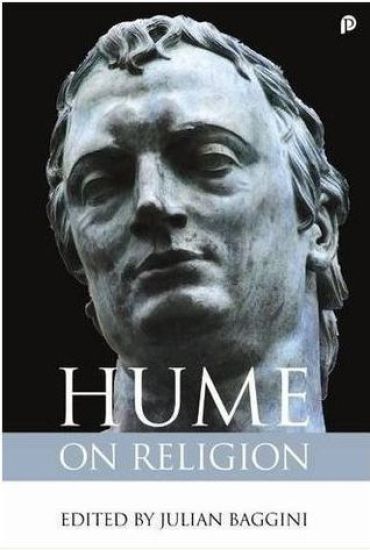
Hume on Religion

Hume on Religion

Julian Baggini

The Philosophy Press
2010
nidottu
This book presents David Hume's writings on religion, providing an account of a state of the world and of human nature entirely different from the present. It retains Archaic spellings, except on certain occasions when these were an obstacle to comprehension.
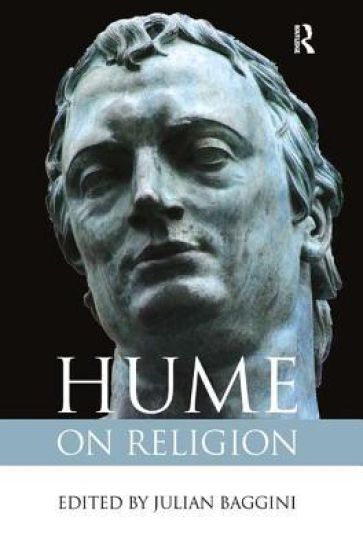
Hume on Religion

Hume on Religion

Julian Baggini

Routledge
2017
sidottu
First Published in 2016. David Hume is widely believed to be Britain’s greatest ever philosopher, and his writings on religion are as relevant today as they were in the eighteenth century. This volume gathers together these disparate writings into one handy volume. It includes both his books, ‘Dialogues concerning Natural Religion’ and ‘The Natural History of Religion’, the chapters on miracles and the argument from design from ‘An Enquiry concerning Human Understanding’, and two lesser- known but brilliant essays, ‘On the Immortality of the Soul’ and ‘Of Superstition and Enthusiasm’.
Philosophy: All That Matters

Philosophy: All That Matters

Julian Baggini

John Murray Learning
2012
nidottu
"Philosophy is like fish: best presented without too much adornment; hard to get just right and easy to ruin."What's the point of it all? In Philosophy: All That Matters, bestselling philosopher Julian Baggini shows how abstract ideas feed into the most important existential questions of all. He tells the story of Philosophy, bringing together and interlinking all its different areas, to create what is perhaps the first non-historical narrative of the subject - one that takes you right to its heart. It places philosophy firmly at the centre of what makes us human. From ethics and metaphysics, to the philosophy of science and religion, Baggini explains what makes us different to other species, why philosophy lies at the heart of that difference, and why that matters.
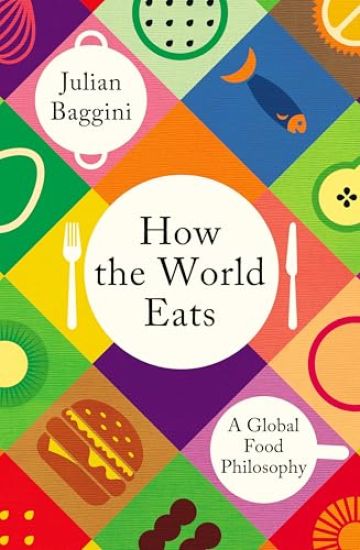
How the World Eats: A Global Food Philosophy
A New York Times Book Review Editor's Choice A Next Big Idea Club must-read selection From the bestselling author of How the World Thinks, an exploration of how we grow, make, buy and eat our food around the world--and a proposal for a global philosophy of food. How we live is shaped by how we eat. You can see this in the vastly different approaches to growing, preparing and eating food around the world, such as the hunter-gatherer Hadza in Tanzania whose sustainable lifestyle is under threat in a crowded planet, or Western societies whose food is farmed or bred in vast intensive enterprises. And most of us now rely on a complex global food web of production, distribution, consumption and disposal, which is now contending with unprecedented challenges. The need for a better understanding of how we feed ourselves has never been more urgent. In this wide-ranging and definitive book, philosopher Julian Baggini expertly delves into the best and worst food practises in a huge array of different societies, past and present. His exploration takes him from cutting-edge technologies, such as new farming methods, cultured meat, GM and astronaut food, to the ethics and health of ultra processed food and aquaculture, as he takes a forensic look at the effectiveness of our food governance, the difficulties of food wastage and the effects of commodification. Extracting essential principles to guide how we eat in the future, How the World Eats is a thought-provoking and illuminating call for a pluralistic, humane, resourceful and equitable global food philosophy that will guide us towards a food system fit for the twenty-first century and beyond.
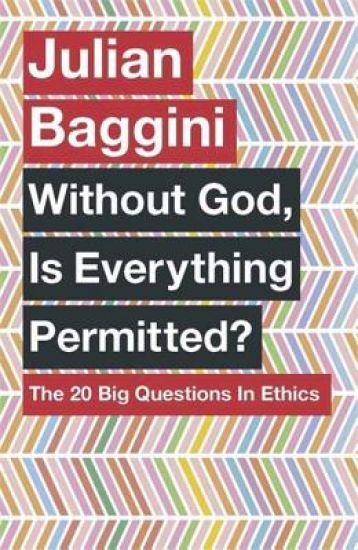
Without God, Is Everything Permitted?

Without God, Is Everything Permitted?

Julian Baggini

Quercus Publishing
2014
nidottu
Can it ever be right to kill? Is terrorism ever justified? Should euthanasia be legal? Are some people superior to others? Do animals have rights? Some ethical judgements are easy: one side is wrong and the other is right. But how do we handle the really tough 'right vs right' dilemmas, where each side has strong moral arguments? In Without God, is Everything Permitted? bestselling author and philosopher Julian Baggini clear-sightedly and compassionately examines 20 of the most complex contemporary ethical dilemmas. Whether it's asking if torture is always wrong, or if discrimination can ever be good, this book will help you sort out what you really believe about the issues that matter most.
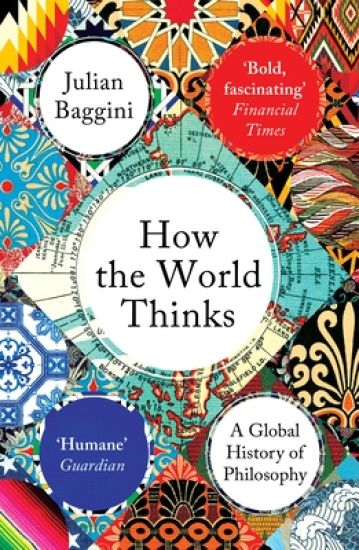
How the World Thinks

How the World Thinks

Julian Baggini

Granta Books
2019
nidottu
'There to fill the Sapiens-size hole in your life' Observer A groundbreaking global overview of philosophy, travelling the world to provide a wide-ranging map of human thought One of the great unexplained wonders of history is that philosophy flowered entirely separately in China, India and Ancient Greece at more or less the same time. These writings would have a profound impact on the development of distinctive cultures in different parts of the world. In How the World Thinks Julian Baggini sets out to expand our horizons, exploring the philosophies of Japan, India, China and the Muslim world, as well as the lesser-known oral traditions of Africa and Australia's first peoples. Interviewing thinkers from around the globe, Baggini asks questions such as: why is the West is more individualistic than the East? What makes secularism a less powerful force in the Islamic world than in Europe? And how has China resisted pressures for greater political freedom? Baggini shows that by gaining greater knowledge of how others think we take the first step to a greater understanding of ourselves. 'Terrific. The intellectual and spiritual generosity of this book makes it an essential text for our fractious and dangerously divided era' Richard Holloway, author of Stories We Tell Ourselves 'This bold fascinating book seeks to inhabit other philosophical traditions, with humility but without patronisingly exempting them from the critique he applies to ours... Deft [and] rigorous' Jane O'Grady, Financial Times
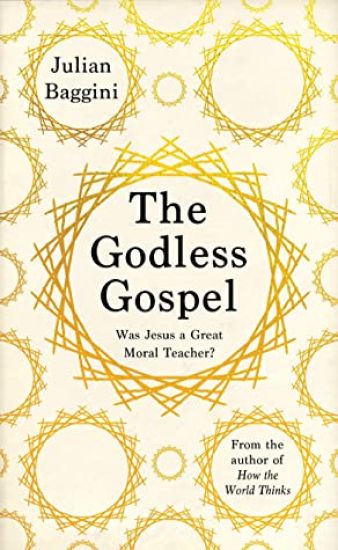
The Godless Gospel

The Godless Gospel

Julian Baggini

Granta Books
2021
nidottu
In The Godless Gospel, Julian Baggini challenges our assumptions about Jesus - and the Christian values he promotes - by focusing solely on his teachings in the Gospel. Stripping away the religious elements, Baggini finds that Jesus's words amount to a purposeful and powerful philosophy, one that still remains applicable to the world we live in today.
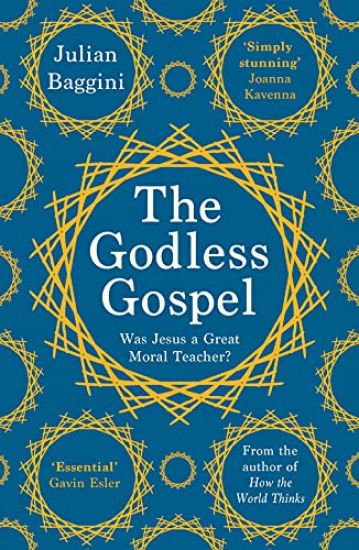
The Godless Gospel

The Godless Gospel

Julian Baggini

Granta Books
2020
nidottu
Even if we don't believe that Jesus was the son of God, we tend to think he was a great moral teacher. But was he? And how closely do idealised values such as our love of the family, helping the needy, and the importance of kindness, match Jesus's original tenets?Julian Baggini challenges our assumptions about Christian values - and about Jesus - by focusing on Jesus's teachings in the Gospels, stripping away the religious elements such as the accounts of miracles or the resurrection of Christ. Reading closely this new 'godless' Gospel, included as an appendix, Baggini asks how we should understand Jesus's attitude to the renunciation of the self, to politics, or to sexuality, as expressed in Jesus's often elusive words.An atheist from a Catholic background, Baggini introduces us to a more radical Jesus than popular culture depicts. And as he journeys deeper into Jesus's worldview, and grapples with Jesus's sometimes contradictory messages, against his scepticism he finds that Jesus's words amount to a purposeful and powerful philosophy, which has much to teach us today.
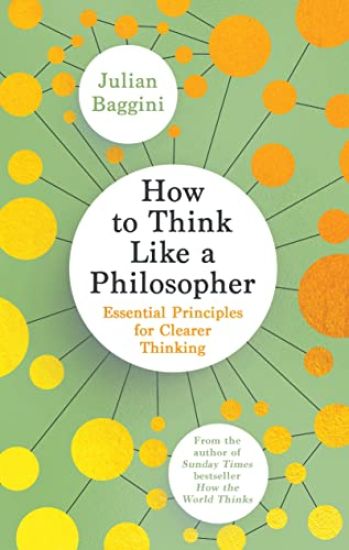
How to Think Like a Philosopher

How to Think Like a Philosopher

Julian Baggini

GRANTA BOOKS
2023
sidottu
The Sunday Times bestselling author of How the World Thinks shares his twelve key principles for a more humane and balanced approach to thinking in this vital new book. -- Pay attention. As politics slides toward impulsivity, and outrage bests rationality, how can philosophy help us critically engage with real world problems? Question everything. Drawing on decades of work in philosophy including a huge range of interviews with contemporary philosophers, Julian Baggini sets out how philosophical thought can promote incisive thinking. Introducing everyday examples and contemporary political concerns - from climate change to implicit bias - How to Think Like a Philosopher is a revelatory exploration of the techniques, methods and principles that guide philosophy, and how they can be applied to our own lives. Seek clarity, not certainty. Covering canonical philosophers and focal movements, as well as introducing new voices in contemporary philosophy, this is both a short history of philosophy and an accessible, practical guide to good thinking. Through twelve key principles, Julian Baggini outlines a pathway to a more humane, balanced and rational approach to thinking, to politics, and to life.
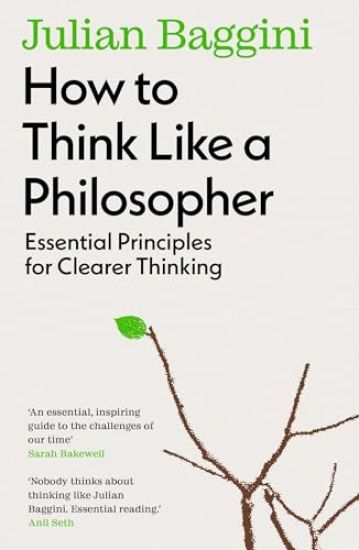
How to Think Like a Philosopher

How to Think Like a Philosopher

Julian Baggini

GRANTA BOOKS
2024
nidottu
As politics slides toward impulsivity, and outrage bests rationality, how can philosophy help us critically engage with the world? How to Think Like A Philosopher is a revelatory exploration of the methods, tenets and attitudes of thought that guide philosophy, and how they can be applied to our own lives. Drawing on decades of enquiry and a huge range of interviews, Julian Baggini identifies twelve key principles that promote incisive thinking. Pay attention; question everything; seek clarity, not certainty: these are just a few of philosophy's guiding maxims which can be applied to everything from understanding the impact of climate change to correctly appraising our own temperaments. Both a fresh introduction to philosophy covering canonical and contemporary philosophers, and an essential, practical guide to good thinking, How to Think Like a Philosopher shows us the way to a more humane, balanced and rational approach to thinking, to politics, and to life.
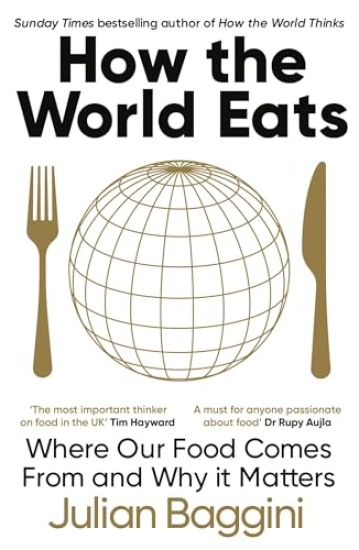
How the World Eats

How the World Eats

Julian Baggini

GRANTA BOOKS
2024
sidottu
How we live is shaped by how we eat. You can see this in the vastly different approaches to growing, preparing and eating food around the world, such as the hunter-gatherer Hadza in Tanzania whose sustainable lifestyle is under threat in a crowded planet, or Western societies whose food is farmed or bred in vast intensive enterprises. And most of us now rely on a complex global food web of production, distribution, consumption and disposal, which is now contending with unprecedented challenges. The need for a better understanding of how we feed ourselves has never been more urgent. In this wide-ranging and definitive book, philosopher Julian Baggini expertly delves into the best and worst food practises in a huge array of different societies, past and present. His exploration takes him from cutting-edge technologies, such as new farming methods, cultured meat, GM and astronaut food, to the ethics and health of ultra processed food and aquaculture, as he takes a forensic look at the effectiveness of our food governance, the difficulties of food wastage and the effects of commodification. Extracting essential principles to guide how we eat in the future, How the World Eats advocates for a pluralistic, humane, resourceful and equitable global food philosophy, so we can build a food system fit for the twenty-first century and beyond.
How the World Eats

How the World Eats

Julian Baggini

GRANTA BOOKS
2025
nidottu
How we live is shaped by how we eat. You can see this in the vastly different approaches to growing, preparing and eating food around the world, such as the hunter-gatherer Hadza in Tanzania whose sustainable lifestyle is under threat in a crowded planet, or Western societies whose food is farmed or bred in vast intensive enterprises. And most of us now rely on a complex global food web of production, distribution, consumption and disposal, which is now contending with unprecedented challenges. The need for a better understanding of how we feed ourselves has never been more urgent. In this wide-ranging and definitive book, philosopher Julian Baggini expertly delves into the best and worst food practises in a huge array of different societies, past and present. His exploration takes him from cutting-edge technologies, such as new farming methods, cultured meat, GM and astronaut food, to the ethics and health of ultra processed food and aquaculture, as he takes a forensic look at the effectiveness of our food governance, the difficulties of food wastage and the effects of commodification. Extracting essential principles to guide how we eat in the future, How the World Eats advocates for a pluralistic, humane, resourceful and equitable global food philosophy, so we can build a food system fit for the twenty-first century and beyond.
How to Think Like a Philosopher

How to Think Like a Philosopher

Julian Baggini

Grantham Books Services
2023
nidottu
Pay attention. As politics slides toward impulsivity, and outrage bests rationality, how can philosophy help us critically engage with real world problems? Question everything. Drawing on decades of work in philosophy including a huge range of interviews with contemporary philosophers, Julian Baggini sets out how philosophical thought can promote incisive thinking. Introducing everyday examples and contemporary political concerns - from climate change to implicit bias - How to Think Like a Philosopher is a revelatory exploration of the techniques, methods and principles that guide philosophy, and how they can be applied to our own lives. Seek clarity, not certainty. Covering canonical philosophers and focal movements, as well as introducing new voices in contemporary philosophy, this is both a short history of philosophy and an accessible, practical guide to good thinking. Through twelve key principles, Julian Baggini outlines a pathway to a more humane, balanced and rational approach to thinking, to politics, and to life.