Kirjojen hintavertailu. Mukana 12 083 983 kirjaa ja 12 kauppaa.

Kirjahaku

Etsi kirjoja tekijän nimen, kirjan nimen tai ISBN:n perusteella.

6 kirjaa tekijältä Julian Caldecott

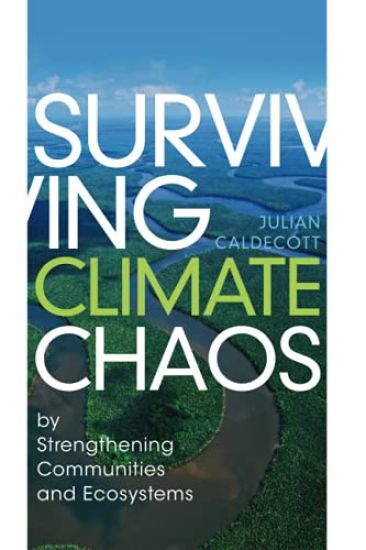
Surviving Climate Chaos

Surviving Climate Chaos

Julian Caldecott

Cambridge University Press
2021
pokkari
Surviving climate chaos needs communities and ecosystems able to cope with near-random impacts. Their strength depends upon their integrity, so preserving and restoring this is essential. Total climate breakdown might be postponed by extreme efforts to conserve carbon and recapture pollutants, but climate chaos everywhere is now inevitable. Adaptation efforts by Paris Agreement countries are converging on community-based and ecosystem-based strategies, and case studies in Bolivia, Nepal and Tanzania confirm that these are the best ways forward. But success depends on local empowerment through forums, ecosystem tenure security and environmental education. When replicated, networked and shielded by governments, they can strengthen societies against climate chaos while achieving sustainable development. These vital messages are highlighted for all those who seek or have already found a role in promoting adaptation: for students, researchers and teachers, government officials and aid professionals, and for everyone who is now living under threat of climate chaos.
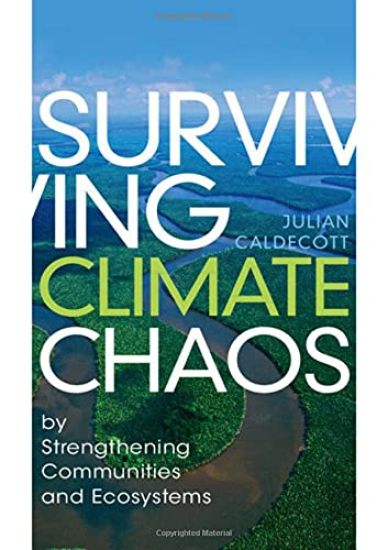
Surviving Climate Chaos

Surviving Climate Chaos

Julian Caldecott

Cambridge University Press
2021
sidottu
Surviving climate chaos needs communities and ecosystems able to cope with near-random impacts. Their strength depends upon their integrity, so preserving and restoring this is essential. Total climate breakdown might be postponed by extreme efforts to conserve carbon and recapture pollutants, but climate chaos everywhere is now inevitable. Adaptation efforts by Paris Agreement countries are converging on community-based and ecosystem-based strategies, and case studies in Bolivia, Nepal and Tanzania confirm that these are the best ways forward. But success depends on local empowerment through forums, ecosystem tenure security and environmental education. When replicated, networked and shielded by governments, they can strengthen societies against climate chaos while achieving sustainable development. These vital messages are highlighted for all those who seek or have already found a role in promoting adaptation: for students, researchers and teachers, government officials and aid professionals, and for everyone who is now living under threat of climate chaos.
Aid Performance and Climate Change

Aid Performance and Climate Change

Julian Caldecott

Routledge
2017
sidottu
The richer countries spend about US$165 billion yearly on overseas aid, mainly to keep human development going. These efforts are undermined by climate change, water-catchment damage, biodiversity loss, and desertification, and their interactions with social systems at all scales, which few aid designs or evaluations fully address. This must change if aid performance is to be improved. Constraints to be overcome include limited understanding of the very complex systems that aid investments affect, and of the ecology behind climate change adaptation and mitigation. Aid Performance and Climate Change targets these problems and others, by explaining how to use multiple points of view to describe each aid investment as a complex system in its own unique context. With examples throughout, it reviews cases, ideas, and options for mitigation using technology and ecology, and for adaptation by preserving resilience and diversity, while exploring related priorities, treaties, and opportunities.Combining an empirical, eye-witness approach with methodological conclusions, this book is an essential resource for those looking to improve aid design and evaluation, and will be a necessary tool in training the next generation of aid professionals to respond to the causes and consequences of climate change.
Aid Performance and Climate Change

Aid Performance and Climate Change

Julian Caldecott

Routledge
2017
nidottu
The richer countries spend about US$165 billion yearly on overseas aid, mainly to keep human development going. These efforts are undermined by climate change, water-catchment damage, biodiversity loss, and desertification, and their interactions with social systems at all scales, which few aid designs or evaluations fully address. This must change if aid performance is to be improved. Constraints to be overcome include limited understanding of the very complex systems that aid investments affect, and of the ecology behind climate change adaptation and mitigation. Aid Performance and Climate Change targets these problems and others, by explaining how to use multiple points of view to describe each aid investment as a complex system in its own unique context. With examples throughout, it reviews cases, ideas, and options for mitigation using technology and ecology, and for adaptation by preserving resilience and diversity, while exploring related priorities, treaties, and opportunities.Combining an empirical, eye-witness approach with methodological conclusions, this book is an essential resource for those looking to improve aid design and evaluation, and will be a necessary tool in training the next generation of aid professionals to respond to the causes and consequences of climate change.