Kirjojen hintavertailu. Mukana 12 390 323 kirjaa ja 12 kauppaa.

Kirjahaku

Etsi kirjoja tekijän nimen, kirjan nimen tai ISBN:n perusteella.

13 kirjaa tekijältä Julian Murphet

Faulkner's Media Romance

Faulkner's Media Romance

Julian Murphet

Oxford University Press Inc
2019
nidottu
This book treats William Faulkner's major fiction--from Flags in the Dust through to Absalom, Absalom!--to a searching reappraisal under the spotlight of a media-historical inquiry. It proposes that Faulkner's inveterate attraction to the paradigms of romance was disciplined and masked by the recurrent use of metaphorical figures borrowed from the new media ecology. Faulkner dressed up his romance materials in the technological garb of radio, gramophony, photography, and cinema, along with the transportational networks of road and air that were being installed in the 1920s. His modernism emerges from a fraght but productive interplay between his anachronistic predilection for chivalric chichés and his extraordinarily knowledgeable interest in the most up-to-date media institutions and forms. Rather than see Faulkner as a divided author, who worked for money in the magazines and studios while producing his serious fiction in despite of their symbolic economies, this study demonstrates how profoundly his mature art was shot through with the figures and dynamics of the materials he publicly repudiated. The result is a richer and more nuanced understanding of the dialectics of his art.
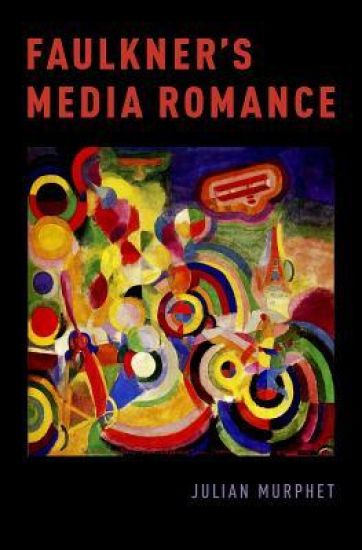
Faulkner's Media Romance

Faulkner's Media Romance

Julian Murphet

Oxford University Press Inc
2017
sidottu
This book treats William Faulkner's major fiction--from Flags in the Dust through to Absalom, Absalom!--to a searching reappraisal under the spotlight of a media-historical inquiry. It proposes that Faulkner's inveterate attraction to the paradigms of romance was disciplined and masked by the recurrent use of metaphorical figures borrowed from the new media ecology. Faulkner dressed up his romance materials in the technological garb of radio, gramophony, photography, and cinema, along with the transportational networks of road and air that were being installed in the 1920s. His modernism emerges from a fraght but productive interplay between his anachronistic predilection for chivalric chichés and his extraordinarily knowledgeable interest in the most up-to-date media institutions and forms. Rather than see Faulkner as a divided author, who worked for money in the magazines and studios while producing his serious fiction in despite of their symbolic economies, this study demonstrates how profoundly his mature art was shot through with the figures and dynamics of the materials he publicly repudiated. The result is a richer and more nuanced understanding of the dialectics of his art.
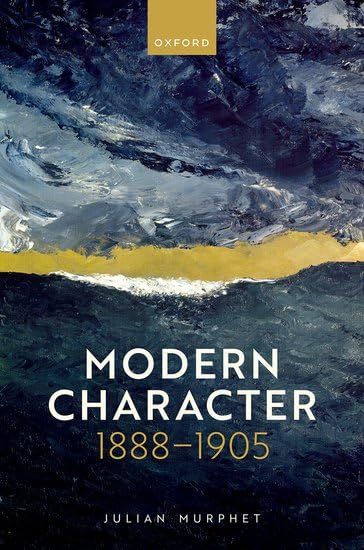
Modern Character

Modern Character

Julian Murphet

Oxford University Press
2023
sidottu
How was modern character made or remade at the turn of the twentieth century? Modern Character: 1888-1905 considers a range of literary and dramatic texts, showcasing the extraordinary efforts of various writers to rethink and reinvent 'human character' during this period. Arguing that many of the most significant breakthroughs happened in the small theatres of Europe in the 1890s, the book's first section demonstrates how the countervailing currents of Naturalism and Symbolism created a vortex in which time-honoured truisms about character consistency, depth, and verisimilitude were jettisoned. Works by Ibsen, Strindberg, Maeterlinck, and Chekhov provide evidence of a searching and critical campaign against assumed models of characterization. The second section turns to contemporary prose narratives, with attention to Knut Hamsun, Oscar Wilde, Joris-Karl Huysmans, Gabriele D'Annunzio, Henry James, George Egerton, Edith Wharton, Kate Chopin, and Joseph Conrad, to ask what writers working in the novel, novella, and short-story forms were doing to contest prevailing expectations about represented persons. Inconsistency, bad faith, fragmentation, and unconscious motives creep into the character spaces of these fictions. Character description recedes and plots disintegrate; a penumbral negativity intrudes just where identification and sympathy might have been achieved. Ultimately, Julian Murphet proposes that the 'modern character' emerging over this decade and a half presents a radical rethinking of a venerable category of narrative and dramatic art, with profound consequences for the coming century.
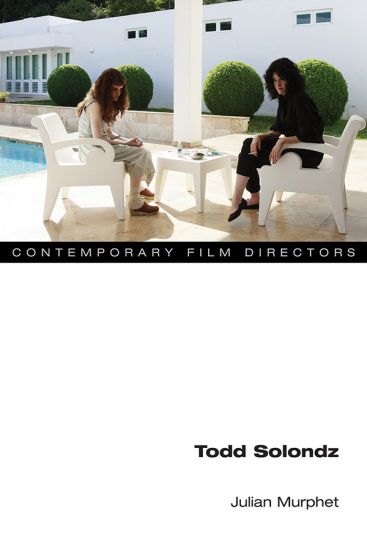
Todd Solondz

Todd Solondz

Julian Murphet

University of Illinois Press
2019
sidottu
Films like Welcome to the Dollhouse and Happiness established Todd Solondz as independent cinema's premier satirist. Blending a trademark black humor into atmospheres of grueling bleakness, Solondz repeatedly takes moviegoers into a bland suburban junk space peopled by the damaged, the neglected, and the depraved. Julian Murphet appraises the career of the controversial, if increasingly ignored, indie film auteur. Through close readings and a discussion with the director, Murphet dissects how Solondz's themes and techniques serve stories laden with hot-button topics like pedophilia, rape, and family and systemic cruelty. Solondz's uncompromising return to the same motifs, stylistic choices, and characters rejects any idea of aesthetic progression. Instead, he embraces an art of diminishing returns that satirizes the laws of valuation sustaining what we call cinema. It also reflects both Solondz's declining box office fortunes and the changing economics of independent film in an era of financial contraction.
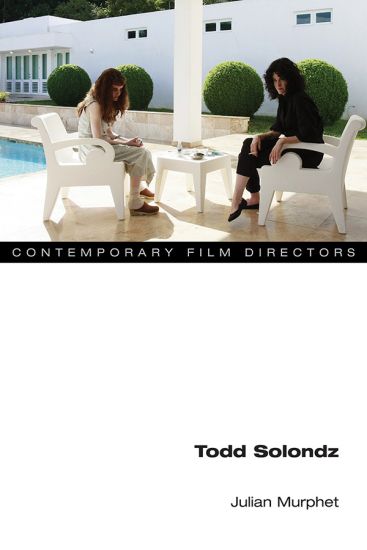
Todd Solondz

Todd Solondz

Julian Murphet

University of Illinois Press
2019
nidottu
Films like Welcome to the Dollhouse and Happiness established Todd Solondz as independent cinema's premier satirist. Blending a trademark black humor into atmospheres of grueling bleakness, Solondz repeatedly takes moviegoers into a bland suburban junk space peopled by the damaged, the neglected, and the depraved. Julian Murphet appraises the career of the controversial, if increasingly ignored, indie film auteur. Through close readings and a discussion with the director, Murphet dissects how Solondz's themes and techniques serve stories laden with hot-button topics like pedophilia, rape, and family and systemic cruelty. Solondz's uncompromising return to the same motifs, stylistic choices, and characters rejects any idea of aesthetic progression. Instead, he embraces an art of diminishing returns that satirizes the laws of valuation sustaining what we call cinema. It also reflects both Solondz's declining box office fortunes and the changing economics of independent film in an era of financial contraction.
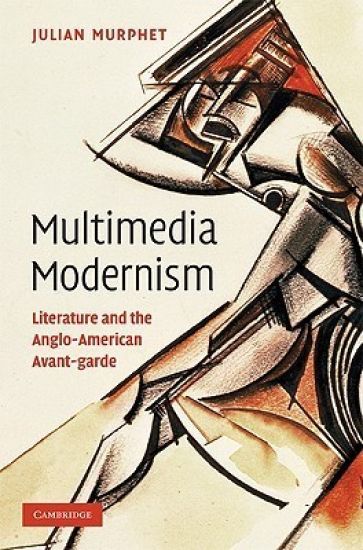
Multimedia Modernism

Multimedia Modernism

Julian Murphet

Cambridge University Press
2009
sidottu
Multimedia Modernism explores the complex effects of a new media environment on avant-garde literary production in the early twentieth century. During this period, the likes of Gertrude Stein, Ezra Pound and Louis Zukofsky wrote works which, in one way or another, attest to the immense effect that photography, cinematography, mechanical print technology and visual advertising had on the established arts. Re-reading modernism's technological origins through the lens of media theory, this innovative study proposes a serious new methodological approach to modernism in general. Examining a wide range of literature that includes Gertrude Stein's contributions to Camera Work, Louis Zukofsky's groundbreaking poem 'A' and Wyndham Lewis's celebrated Blast, this book embeds literary revolution within media evolution to show that literary criticism and media history have a lot to learn from each other.
Literature and Race in Los Angeles

Literature and Race in Los Angeles

Julian Murphet

Cambridge University Press
2001
sidottu
Los Angeles is both the most fragmented and the most minoritized metropolis in America, and its most luridly abstract and aestheticized city. With more than eighty-five languages being spoken in its classrooms, and one homogeneous visual language emanating from its entertainment industry, LA radically challenges the prospects of that archaic representational medium: literature. In its investigation of the work of Bret Easton Ellis, James Ellroy, Anna Deveare Smith and others, Literature and Race in Los Angeles articulates their aesthetic preoccupations with the structures of social space in the city. Harnessing some of the theoretical insights of Henri Lefebvre and the 'LA school' of geographers, Murphet demonstrates the versatility of literary production in LA and speculates about the fortunes of literature in a predominantly visual culture.
Literature and Race in Los Angeles

Literature and Race in Los Angeles

Julian Murphet

Cambridge University Press
2001
pokkari
Los Angeles is both the most fragmented and the most minoritized metropolis in America, and its most luridly abstract and aestheticized city. With more than eighty-five languages being spoken in its classrooms, and one homogeneous visual language emanating from its entertainment industry, LA radically challenges the prospects of that archaic representational medium: literature. In its investigation of the work of Bret Easton Ellis, James Ellroy, Anna Deveare Smith and others, Literature and Race in Los Angeles articulates their aesthetic preoccupations with the structures of social space in the city. Harnessing some of the theoretical insights of Henri Lefebvre and the 'LA school' of geographers, Murphet demonstrates the versatility of literary production in LA and speculates about the fortunes of literature in a predominantly visual culture.
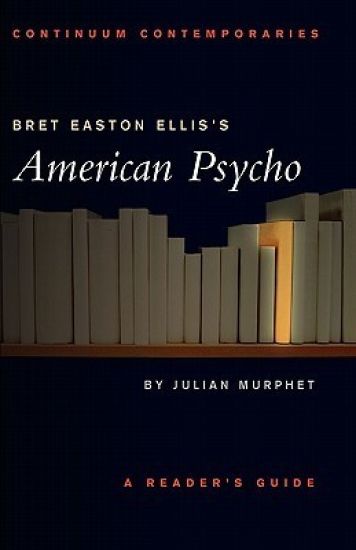
Bret Easton Ellis's American Psycho

Bret Easton Ellis's American Psycho

Julian Murphet

Continuum International Publishing Group Ltd.
2002
nidottu
This is part of a new series of guides to contemporary novels. The aim of the series is to give readers accessible and informative introductions to some of the most popular, most acclaimed and most influential novels of recent years from The Remains of the Day to White Teeth. A team of contemporary fiction scholars from both sides of the Atlantic has been assembled to provide a thorough and readable analysis of each of the novels in question.
Prison Writing in the Twentieth Century

Prison Writing in the Twentieth Century

Julian Murphet

EDINBURGH UNIVERSITY PRESS
2023
sidottu
Provides a comprehensive survey of twentieth-century prison writing from around the world Analyses texts from the UK, USA, Australia, Kenya, South Africa, Egypt, Ireland, Germany, and the USSR Texts by male and female writers considered with structural balance Approaches texts chronologically within an historical sequence of social and institutional changes Brings a specifically literary approach to material generally approached sociologically and criminologically Tracking the evolutionary arc of prison writing across the twentieth century in an international and comparative framework, this study proposes an integrated account of the major shifts and movements in this relatively neglected genre of autobiography. Dwelling on works memoirs, novellas, poems by actual detainees, the book offers a close stylistic analysis of 12 important texts to show how prison writing moved away from the confessional and self-scrutinizing modes of an earlier tradition, to espouse openly political sentiments and solidarities. Looking at works by Oscar Wilde, Rosa Luxemburg, Ezra Pound, Primo Levi, Bobby Sands, Angela Davis, Ng?g? wa Thiong'o, and Behrouz Boochani (among others), the book shows how themes such as the annihilation of experience, dehumanization, sensory deprivation, brutality, and numbing routine are woven into distinctive textual artefacts that give evidence of an abiding human resilience in the face of raw state power.
Prison Writing in the Twentieth Century

Prison Writing in the Twentieth Century

Julian Murphet

EDINBURGH UNIVERSITY PRESS
2025
nidottu
Tracking the evolutionary arc of prison writing across the twentieth century in an international and comparative framework, this study proposes an integrated account of the major shifts and movements in this relatively neglected genre of autobiography. Dwelling on works-memoirs, novellas, poems-by actual detainees, the book offers a close stylistic analysis of 12 important texts to show how prison writing moved away from the confessional and self-scrutinizing modes of an earlier tradition, to espouse openly political sentiments and solidarities. Looking at works by Oscar Wilde, Rosa Luxemburg, Ezra Pound, Primo Levi, Bobby Sands, Angela Davis, Ngg wa Thiong'o, and Behrouz Boochani (among others), the book shows how themes such as the annihilation of experience, dehumanization, sensory deprivation, brutality, and numbing routine are woven into distinctive textual artefacts that give evidence of an abiding human resilience in the face of raw state power.
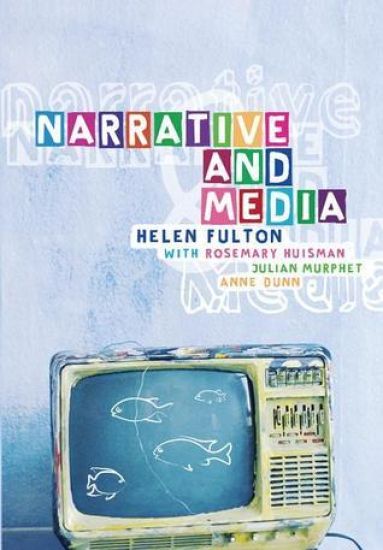
Narrative and Media

Narrative and Media

Rosemary Huisman; Julian Murphet; Anne Dunn

Cambridge University Press
2005
pokkari
Narrative and Media, first published in 2006, applies narrative theory to media texts, including film, television, radio, advertising, and print journalism. Drawing on research in structuralist and post-structuralist theory, as well as functional grammar and image analysis, the book explains the narrative techniques which shape media texts and offers interpretive tools for analysing meaning and ideology. Each section looks at particular media forms and shows how elements such as chronology, character, and focalization are realized in specific texts. As the boundaries between entertainment and information in the mass media continue to dissolve, understanding the ways in which modes of story-telling are seamlessly transferred from one medium to another, and the ideological implications of these strategies, is an essential aspect of media studies.
Ranciere and Literature

Ranciere and Literature

Grace Hellyer; Julian Murphet

Edinburgh University Press
2017
nidottu
These 13 original essays engage with Ranciere's accounts of literature from across his work, putting his conceptual apparatus to work in acts of literary criticism. From his archival investigations of the literary efforts of 19th-century workers to his engagements with specific novelists and poets, and from his concept of 'literarity' to his central positioning of the novel in his account of the three 'regimes' of literary practice, this collection unearths, consolidates, evaluates and critiques Ranciere's work on literature.