Kirjojen hintavertailu. Mukana 12 475 080 kirjaa ja 12 kauppaa.

Kirjahaku

Etsi kirjoja tekijän nimen, kirjan nimen tai ISBN:n perusteella.

3 kirjaa tekijältä Julie Buckner Armstrong

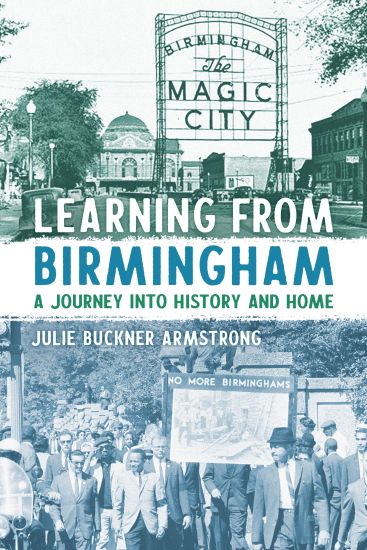
Learning from Birmingham

Learning from Birmingham

Julie Buckner Armstrong

THE UNIVERSITY OF ALABAMA PRESS
2023
nidottu
A steel town daughter’s search for truth and beauty in Birmingham, Alabama “As Birmingham goes, so goes the nation,” Fred Shuttlesworth observed when he invited Martin Luther King Jr. to the city for the transformative protests of 1963. From the height of the Civil Rights Movement through its long aftermath, images of police dogs, fire hoses and four girls murdered when Ku Klux Klan members bombed the Sixteenth Street Baptist Church have served as an uncomfortable racial mirror for the nation. Like many white people who came of age in the Civil Rights Movement’s wake, Julie Buckner Armstrong knew little about this history. Only after moving away and discovering writers like Toni Morrison and Alice Walker did she realize how her hometown and family were part of a larger, ongoing story of struggle and injustice. When Armstrong returned to Birmingham decades later to care for her aging mother, Shuttlesworth’s admonition rang in her mind. By then an accomplished scholar and civil rights educator, Armstrong found herself pondering the lessons Birmingham holds for a twenty-first century America. Those lessons extended far beyond what a 2014 Teaching Tolerance report describes as the common distillation of the Civil Rights Movement into “two names and four words: Martin Luther King Jr, Rosa Parks, and ‘I have a dream.’” Seeking to better understand a more complex local history, its connection to broader stories of oppression and resistance, and her own place in relation to it, Armstrong embarked on a journey to unravel the standard Birmingham narrative to see what she would find. Beginning at the center, with her family’s 1947 arrival to a housing project near the color line, within earshot of what would become known as Dynamite Hill, Armstrong works her way over time and across the map. Weaving in stories of her white working-class family, classmates, and others not traditionally associated with Birmingham’s civil rights history, including members of the city’s LGBTQ community, she forges connections between the familiar and lesser-known. The result is a nuanced portrait of Birmingham--as seen in public housing, at old plantations, in segregated neighborhoods, across contested boundary lines, over mountains, along increasingly polluted waterways, beneath airport runways, on highways cutting through town, and under the gaze of the iconic statue of Vulcan. In her search for truth and beauty in Birmingham, Armstrong draws on the powers of place and storytelling to dig into the cracks, complicating easy narratives of civil rights progress. Among the discoveries she finds in America’s racial mirror is a nation that has failed to recognize itself in the horrific images from Birmingham’s past and to acknowledge the continuing inequalities that make up the Civil Right’s Movement’s unfinished business. Learning from Birmingham reminds us that stories of civil rights, structural oppression, privilege, abuse, race and gender bias, and inequity are difficult and complicated, but their telling, especially from multiple stakeholder perspectives, is absolutely necessary.
Mary Turner and the Memory of Lynching

Mary Turner and the Memory of Lynching

Julie Buckner Armstrong

University of Georgia Press
2011
sidottu
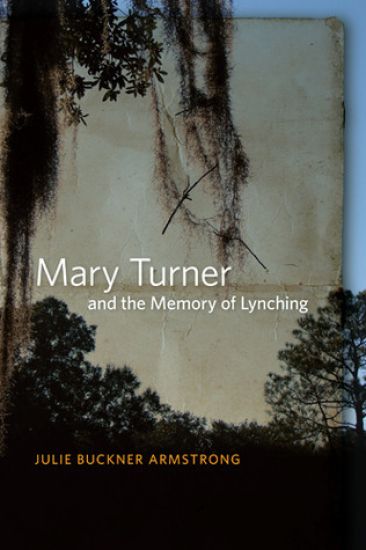
Mary Turner and the Memory of Lynching traces the reaction of activists, artists, writers, and local residents to the brutal lynching of a pregnant woman near Valdosta, Georgia. In 1918, the murder of a white farmer led to a week of mob violence that claimed the lives of at least eleven African Americans, including Hayes Turner. When his wife Mary vowed to press charges against the killers, she too fell victim to the mob.Mary’s lynching was particularly brutal and involved the grisly death of her eight-month-old fetus. It led to both an entrenched local silence and a widespread national response in newspaper and magazine accounts, visual art, film, literature, and public memorials. Turner’s story became a centerpiece of the Anti-Lynching Crusaders campaign for the 1922 Dyer Bill, which sought to make lynching a federal crime. Julie Buckner Armstrong explores the complex and contradictory ways this horrific event was remembered in works such as Walter White’s report in the NAACP’s newspaper the Crisis, the “Kabnis” section of Jean Toomer’s Cane, Angelina Weld Grimké’s short story “Goldie,” and Meta Fuller’s sculpture Mary Turner: A Silent Protest against Mob Violence.Like those of Emmett Till and Leo Frank, Turner’s story continues to resonate on multiple levels. Armstrong’s work provides insight into the different roles black women played in the history of lynching: as victims, as loved ones left behind, and as those who fought back. The crime continues to defy conventional forms of representation, illustrating what can, and cannot, be said about lynching and revealing the difficulty and necessity of confronting this nation’s legacy of racial violence.
Mary Turner and the Memory of Lynching

Mary Turner and the Memory of Lynching

Julie Buckner Armstrong

University of Georgia Press
2011
pokkari
Mary Turner and the Memory of Lynching traces the reaction of activists, artists, writers, and local residents to the brutal lynching of a pregnant woman near Valdosta, Georgia. In 1918, the murder of a white farmer led to a week of mob violence that claimed the lives of at least eleven African Americans, including Hayes Turner. When his wife Mary vowed to press charges against the killers, she too fell victim to the mob.Mary’s lynching was particularly brutal and involved the grisly death of her eight-month-old fetus. It led to both an entrenched local silence and a widespread national response in newspaper and magazine accounts, visual art, film, literature, and public memorials. Turner’s story became a centerpiece of the Anti-Lynching Crusaders campaign for the 1922 Dyer Bill, which sought to make lynching a federal crime. Julie Buckner Armstrong explores the complex and contradictory ways this horrific event was remembered in works such as Walter White’s report in the NAACP’s newspaper the Crisis, the “Kabnis” section of Jean Toomer’s Cane, Angelina Weld Grimké’s short story “Goldie,” and Meta Fuller’s sculpture Mary Turner: A Silent Protest against Mob Violence.Like those of Emmett Till and Leo Frank, Turner’s story continues to resonate on multiple levels. Armstrong’s work provides insight into the different roles black women played in the history of lynching: as victims, as loved ones left behind, and as those who fought back. The crime continues to defy conventional forms of representation, illustrating what can, and cannot, be said about lynching and revealing the difficulty and necessity of confronting this nation’s legacy of racial violence.