Kirjojen hintavertailu. Mukana 12 353 659 kirjaa ja 12 kauppaa.

Kirjahaku

Etsi kirjoja tekijän nimen, kirjan nimen tai ISBN:n perusteella.

3 kirjaa tekijältä Julie Chernov Hwang

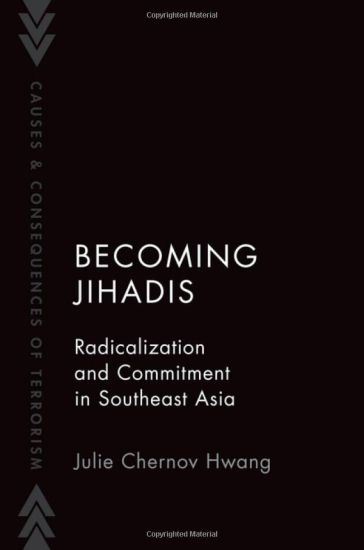
Becoming Jihadis

Becoming Jihadis

Julie Chernov Hwang

OXFORD UNIVERSITY PRESS INC
2023
sidottu
Why does someone join an extremist group? What are the pathways via which individuals join such groups? How does one show commitment to an extremist group? Why does someone participate in acts of terrorism? Drawing on 175 interviews with current and former members of Islamist extremist groups in Indonesia and the Philippines, Becoming Jihadis: Radicalization and Commitment in Southeast Asia answers these questions by exploring the socio-emotional underpinnings of joining an extremist group. This book argues that social ties play a critical role at every juncture in the joining process, from initial engagement to commitment to participation in jihad experiences, paramilitary training, and terrorism. It unpacks the process by which members build a sense of community, connection, solidarity, and brotherhood; how they come to trust and love one another; and how ideology functions as a binding agent, not a cause. Becoming Jihadis draws its conclusions from broad patterns data based on nearly a decade of iterated interviews with current and former members of Islamist extremist groups between 2010 and 2019, as well as partial life histories detailing the journeys of men and women who joined Indonesian and Filipino extremist groups. This book makes a unique contribution to the literature on terrorism and radicalization for students, practitioners, and policymakers.
Becoming Jihadis

Becoming Jihadis

Julie Chernov Hwang

OXFORD UNIVERSITY PRESS INC
2023
nidottu
Why does someone join an extremist group? What are the pathways via which individuals join such groups? How does one show commitment to an extremist group? Why does someone participate in acts of terrorism? Drawing on 175 interviews with current and former members of Islamist extremist groups in Indonesia and the Philippines, Becoming Jihadis: Radicalization and Commitment in Southeast Asia answers these questions by exploring the socio-emotional underpinnings of joining an extremist group. This book argues that social ties play a critical role at every juncture in the joining process, from initial engagement to commitment to participation in jihad experiences, paramilitary training, and terrorism. It unpacks the process by which members build a sense of community, connection, solidarity, and brotherhood; how they come to trust and love one another; and how ideology functions as a binding agent, not a cause. Becoming Jihadis draws its conclusions from broad patterns data based on nearly a decade of iterated interviews with current and former members of Islamist extremist groups between 2010 and 2019, as well as partial life histories detailing the journeys of men and women who joined Indonesian and Filipino extremist groups. This book makes a unique contribution to the literature on terrorism and radicalization for students, practitioners, and policymakers.
Why Terrorists Quit

Why Terrorists Quit

Julie Chernov Hwang

Cornell University Press
2018
sidottu
Why do hard-line terrorists decide to leave their organizations and quit the world of terror and destruction? This is the question for which Julie Chernov Hwang seeks answers in Why Terrorists Quit. Over the course of six years Chernov Hwang conducted more than one hundred interviews with current and former leaders and followers of radical Islamist groups in Indonesia. Using what she learned from these radicals she examines the reasons they rejected physical force and extremist ideology, slowly moving away from, or in some cases completely leaving, groups such as Jemaah Islamiyah, Mujahidin KOMPAK, Ring Banten, Laskar Jihad, and Tanah Runtuh. Why Terrorists Quit considers the impact of various public initiatives designed to encourage radicals to disengage, and follows the lives of five radicals from the various groups, seeking to establish trends, ideas, and reasons for why radicals might eschew violence or quit terrorism. Chernov Hwang has, with this book, provided a clear picture of why Indonesians disengage from jihadist groups, what the state can do to help them reintegrate into nonterrorist society, and how what happens in Indonesia can be more widely applied beyond the archipelago.