Kirjojen hintavertailu. Mukana 11 717 486 kirjaa ja 12 kauppaa.

Kirjahaku

Etsi kirjoja tekijän nimen, kirjan nimen tai ISBN:n perusteella.

6 kirjaa tekijältä Julie Dickson

Elucidating Law

Elucidating Law

Julie Dickson

Oxford University Press
2022
sidottu
What are the aims of legal philosophy? Which questions should it seek to address? How should legal philosophers approach and engage with their subject-matter, and what constraints are incumbent on them as they do so? What are the criteria of success of theories of law, and how do we know if they have been met? Can there be progress in legal philosophy? In Elucidating Law, Julie Dickson addresses these and other questions concerning the methodology, or the philosophy, of legal philosophy and offers her own distinctive response to them. The book advocates that legal philosophers should espouse an approach that Dickson terms 'Indirectly Evaluative Legal Philosophy.' This distinctive approach can facilitate legal philosophers' understanding of aspects of the nature of law, whilst avoiding prematurely or inappropriately regarding law as inherently morally valuable. Law is a powerful, systemic, and institutionalized social tool. It should be understood in a manner appropriate to its character.
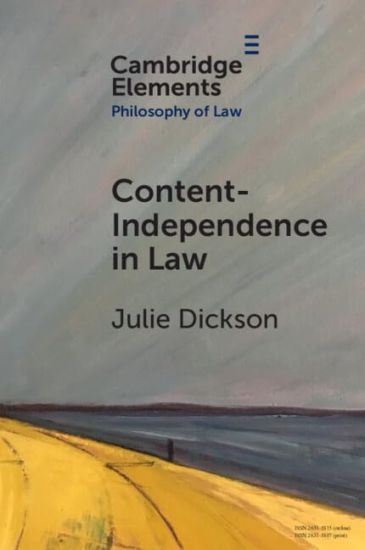
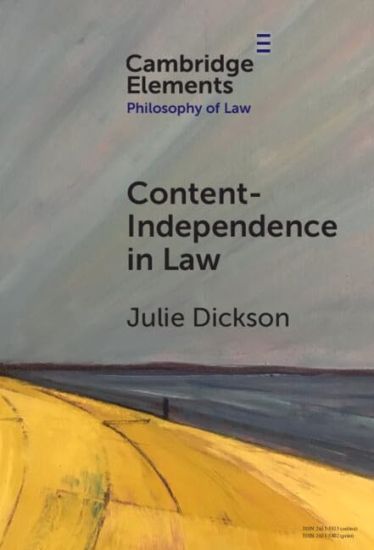
Content-Independence in Law

Content-Independence in Law

Julie Dickson

Cambridge University Press
2024
pokkari
This Element examines the notion of content-independence and its relevance for understanding various aspects of the character of law. Its task should be understood expansively, as encompassing both inquiry into that which makes law into what it is, and inquiry into what law ought to be, which values it ought to serve, and which aspects of its character may play a facilitative role in law realising aspects of its potential. Many existing discussions of content-independence focus largely on the justificatory aspects of content-independence: whether, and, if so, how, there can be content-independent reasons for action, or content-independent justifications of rules, or the extent to which political obligation is content-independent. This Element, too, examines such issues but also seeks to explore an additional possibility: that the notion of content-independence can illuminate issues regarding law's existence, identification, and systematicity.
Content-Independence in Law

Content-Independence in Law

Julie Dickson

Cambridge University Press
2024
sidottu
This Element examines the notion of content-independence and its relevance for understanding various aspects of the character of law. Its task should be understood expansively, as encompassing both inquiry into that which makes law into what it is, and inquiry into what law ought to be, which values it ought to serve, and which aspects of its character may play a facilitative role in law realising aspects of its potential. Many existing discussions of content-independence focus largely on the justificatory aspects of content-independence: whether, and, if so, how, there can be content-independent reasons for action, or content-independent justifications of rules, or the extent to which political obligation is content-independent. This Element, too, examines such issues but also seeks to explore an additional possibility: that the notion of content-independence can illuminate issues regarding law's existence, identification, and systematicity.
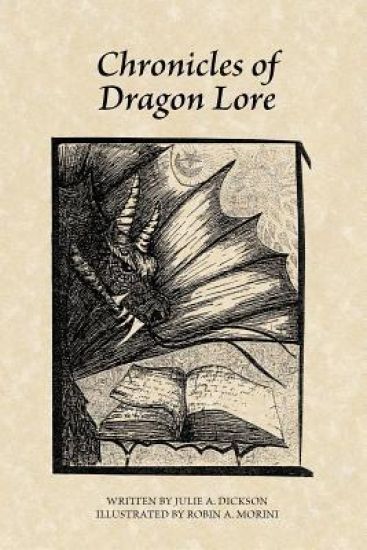
Chronicles of Dragon Lore

Chronicles of Dragon Lore

Julie Dickson

Trafford Publishing
2011
pokkari
Chronicles of Dragon Lore is the story of a dragon scribe detailing the history of dragon existence in an ancient world of dragons, faeries and humans. A wonderful fantasy tale, describing intelligent dragons in their established existence, their long-time relationship to faeries and the introduction of humans to their world. Illustrated with original artwork depicting the dragons and other species of the realm, the drawings add character and detail to the story.
Evaluation and Legal Theory

Evaluation and Legal Theory

Julie Dickson

Hart Publishing
2001
nidottu
If Raz and Dworkin disagree over how law should be characterised,how are we, their jurisprudential public, supposed to go about adjudicating between the rival theories which they offer us? To what considerations would those theorists themselves appeal in order to convince us that their accounts of law are accurate and successful? Moreover, what is it that makes an account of law successful? Evaluation and Legal Theory tackles methodological or meta-theoretical issues such as these, and does so via attempting to answer the question: to what extent, and in what sense, must a legal theorist make value judgements about his data in order to construct a successful theory of law? Dispelling the obfuscatory myth that legal positivism seeks a 'value-free' account of law, the author attempts to explain and defend Joseph Razs position that evaluation is essential to successful legal theory, whilst refuting John Finnis and Ronald Dworkins contentions that the legal theorist must morally evaluate and morally justify the law in order to properly explain its nature. The book does not claim to solve the many mysteries of meta-legal theory but does seek to contribute to and engender rigorous and focused debate on this topic.