Kirjojen hintavertailu. Mukana 11 342 296 kirjaa ja 12 kauppaa.

Kirjahaku

Etsi kirjoja tekijän nimen, kirjan nimen tai ISBN:n perusteella.

4 kirjaa tekijältä Julie E. Maybee

Picturing Hegel

Picturing Hegel

Julie E. Maybee

Lexington Books
2009
sidottu
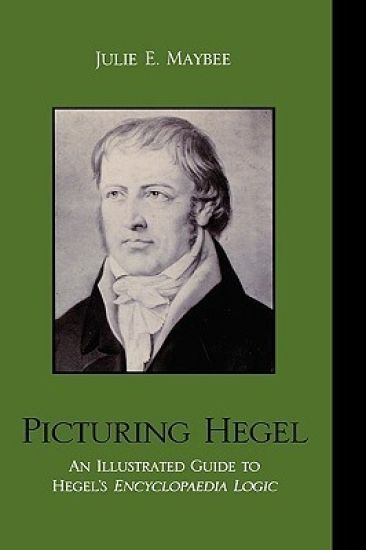
In her innovative take on G.W. F. Hegel's The Encyclopaedia Logic, Julie E. Maybee uses pictures and diagrams to cut through the philosopher's dense, difficult writing. Picturing Hegel: An Illustrated Guide to Hegel's Encyclopaedia Logic utilizes diagrams in order to rehabilitate Hegel's logic for serious consideration by showing how each stage develops step-by-step from earlier stages according to definite, logical patterns. This interpretation makes Hegel's work accessible and understandable for new and experienced readers alike. Because Hegel uses the same logic in all of his works, Maybee's analysis and defense of the logic will capture the attention of those readers interested in Hegel's ethics, politics, history, philosophy of religion, and phenomenology. Through the included diagrams, Maybee is able to define central Hegelian concepts such as "being-in-itself," and "being-in-and-for-itself" with a new level of precision. Maybee argues that Hegel's logic does not include the one logistical pattern most often attributed to him; namely, the pattern "thesis-antithesis-synthesis." Rather, Hegel's model of logic was more scientific than formalistic in nature, as the philosopher himself pointed out. Hegel considered himself an encyclopedic culmination of Western philosophy in some ways, and indeed his work summarizes many of the presuppositions of Western philosophy. By picturing Hegel's logic, we can gain a greater understanding of ourselves.
Picturing Hegel

Picturing Hegel

Julie E. Maybee

Lexington Books
2009
nidottu
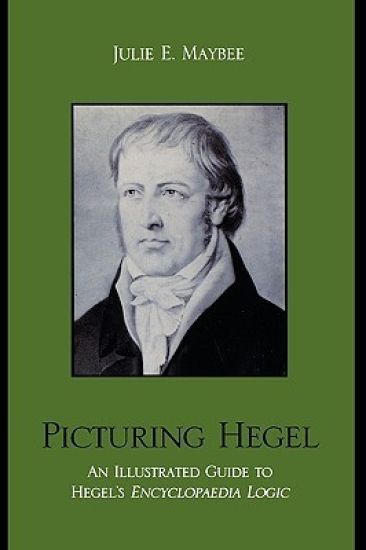
In her innovative take on G.W. F. Hegel's The Encyclopaedia Logic, Julie E. Maybee uses pictures and diagrams to cut through the philosopher's dense, difficult writing. Picturing Hegel: An Illustrated Guide to Hegel's Encyclopaedia Logic utilizes diagrams in order to rehabilitate Hegel's logic for serious consideration by showing how each stage develops step-by-step from earlier stages according to definite, logical patterns. This interpretation makes Hegel's work accessible and understandable for new and experienced readers alike. Because Hegel uses the same logic in all of his works, Maybee's analysis and defense of the logic will capture the attention of those readers interested in Hegel's ethics, politics, history, philosophy of religion, and phenomenology. Through the included diagrams, Maybee is able to define central Hegelian concepts such as 'being-in-itself,' and 'being-in-and-for-itself' with a new level of precision. Maybee argues that Hegel's logic does not include the one logistical pattern most often attributed to him; namely, the pattern 'thesis-antithesis-synthesis.' Rather, Hegel's model of logic was more scientific than formalistic in nature, as the philosopher himself pointed out. Hegel considered himself an encyclopedic culmination of Western philosophy in some ways, and indeed his work summarizes many of the presuppositions of Western philosophy. By picturing Hegel's logic, we can gain a greater understanding of ourselves.
Making and Unmaking Disability

Making and Unmaking Disability

Julie E. Maybee

Rowman Littlefield
2019
sidottu
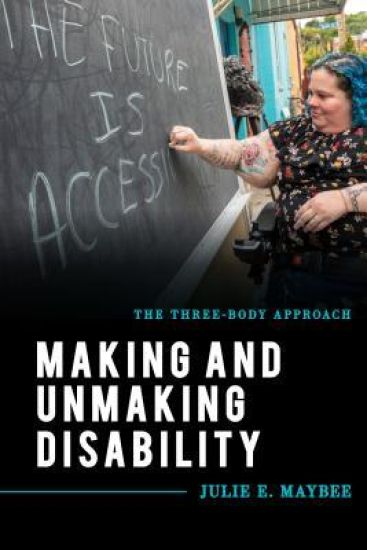
Julie E. Maybee uses a unique combination of a comprehensive theory--the three-bodies approach--and concrete examples to trace the social construction of disability and impairment in Western societies and to suggest how disability and impairment may be unmade to better understand and serve those in the community. Through an examination of the history disability as well as of a variety of interdisciplinary sources—disability studies, philosophy, African studies and philosophy, philosophy of science, sociology, medical sociology, anthropology, social work and rehabilitation medicine—Maybee offers a wide-ranging philosophical analysis of existing discourse while developing a new methodology for ongoing debates.
Making and Unmaking Disability

Making and Unmaking Disability

Julie E. Maybee

Rowman Littlefield
2019
nidottu
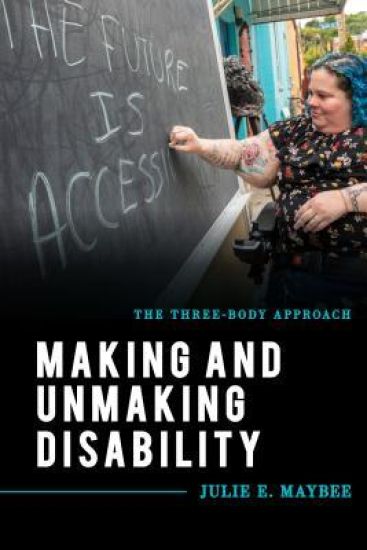
Julie E. Maybee uses a unique combination of a comprehensive theory--the three-bodies approach--and concrete examples to trace the social construction of disability and impairment in Western societies and to suggest how disability and impairment may be unmade to better understand and serve those in the community. Through an examination of the history disability as well as of a variety of interdisciplinary sources—disability studies, philosophy, African studies and philosophy, philosophy of science, sociology, medical sociology, anthropology, social work and rehabilitation medicine—Maybee offers a wide-ranging philosophical analysis of existing discourse while developing a new methodology for ongoing debates.