Kirjojen hintavertailu. Mukana 11 244 527 kirjaa ja 12 kauppaa.

Kirjahaku

Etsi kirjoja tekijän nimen, kirjan nimen tai ISBN:n perusteella.

9 kirjaa tekijältä Julie Sanders

Shakespeare and Music

Shakespeare and Music

Julie Sanders

Polity Press
2007
sidottu
This is a study of the rich and diverse range of musical responses to Shakespeare that have taken place from the seventeenth century onwards. Written from a literary perspective, the book explores the many genres and contexts in which Shakespeare and his work have enjoyed a musical afterlife discussing opera, ballet, and classical symphony alongside musicals and film soundtracks, as well as folk music and hip-hop traditions. Taking as its starting point ideas of creativity and improvisation stemming from early modern baroque practices and the more recent example of twentieth-century jazz adaptation, this volume explores the many ways in which Shakespeares plays and poems have been re-worked by musical composers. It also places these cultural productions in their own historical moment and context. Adaptation studies is a fast emerging field of scholarship and as a contribution to this field, Shakespeare and Music: Afterlives and Borrowings: develops theories and practices from adaptation studies to think about musical responses to Shakespeare across the centuries brings together in an exciting intellectual encounter ideas and methodologies deriving from literary criticism, theatre history, film studies, and musicology explores music in its widest context, looking at classical symphonies including the work of Berlioz and Elgar and operas by Verdi and Britten as well as Broadway musicals, film scores by Shostakovich, Walton, and contemporary performers, and the jazz adaptations of Duke Ellington and others. This is a timely study that will appeal to a wide readership from lovers of Shakespeare and classical music through to students of film and historians of the theatre.

Shakespeare and Music

Shakespeare and Music

Julie Sanders

Polity Press
2007
nidottu
This is a study of the rich and diverse range of musical responses to Shakespeare that have taken place from the seventeenth century onwards. Written from a literary perspective, the book explores the many genres and contexts in which Shakespeare and his work have enjoyed a musical afterlife discussing opera, ballet, and classical symphony alongside musicals and film soundtracks, as well as folk music and hip-hop traditions. Taking as its starting point ideas of creativity and improvisation stemming from early modern baroque practices and the more recent example of twentieth-century jazz adaptation, this volume explores the many ways in which Shakespeares plays and poems have been re-worked by musical composers. It also places these cultural productions in their own historical moment and context. Adaptation studies is a fast emerging field of scholarship and as a contribution to this field, Shakespeare and Music: Afterlives and Borrowings: develops theories and practices from adaptation studies to think about musical responses to Shakespeare across the centuries brings together in an exciting intellectual encounter ideas and methodologies deriving from literary criticism, theatre history, film studies, and musicology explores music in its widest context, looking at classical symphonies including the work of Berlioz and Elgar and operas by Verdi and Britten as well as Broadway musicals, film scores by Shostakovich, Walton, and contemporary performers, and the jazz adaptations of Duke Ellington and others. This is a timely study that will appeal to a wide readership from lovers of Shakespeare and classical music through to students of film and historians of the theatre.
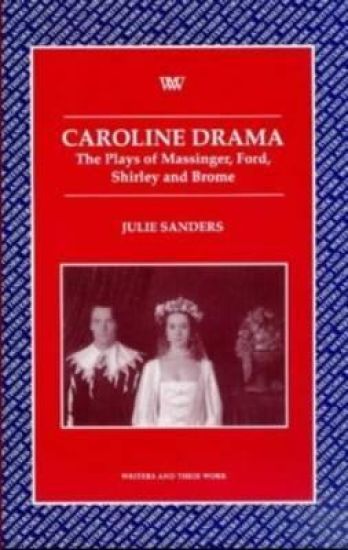
Caroline Drama

Caroline Drama

Julie Sanders

Liverpool University Press
1999
pokkari
Caroline Drama takes as its focus the public theatre playwriting of Philip Massinger, John Ford, James Shirley and Richard Brome between 1625 and 1642. It brings into clear focus for those unfamiliar with these playwrights a neglected period of writing. Setting their plays within a social and political context, Julie Sanders reveals their concern with issues of community and hierarchy in the decades leading up to the English Civil Wars. By exploring a range of plays of each writer, she explores both their continuities and their differences, as well as examining their particular choices of subject matter, language, and theatrical strategy. The value of Caroline Drama as a whole becomes clear as a result of this study.
The Cultural Geography of Early Modern Drama, 1620–1650

The Cultural Geography of Early Modern Drama, 1620–1650

Julie Sanders

Cambridge University Press
2011
sidottu
Literary geographies is an exciting new area of interdisciplinary research. Innovative and engaging, this book applies theories of landscape, space and place from the discipline of cultural geography within an early modern historical context. Different kinds of drama and performance are analysed: from commercial drama by key playwrights to household masques and entertainment performed by families and in semi-official contexts. Sanders provides a fresh look at works from the careers of Ben Jonson, John Milton and Richard Brome, paying attention to geographical spaces and habitats like forests, coastlines and arctic landscapes of ice and snow, as well as the more familiar locales of early modern country estates and city streets and spaces. Overall, the book encourages readers to think about geography as kinetic, embodied and physical, not least in its literary configurations, presenting a key contribution to early modern scholarship.
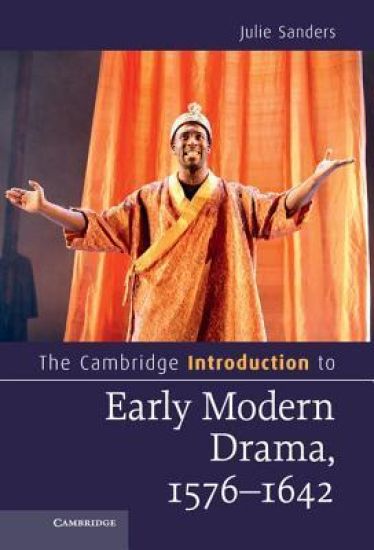
The Cambridge Introduction to Early Modern Drama, 1576–1642
Engaging and stimulating, this Introduction provides a fresh vista of the early modern theatrical landscape. Chapters are arranged according to key genres (tragedy, revenge, satire, history play, pastoral and city comedy), punctuated by a series of focused case studies on topics ranging from repertoire to performance style, political events to the physical body of the actor, and from plays in print to the space of the playhouse. Julie Sanders encourages readers to engage with particular dramatic moments, such as opening scenes, skulls on stage or the conventions of disguise, and to apply the materials and methods contained in the book in inventive ways. A timeline and frequent cross-references provide continuity. Always alert to the possibilities of performance, Sanders reveals the remarkable story of early modern drama not through individual writers, but through repertoires and company practices, helping to relocate and re-imagine canonical plays and playwrights.
The Cultural Geography of Early Modern Drama, 1620–1650

The Cultural Geography of Early Modern Drama, 1620–1650

Julie Sanders

Cambridge University Press
2014
pokkari
Literary geographies is an exciting new area of interdisciplinary research. Innovative and engaging, this book applies theories of landscape, space and place from the discipline of cultural geography within an early modern historical context. Different kinds of drama and performance are analysed: from commercial drama by key playwrights to household masques and entertainment performed by families and in semi-official contexts. Sanders provides a fresh look at works from the careers of Ben Jonson, John Milton and Richard Brome, paying attention to geographical spaces and habitats like forests, coastlines and arctic landscapes of ice and snow, as well as the more familiar locales of early modern country estates and city streets and spaces. Overall, the book encourages readers to think about geography as kinetic, embodied and physical, not least in its literary configurations, presenting a key contribution to early modern scholarship.
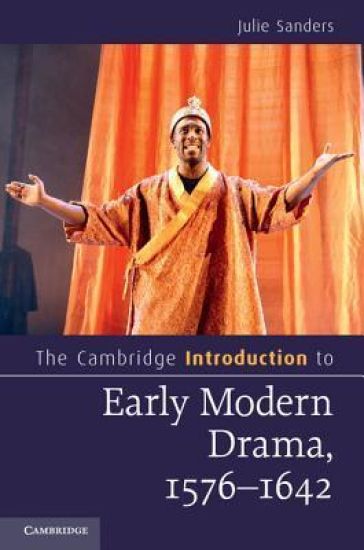
The Cambridge Introduction to Early Modern Drama, 1576–1642
Engaging and stimulating, this Introduction provides a fresh vista of the early modern theatrical landscape. Chapters are arranged according to key genres (tragedy, revenge, satire, history play, pastoral and city comedy), punctuated by a series of focused case studies on topics ranging from repertoire to performance style, political events to the physical body of the actor, and from plays in print to the space of the playhouse. Julie Sanders encourages readers to engage with particular dramatic moments, such as opening scenes, skulls on stage or the conventions of disguise, and to apply the materials and methods contained in the book in inventive ways. A timeline and frequent cross-references provide continuity. Always alert to the possibilities of performance, Sanders reveals the remarkable story of early modern drama not through individual writers, but through repertoires and company practices, helping to relocate and re-imagine canonical plays and playwrights.
Adaptation and Appropriation

Adaptation and Appropriation

Julie Sanders

Routledge
2015
sidottu
From the apparently simple adaptation of a text into film, theatre or a new literary work, to the more complex appropriation of style or meaning, it is arguable that all texts are somehow connected to a network of existing texts and art forms. In this new edition Adaptation and Appropriation explores:multiple definitions and practices of adaptation and appropriationthe cultural and aesthetic politics behind the impulse to adaptthe global and local dimensions of adaptationthe impact of new digital technologies on ideas of making, originality and customizationdiverse ways in which contemporary literature, theatre, television and film adapt, revise and reimagine other works of artthe impact on adaptation and appropriation of theoretical movements, including structuralism, post-structuralism, postcolonialism, postmodernism, feminism and gender studiesthe appropriation across time and across cultures of specific canonical texts, by Shakespeare, Dickens, and others, but also of literary archetypes such as myth or fairy tale. Ranging across genres and harnessing concepts from fields as diverse as musicology and the natural sciences, this volume brings clarity to the complex debates around adaptation and appropriation, offering a much-needed resource for those studying literature, film, media or culture.
Adaptation and Appropriation

Adaptation and Appropriation

Julie Sanders

Routledge
2015
nidottu
From the apparently simple adaptation of a text into film, theatre or a new literary work, to the more complex appropriation of style or meaning, it is arguable that all texts are somehow connected to a network of existing texts and art forms. In this new edition Adaptation and Appropriation explores:multiple definitions and practices of adaptation and appropriationthe cultural and aesthetic politics behind the impulse to adaptthe global and local dimensions of adaptationthe impact of new digital technologies on ideas of making, originality and customizationdiverse ways in which contemporary literature, theatre, television and film adapt, revise and reimagine other works of artthe impact on adaptation and appropriation of theoretical movements, including structuralism, post-structuralism, postcolonialism, postmodernism, feminism and gender studiesthe appropriation across time and across cultures of specific canonical texts, by Shakespeare, Dickens, and others, but also of literary archetypes such as myth or fairy tale. Ranging across genres and harnessing concepts from fields as diverse as musicology and the natural sciences, this volume brings clarity to the complex debates around adaptation and appropriation, offering a much-needed resource for those studying literature, film, media or culture.