Kirjojen hintavertailu. Mukana 11 627 220 kirjaa ja 12 kauppaa.

Kirjahaku

Etsi kirjoja tekijän nimen, kirjan nimen tai ISBN:n perusteella.

16 kirjaa tekijältä Jurek Becker

Sleepless Days

Sleepless Days

Jurek Becker

Harpervia
1986
nidottu
An East German schoolteacher is jolted into an awareness of his mortality by a seeming heart attack. The actions he takes afterword put him on a collision course with the state in which he has painlessly, if numbly, lived his life. The results, while harsh, are not unwelcome as he finds a new vitality in a world seen through new eyes. Translated by Leila Vennewitz.
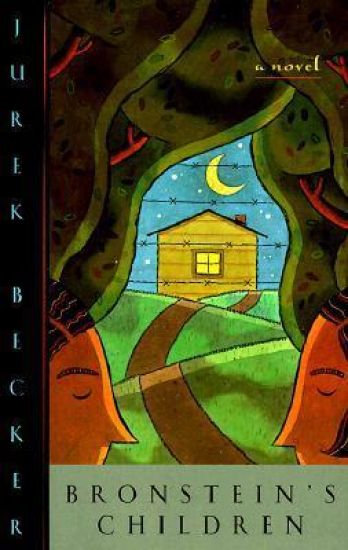
Bronstein's Children

Bronstein's Children

Jurek Becker

University of Chicago Press
1999
nidottu
An 18-year-old Jew discovers that his father's friends are holding prisoner a former Nazi concentration camp guard. They are interrogating and torturing him in an attempt to get him to admit his crimes. This novel illustrates the tensions between the holocaust generation and their children.
My Father, the Germans and I

My Father, the Germans and I

Jurek Becker

Seagull Books London Ltd
2021
nidottu
Jürek Becker (1937–97) is best known for his novel Jacob the Liar, which follows the life of a man, who, like Becker, lived in the Lódz ghetto during the German occupation of Poland in World War II. Throughout his career, Becker also wrote nonfiction, and the essays, lectures, and interviews collected in My Father, the Germans and I share a common thread in that they each speak to Becker’s interactions with and opinions on the social, political, and cultural conditions of twentieth-century Germany. Becker, who had lived in both German states and in unified Germany, was passionately and humorously active in the political debates of his time. Becker never directly aligned himself with either the political ideology of East Germany or the capitalist market forces of West Germany. The remains of fascism in postwar Germany, and the demise of Socialism, as well as racism and xenophobic violence, were topics that perpetually interested Becker. However, his writings, as evidenced in this collection, were never pedantic, but always entertaining, retaining the sense of humor that made his novels so admired. My Father, the Germans and I gives expression to an exceptional author’s perception of himself and the world and to his tireless attempt to bring his own unique tone of linguistic brevity, irony, and balance to German relations.
My Father, the Germans and I

My Father, the Germans and I

Jurek Becker

Seagull Books London Ltd
2010
sidottu
Jurek Becker (1937-97) is best known for his novel "Jacob the Liar", which follows the life of a man who, like Becker, lived in the Lodz ghetto during the German occupation of Poland in World War II. Throughout his career, Becker also wrote nonfiction, and the essays, lectures, and interviews collected in My Father, the Germans and I share a common thread in that they each speak to Becker's interactions with and opinions on the social, political, and cultural conditions of twentieth-century Germany. Becker, who lived in both German states and in unified Germany, was passionately and humorously active in the political debates of his time. Becker never directly aligned himself with either the political ideology of East Germany or the capitalist market forces of West Germany. The remains of fascism in postwar Germany, and the demise of Socialism, as well as racism and xenophobic violence, were topics that perpetually interested Becker. However, his writings, as evidenced in this collection, were never pedantic, but always entertaining, retaining the sense of humor that made his novels so admired. "My Father, the Germans and I" gives expression to an exceptional author's perception of himself and the world and to his tireless attempt to bring his own unique tone of linguistic brevity, irony, and balance to German relations.
Jacob the Liar: A Novel--50th Anniversary Edition
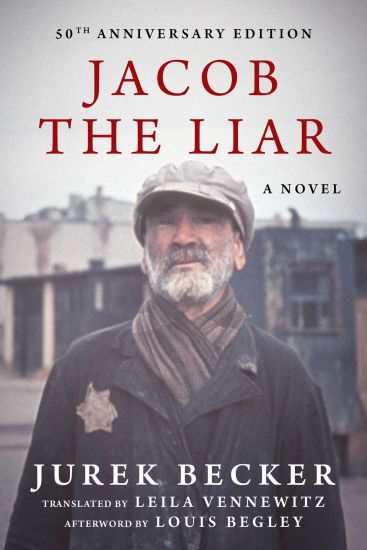
​One of the most remarkable novels of the Holocaust ever written, and the basis of the 1999 major motion picture starring Robin Williams. A novel about the Holocaust "that has never been surpassed" (Times Literary Supplement), Jacob the Liar is a now classic work from one of the giants of German postwar literature and a tale of everyday heroism and the extraordinary power of illusion. In the ghetto, possession of a radio is punishable by death. Like thousands of his fellow prisoners, Jacob Heym is cut off from all news of the war--until he is arrested one evening and brought to the German military office, where he overhears a report of the Red Army's advance to a city some 300 miles away. Miraculously, he is allowed to return to his quarters, but when he tries to spread the good news, the only way to make people believe him is to tell a lie: "How do I know? I have a radio." One lie leads to another, and before long Jacob finds himself feeding the entire ghetto fabricated news reports of the Russians' advance--reports that save lives by giving people renewed hope. So Jacob is a hero and a liar. But how much longer can his web of lies hold? Told with suspense and humor, here is a masterful tale of hope, desire, and the life-giving force of fiction. Awarded Germany's prestigious Heinrich Mann Prize for fiction and in a new translation by Leila Vennewitz, Jacob the Liar is a masterpiece of Kafkaesque comedy which unfolds with the impact of a timeless folk legend. This edition includes a new afterword by Louis Begley.
Jakob der Lugner

Jakob der Lugner

Jurek Becker

SUHRKAMP VERLAG
2011
pokkari
Der kleinste von Menschen gebaute Motor: Nicht dicker als ein Haar, bewegt er sich mit 10.000 Umdrehungen pro Minute. Noch kleiner werden die Molekular-Maschinen und Mikroroboter sein, die in der modernsten Computertechnologie und Biomedizin ungeahnte Anwedungsmöglichkeiten eröffnen. Millionstel von Millimetern groß, aus einzelnen Atomen gebaut, ausgerüstet mit Miniaturgreifern, künstlichen Sensoren und Muskeln, werden die kleinsten Maschinen der Welt in Zukunft auch die Welt des Großen beinflussen.
Jakob løgneren

Jakob løgneren

Jurek Becker

Solum
2009
sidottu
Polen, 1944: Kaféverten og jøden Jakob gir inntrykk av at han har radio og kan lytte til nyheter. I lengre tid sprer han håp blant innbyggerne i gettoen ved å fabrikkere falske, men positive nyheter om at russerne nærmer seg for å redde jødene fra tyskerne. Boken er filmatisert.