Kirjojen hintavertailu. Mukana 11 699 587 kirjaa ja 12 kauppaa.

Kirjahaku

Etsi kirjoja tekijän nimen, kirjan nimen tai ISBN:n perusteella.

6 kirjaa tekijältä Justin Jennings

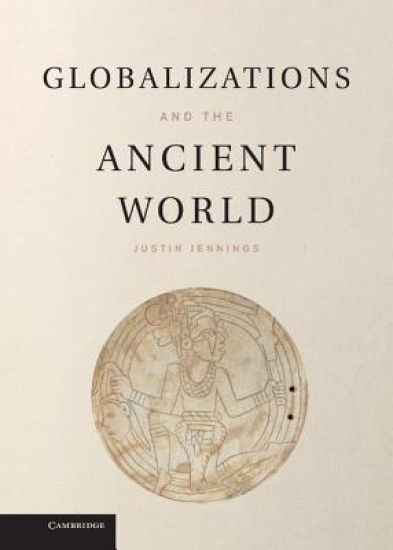
Globalizations and the Ancient World

Globalizations and the Ancient World

Justin Jennings

Cambridge University Press
2010
sidottu
In this book, Justin Jennings argues that globalization is not just a phenomenon limited to modern times. Instead he contends that the globalization of today is just the latest in a series of globalizing movements in human history. Using the Uruk, Mississippian, and Wari civilizations as case studies, Jennings examines how the growth of the world's first great cities radically transformed their respective areas. The cities required unprecedented exchange networks, creating long-distance flows of ideas, people, and goods. These flows created cascades of interregional interaction that eroded local behavioral norms and social structures. New, hybrid cultures emerged within these globalized regions. Although these networks did not span the whole globe, people in these areas developed globalized cultures as they interacted with one another. Jennings explores how understanding globalization as a recurring event can help in the understanding of both the past and the present.
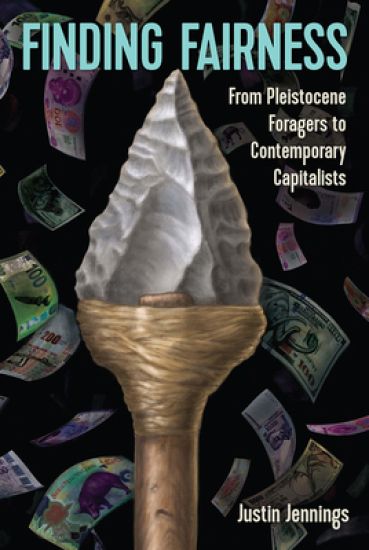
Finding Fairness

Finding Fairness

Justin Jennings

University Press of Florida
2021
sidottu
In this ambitious work, Justin Jennings explores the origins, endurance, and elasticity of ideas about fairness and how these ideas have shaped the development of societies at critical moments over the last 20,000 years. He argues that humans have an innate expectation for fairness, a disposition that evolved during the Pleistocene era as a means of adapting to an unpredictable and often cruel climate. This deep-seated desire to do what felt right then impacted how our species transitioned into smaller territories, settled into villages, formed cities, expanded empires, and navigated capitalism. Paradoxically, the predilection to find fair solutions often led to entrenched inequities over time as cooperative groups grew in size, duration, and complexity.Using case studies ranging from Japanese hunter-gatherers to North African herders to protestors on Wall Street, this book offers a broad comparative reflection on the endurance of a universal human trait amidst radical social change. Jennings makes the case that if we acknowledge fairness as a guiding principle of society, we can better understand that the solutions to yesterday's problems remain relevant to the global challenges that we face today.Finding Fairness is a sweeping, archaeologically grounded view of human history with thought-provoking implications for the contemporary world.
Killing Civilization

Killing Civilization

Justin Jennings

University of New Mexico Press
2016
sidottu
The concept of civilization has long been the basis for theories about how societies evolve. This provocative book challenges that concept. The author argues that a “civilization bias” shapes academic explanations of urbanization, colonization, state formation, and cultural horizons. Earlier theorists have criticized the concept, but according to Jennings the critics remain beholden to it as a way of making sense of a dizzying landscape of cultural variation. Relying on the idea of civilization, he suggests, holds back understanding of the development of complex societies.Killing Civilization uses case studies from across the modern and ancient world to develop a new model of incipient urbanism and its consequences, using excavation and survey data from Çatalhöyük, Cahokia, Harappa, Jenne-jeno, Tiahuanaco, and Monte Albán to create a more accurate picture of the turbulent social, political, and economic conditions in and around the earliest cities. The book will influence not just anthropology but all of the social sciences.
Killing Civilization

Killing Civilization

Justin Jennings

University of New Mexico Press
2021
nidottu
The concept of civilization has long been the basis for theories about how societies evolve. This provocative book challenges that concept. The author argues that a ""civilization bias"" shapes academic explanations of urbanization, colonization, state formation, and cultural horizons. Earlier theorists have criticized the concept, but according to Jennings the critics remain beholden to it as a way of making sense of a dizzying landscape of cultural variation. Relying on the idea of civilization, he suggests, holds back understanding of the development of complex societies.Killing Civilization uses case studies from across the modern and ancient world to develop a new model of incipient urbanism and its consequences, using excavation and survey data from ÇatalhÖyÜk, Cahokia, Harappa, Jenne-jeno, Tiahuanaco, and Monte AlbÁn to create a more accurate picture of the turbulent social, political, and economic conditions in and around the earliest cities. The book will influence not just anthropology but all of the social sciences.
Rethinking Global Governance

Rethinking Global Governance

Justin Jennings

TAYLOR FRANCIS LTD
2023
sidottu
This book argues that long-ignored, non-western political systems from the distant and more recent past can provide critical insights into improving global governance.These societies show how successful collection action can occur by dividing sovereignty, consensus building, power from below, and other mechanisms. For a better tomorrow, we need to free ourselves of the colonial constraints on our political imagination. A pandemic, war in Europe, and another year of climatic anomalies are among the many indications of the limits of global governance today. To meet these challenges, we must look far beyond the status quo to the thousands of successful mechanisms for collective action that have been cast aside a priori because they do not fit into Western traditions of how people should be organized. Coming from long past or still enduring societies often dismissed as “savages” and “primitives” until well into the twentieth century, the political systems in this book were often seen as too acephalous, compartmentalized, heterarchical, or anarchic to be of use. Yet as globalization makes international relations more chaotic, long-ignored governance alternatives may be better suited to today’s changing realities. Understanding how the Zulu, Trypillian, Alur, and other collectives worked might be humanity’s best hope for survival.This book will be of interest both to those seeking to apply archaeological and ethnographic data to issues of broad contemporary concern and to academics, politicians, policy makers, students, and the general public seeking possible alternatives to conventional thinking in global governance.
Rethinking Global Governance

Rethinking Global Governance

Justin Jennings

TAYLOR FRANCIS LTD
2024
nidottu
This book argues that long-ignored, non-western political systems from the distant and more recent past can provide critical insights into improving global governance.These societies show how successful collection action can occur by dividing sovereignty, consensus building, power from below, and other mechanisms. For a better tomorrow, we need to free ourselves of the colonial constraints on our political imagination. A pandemic, war in Europe, and another year of climatic anomalies are among the many indications of the limits of global governance today. To meet these challenges, we must look far beyond the status quo to the thousands of successful mechanisms for collective action that have been cast aside a priori because they do not fit into Western traditions of how people should be organized. Coming from long past or still enduring societies often dismissed as “savages” and “primitives” until well into the twentieth century, the political systems in this book were often seen as too acephalous, compartmentalized, heterarchical, or anarchic to be of use. Yet as globalization makes international relations more chaotic, long-ignored governance alternatives may be better suited to today’s changing realities. Understanding how the Zulu, Trypillian, Alur, and other collectives worked might be humanity’s best hope for survival.This book will be of interest both to those seeking to apply archaeological and ethnographic data to issues of broad contemporary concern and to academics, politicians, policy makers, students, and the general public seeking possible alternatives to conventional thinking in global governance.