Kirjojen hintavertailu. Mukana 11 244 527 kirjaa ja 12 kauppaa.

Kirjahaku

Etsi kirjoja tekijän nimen, kirjan nimen tai ISBN:n perusteella.

6 kirjaa tekijältä Justin O'Brien

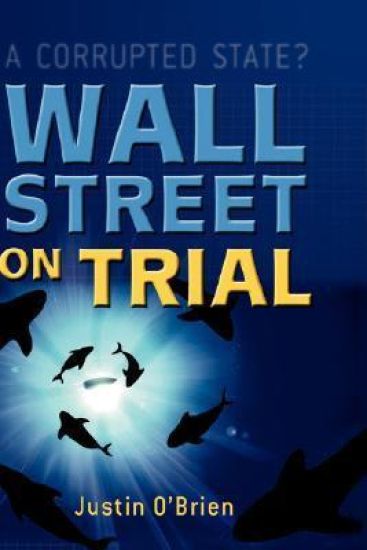
Wall Street on Trial

Wall Street on Trial

Justin O'Brien

John Wiley Sons Inc
2003
sidottu
The politics of business have become the business of politics. Across the world the lesson is clear: just as too much governmental interference leads to dysfunctional economies, left to its own devices the market is incapable of adequate self-regulation. The corporate malfeasance crisis in the United States has transformed global perceptions about the efficacy of regulatory structures in combating corrupt practices in private and public sectors. The design of effective corporate governance structures depends not just on internal factors but also on the inter-relationship between various actors that constitute wider governance: politicians, lobbyists, corporations and regulators. A Corrupted State: Wall Street on Trial breaks new ground by deconstructing the systemic flaws inherent in the model itself. It reveals that the 'rotten apple' theory, positing the problems in corporate America as merely the result of deviancy by an individual or a single firm, is an intellectual deceit not supported by the facts.
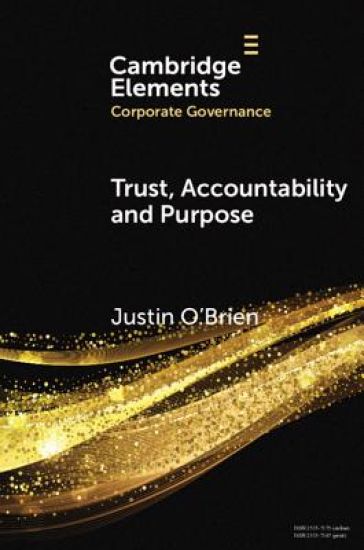
Trust, Accountability and Purpose

Trust, Accountability and Purpose

Justin O'Brien

Cambridge University Press
2019
pokkari
The collapse of trust can be found across all of our institutions but most of all in finance. This Element seeks to answer an existential question: how to rebuild trust in distrusting times? Integrity, responsibility and accountability must be embedded into corporate mission statements, values and codes of conduct. Through organisational and regulatory design across five interlocking themes - legal, regulatory, managerial, ethical and social. What is required is substantive rather than technical compliance; warranted rather than stated commitment to high ethical standards; effective deterrence strategies; enhanced accountability; and a shared commitment to risk within negotiated, binding and enforceable parameters.
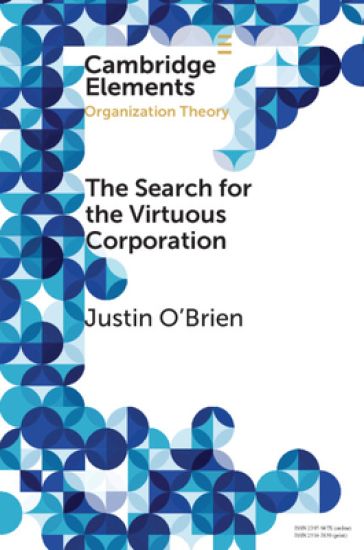
The Search for the Virtuous Corporation

The Search for the Virtuous Corporation

Justin O'Brien

Cambridge University Press
2021
pokkari
The corporation is the most complex, adaptive, and resilient model of organizing economic activity in history. In an era of globalization, the transnational corporation has significant power over society. While its rights are specified through private ordering, and choice of jurisdictional home, in the event of conflict of laws, the corporation's duties and responsibilities remain contested. Notwithstanding the argument in institutional economics that all transactions take place within governance and legal frameworks, underpinned by a 'non-calculative social contract,' the terms are notoriously difficult to define or enforce. They are made more so if regulatory dynamics preclude litigation to a judicial conclusion. This Element situates the corporation – its culture, governance, responsibility, and accountability – within a broader discourse of duty. In doing so, it addresses the problem of the corporation for society and the corporation's problem in aligning its governance to changing community expectations of obligation.
The Triumph, Tragedy and Lost Legacy of James M Landis
James M Landis – scholar, administrator, advocate and political adviser – is known for his seminal contribution to the creation of the modern system of market regulation in the USA. As a highly influential participant in the politics of the New Deal he drafted the statute which was to become the foundation for securities regulation in the US, and by extension the founding principle of financial market regulation across the world. He was also a complex and in some ways tragic figure, whose glittering career collapsed following the revelation that he had failed to pay tax for a five year period in the 1950s. The oversight was to cost possible elevation to the Supreme Court, forced prosecution and sentencing in 1963 to one month's imprisonment, commuted to forced hospitalisation, and subsequent suspension of licence to practise. This candid and revealing book sets his life in the context of his work as an academic, legislative draftsman, administrator and Dean of Harvard Law School. In rescuing from history Landis's battles and achievements in regulatory design, theory and practice, it speaks directly to the perennial problems in financial market regulation - how to deal with institutions deemed too big to fail, how to regulate the sale of complex financial instruments and what role can the professions play as gatekeepers of market integrity. It argues that in failing to learn from the lessons of history we limit the capacity of regulatory intervention to facilitate cultural change, without which contemporary responses to financial crises are destined to fail.
The Triumph, Tragedy and Lost Legacy of James M Landis
James M Landis – scholar, administrator, advocate and political adviser – is known for his seminal contribution to the creation of the modern system of market regulation in the USA. As a highly influential participant in the politics of the New Deal he drafted the statute which was to become the foundation for securities regulation in the US, and by extension the founding principle of financial market regulation across the world. He was also a complex and in some ways tragic figure, whose glittering career collapsed following the revelation that he had failed to pay tax for a five year period in the 1950s. The oversight was to cost possible elevation to the Supreme Court, forced prosecution and sentencing in 1963 to one month's imprisonment, commuted to forced hospitalisation, and subsequent suspension of licence to practise. This candid and revealing book sets his life in the context of his work as an academic, legislative draftsman, administrator and Dean of Harvard Law School. In rescuing from history Landis's battles and achievements in regulatory design, theory and practice, it speaks directly to the perennial problems in financial market regulation - how to deal with institutions deemed too big to fail, how to regulate the sale of complex financial instruments and what role can the professions play as gatekeepers of market integrity. It argues that in failing to learn from the lessons of history we limit the capacity of regulatory intervention to facilitate cultural change, without which contemporary responses to financial crises are destined to fail.