Kirjojen hintavertailu. Mukana 11 244 527 kirjaa ja 12 kauppaa.

Kirjahaku

Etsi kirjoja tekijän nimen, kirjan nimen tai ISBN:n perusteella.

4 kirjaa tekijältä K. David Jackson

Oxford Anthology of the Brazilian Short Story

Oxford Anthology of the Brazilian Short Story

K. David Jackson

Oxford University Press Inc
2006
sidottu
The Oxford Anthology of the Brazilian Short Story contains a selection of short stories by the best-known authors in Brazilian literature from the late nineteenth century to the present. With few exceptions, these stories have appeared in English translation, although widely separated in time and often published in obscure journals. Here they are united in a coherent edition representing Brazil's modern, vibrant literature and culture. J.M. Machado de Assis, who first perfected the genre, wrote at least sixty stories considered to be masterpieces of world literature. Ten of his stories are included here, and are accompanied by strong and diverse representations of the contemporary story in Brazil, featuring nine stories by Clarice Lispector and seven by João Guimarães Rosa. The remaining 34 authors include Mário de Andrade, Graciliano Ramos, Osman Lins, Dalton Trevisan, and other major names whose stories in translation exhibit profound artistry. The anthology is divided into four major periods, "Tropical Belle-Époque," "Modernism," "Modernism at Mid-Century," and "Contemporary Views." There is a general introduction to Brazilian literary culture and introductions to each of the four sections, with descriptions of the authors and a general bibliography on Brazil and Brazilian literature in English. It includes stories of innovation (Mário de Andrade), psychological suspense (Graciliano Ramos), satire and perversion (Dalton Trevisan), altered realities and perceptions (Murilo Rubião), repression and sexuality (Hilda Hilst, Autran Dourado), myth (Nélida Piñón), urban life (Lygia Fagundes Telles, Rubem Fonescal), the oral tale (Jorge Amado, Rachel de Queiroz) and other overarching themes and issues of Brazilian culture. The anthology concludes with a haunting story set in the opera theater in Manaus by one of Brazil's most recently successful writers, Milton Hatoum.
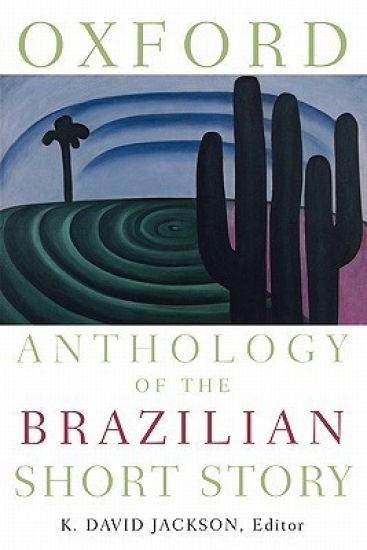
Oxford Anthology of the Brazilian Short Story

Oxford Anthology of the Brazilian Short Story

K. David Jackson

Oxford University Press Inc
2006
nidottu
The Oxford Anthology of the Brazilian Short Story contains a selection of short stories by the best-known authors in Brazilian literature from the late nineteenth century to the present. With few exceptions, these stories have appeared in English translation, although widely separated in time and often published in obscure journals. Here they are united in a coherent edition representing Brazil's modern, vibrant literature and culture. J.M. Machado de Assis, who first perfected the genre, wrote at least sixty stories considered to be masterpieces of world literature. Ten of his stories are included here, and are accompanied by strong and diverse representations of the contemporary story in Brazil, featuring nine stories by Clarice Lispector and seven by João Guimarães Rosa. The remaining 34 authors include Mário de Andrade, Graciliano Ramos, Osman Lins, Dalton Trevisan, and other major names whose stories in translation exhibit profound artistry. The anthology is divided into four major periods, "Tropical Belle-Époque," "Modernism," "Modernism at Mid-Century," and "Contemporary Views." There is a general introduction to Brazilian literary culture and introductions to each of the four sections, with descriptions of the authors and a general bibliography on Brazil and Brazilian literature in English. It includes stories of innovation (Mário de Andrade), psychological suspense (Graciliano Ramos), satire and perversion (Dalton Trevisan), altered realities and perceptions (Murilo Rubião), repression and sexuality (Hilda Hilst, Autran Dourado), myth (Nélida Piñón), urban life (Lygia Fagundes Telles, Rubem Fonescal), the oral tale (Jorge Amado, Rachel de Queiroz) and other overarching themes and issues of Brazilian culture. The anthology concludes with a haunting story set in the opera theater in Manaus by one of Brazil's most recently successful writers, Milton Hatoum.
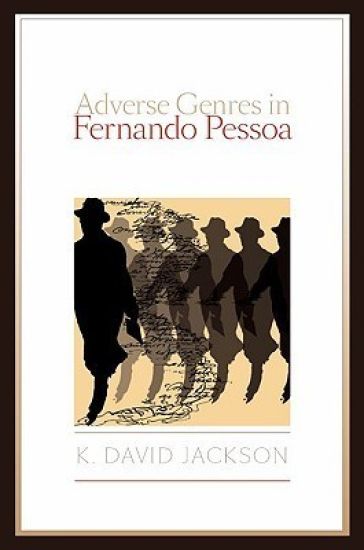
Adverse Genres in Fernando Pessoa

Adverse Genres in Fernando Pessoa

K. David Jackson

Oxford University Press Inc
2010
sidottu
This book is an introduction to and interpretation of the world of Fernando Pessoa (1888-1935), one of the most fascinating and complex figures in European literary modernism and the avant-garde. Raised in South Africa and writing much of his literary work in English, Pessoa nevertheless almost never left the city of Lisbon after returning in 1905. Pessoa is known for abolishing the authorial self and for dividing his writings among a large number of other personalities - the heteronyms - who wrote through him, each in a completely different style. The theory of 'adverse genres' introduced in this book aids understanding of his paradoxical and contradictory use of genres. Through the invented 'coterie of authors,' Pessoa explored mixed writing by changing the relationship between form and content, authorship and text. Adverse Genres describes how Pessoa selected genres from the European tradition (Ricardo Reis' 'Horatian' odes, Álvaro de Campos' worship of Whitman, Alberto Caeiro's pastoral and metaphysical, Bernardo Soares' philosophical diary), into which he put a different and incongruent content taken from modernist, contemporary themes. By creating anomalies between form and content, or authors and texts, Pessoa gives new life and definition to traditional historical genres for a modernist age. In doing so, he enhances the normal expressive potential of each genre by incorporating uncharacteristic content and questioning authorship. Pessoa uses this procedure in his 1907 short story, 'A Very Original Dinner' in the 'Cancioneiro' or collected poems written under the name Fernando Pessoa; in his love letters to Ophélia Queirós; in his 1922 story 'The Adventure of the Anarchist Banker;' in his collection of quatrains derived from Portuguese popular verse; and, finally, in his problematic non-existence as 'the man who never was,' in Jorge de Sena's expression, who exchanged a normal life for an entirely literary world of the imagination. This book addresses Pessoa's desire to be an entire literature, a new literary history, as it were, full of diverse authors and styles, as if they were characters or roles in a dramatic theater of the self in literary modernism.
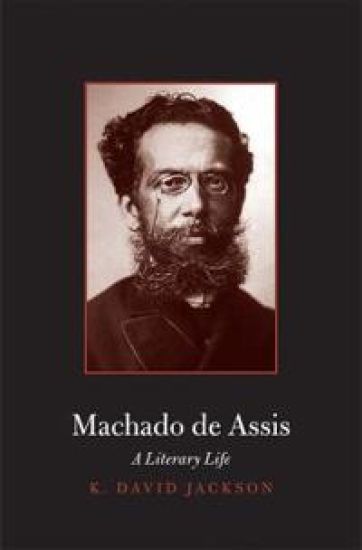
Machado de Assis

Machado de Assis

K. David Jackson

Yale University Press
2015
sidottu
Novelist, poet, playwright, and short story writer Joaquim Maria Machado de Assis (1839–1908) is widely regarded as Brazil’s greatest writer, although his work is still too little read outside his native country. In this first comprehensive English-language examination of Machado since Helen Caldwell’s seminal 1970 study, K. David Jackson reveals Machado de Assis as an important world author, one of the inventors of literary modernism whose writings profoundly influenced some of the most celebrated authors of the twentieth century, including José Saramago, Carlos Fuentes, and Donald Barthelme. Jackson introduces a hitherto unknown Machado de Assis to readers, illuminating the remarkable life, work, and legacy of the genius whom Susan Sontag called “the greatest writer ever produced in Latin America” and whom Allen Ginsberg hailed as “another Kafka.” Philip Roth has said of him that “like Beckett, he is ironic about suffering.” And Harold Bloom has remarked of Machado that “he’s funny as hell.”