Kirjojen hintavertailu. Mukana 12 392 278 kirjaa ja 12 kauppaa.

Kirjahaku

Etsi kirjoja tekijän nimen, kirjan nimen tai ISBN:n perusteella.

3 kirjaa tekijältä K. M. Newton

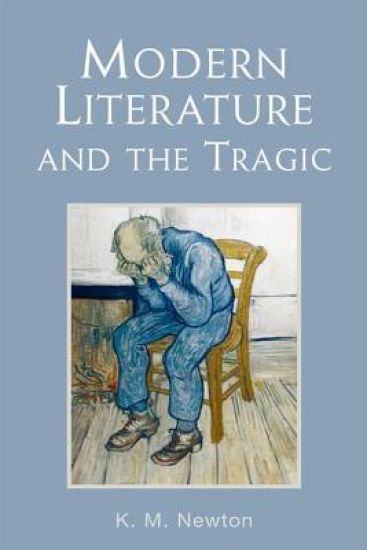
Modern Literature and the Tragic

Modern Literature and the Tragic

K. M. Newton

Edinburgh University Press
2008
sidottu
This book explores modern literature's responses to the tragic. It examines writers from the latter half of the nineteenth century through to the later twentieth century who respond to ideas about tragedy. Although Ibsen has been accused of being responsible for the 'death of tragedy', Ken Newton argues that Ibsen instead generates an anti-tragic perspective that had a major influence on dramatists such as Shaw and Brecht. By contrast, writers such as Hardy and Conrad, influenced by Schopenhauerean pessimism and Darwinism, attempt to modernise the concept of the tragic. Nietzsche's revisionist interpretation of the tragic influenced writers who either take pessimism or the 'Dionysian' commitment to life to an extreme, as in Strindberg and D. H. Lawrence. Different views emerge in the period following the second world war with the 'Theatre of the Absurd' and postmodern anti-foundationalism. Key Features *Broad coverage of drama and fiction by British, European, and American writers *Provides readings of particular texts including Tolstoy's Anna Karenina, Ibsen's Ghosts, Strindberg's Miss Julie, Brecht's Mother Courage, Chekhov's Three Sisters, Thomas Hardy's Tess of the d'Urbervilles and Jude the Obscure, Shaw's Saint Joan, Miller's Death of a Salesman, Conrad's Heart of Darkness, and D H Lawrence's The Rainbow and Women in Love *Combines literary interpretation with philosophical discussion, e.g. of Schopenhauer, Nietzsche, Derrida, Rorty
George Eliot for the Twenty-First Century

George Eliot for the Twenty-First Century

K. M. Newton

Springer Nature Switzerland AG
2018
nidottu
George Eliot for the Twenty-First Century reexamines Eliot two hundred years after her birth and offers an innovative critical reading that seeks to change perceptions of Eliot. Tracing Eliot’s literary reception from the nineteenth century to the late twentieth and early twenty-first century, K. M. Newton frames Eliot as an unorthodox radical and considers the philosophical, ethical, political, and artistic subtleties permeating her writings. Drawing from close readings of her novels, essays, and letters, Newton offers a new critical perspective on George Eliot and reveals her enduring relevance in the twenty-first century.
George Eliot for the Twenty-First Century

George Eliot for the Twenty-First Century

K. M. Newton

Springer International Publishing AG
2018
sidottu
George Eliot for the Twenty-First Century reexamines Eliot two hundred years after her birth and offers an innovative critical reading that seeks to change perceptions of Eliot. Tracing Eliot’s literary reception from the nineteenth century to the late twentieth and early twenty-first century, K. M. Newton frames Eliot as an unorthodox radical and considers the philosophical, ethical, political, and artistic subtleties permeating her writings. Drawing from close readings of her novels, essays, and letters, Newton offers a new critical perspective on George Eliot and reveals her enduring relevance in the twenty-first century.