Kirjojen hintavertailu. Mukana 11 717 486 kirjaa ja 12 kauppaa.

Kirjahaku

Etsi kirjoja tekijän nimen, kirjan nimen tai ISBN:n perusteella.

5 kirjaa tekijältä Kai-Fu Lee

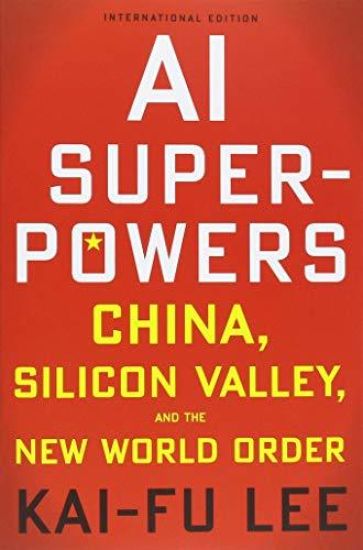
AI Superpowers

AI Superpowers

Kai-Fu Lee

HARPERCOLLINS PUBLISHERS INC
2021
nidottu
THE NEW YORK TIMES, USA TODAY, AND WALL STREET JOURNAL BESTSELLER "Kai-Fu Lee believes China will be the next tech-innovation superpower and in AI Superpowers: China, Silicon Valley, and the New World Order, he explains why. Taiwan-born Lee is perfectly positioned for the task."—New York Magazine In this thought-provoking book, Lee argues powerfully that because of the unprecedented developments in AI, dramatic changes will be happening much sooner than many of us expected. Indeed, as the US-Sino AI competition begins to heat up, Lee urges the US and China to both accept and to embrace the great responsibilities that come with significant technological power. Most experts already say that AI will have a devastating impact on blue-collar jobs. But Lee predicts that Chinese and American AI will have a strong impact on white-collar jobs as well. Is universal basic income the solution? In Lee’s opinion, probably not. But he provides a clear description of which jobs will be affected and how soon, which jobs can be enhanced with AI, and most importantly, how we can provide solutions to some of the most profound changes in the future of human history.
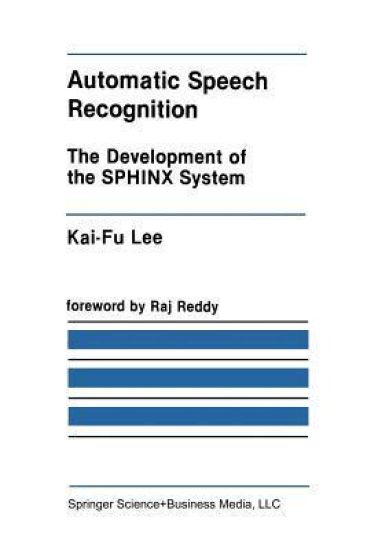
Automatic Speech Recognition

Automatic Speech Recognition

Kai-Fu Lee

Kluwer Academic Publishers
1988
sidottu
Speech Recognition has a long history of being one of the difficult problems in Artificial Intelligence and Computer Science. As one goes from problem solving tasks such as puzzles and chess to perceptual tasks such as speech and vision, the problem characteristics change dramatically: knowledge poor to knowledge rich; low data rates to high data rates; slow response time (minutes to hours) to instantaneous response time. These characteristics taken together increase the computational complexity of the problem by several orders of magnitude. Further, speech provides a challenging task domain which embodies many of the requirements of intelligent behavior: operate in real time; exploit vast amounts of knowledge, tolerate errorful, unexpected unknown input; use symbols and abstractions; communicate in natural language and learn from the environment. Voice input to computers offers a number of advantages. It provides a natural, fast, hands free, eyes free, location free input medium. However, there are many as yet unsolved problems that prevent routine use of speech as an input device by non-experts. These include cost, real time response, speaker independence, robustness to variations such as noise, microphone, speech rate and loudness, and the ability to handle non-grammatical speech. Satisfactory solutions to each of these problems can be expected within the next decade. Recognition of unrestricted spontaneous continuous speech appears unsolvable at present. However, by the addition of simple constraints, such as clarification dialog to resolve ambiguity, we believe it will be possible to develop systems capable of accepting very large vocabulary continuous speechdictation.
AI Superpowers

AI Superpowers

Kai-Fu Lee

Houghton Mifflin Harcourt Publishing Company
2019
nidottu
In AI Superpowers, Kai-fu Lee argues powerfully that because of these unprecedented developments in AI, dramatic changes will be happening much sooner than many of us expected. Indeed, as the US-Sino AI competition begins to heat up, Lee urges the US and China to both accept and to embrace the great responsibilities that come with significant technological power. Most experts already say that AI will have a devastating impact on blue-collar jobs. But Lee predicts that Chinese and American AI will have a strong impact on white-collar jobs as well. Is universal basic income the solution? In Lee’s opinion, probably not. But he provides a clear description of which jobs will be affected and how soon, which jobs can be enhanced with AI, and most importantly, how we can provide solutions to some of the most profound changes in human history that are coming soon.
Automatic Speech Recognition

Automatic Speech Recognition

Kai-Fu Lee

Springer-Verlag New York Inc.
2013
nidottu
Speech Recognition has a long history of being one of the difficult problems in Artificial Intelligence and Computer Science. As one goes from problem solving tasks such as puzzles and chess to perceptual tasks such as speech and vision, the problem characteristics change dramatically: knowledge poor to knowledge rich; low data rates to high data rates; slow response time (minutes to hours) to instantaneous response time. These characteristics taken together increase the computational complexity of the problem by several orders of magnitude. Further, speech provides a challenging task domain which embodies many of the requirements of intelligent behavior: operate in real time; exploit vast amounts of knowledge, tolerate errorful, unexpected unknown input; use symbols and abstractions; communicate in natural language and learn from the environment. Voice input to computers offers a number of advantages. It provides a natural, fast, hands free, eyes free, location free input medium. However, there are many as yet unsolved problems that prevent routine use of speech as an input device by non-experts. These include cost, real time response, speaker independence, robustness to variations such as noise, microphone, speech rate and loudness, and the ability to handle non-grammatical speech. Satisfactory solutions to each of these problems can be expected within the next decade. Recognition of unrestricted spontaneous continuous speech appears unsolvable at present. However, by the addition of simple constraints, such as clarification dialog to resolve ambiguity, we believe it will be possible to develop systems capable of accepting very large vocabulary continuous speechdictation.
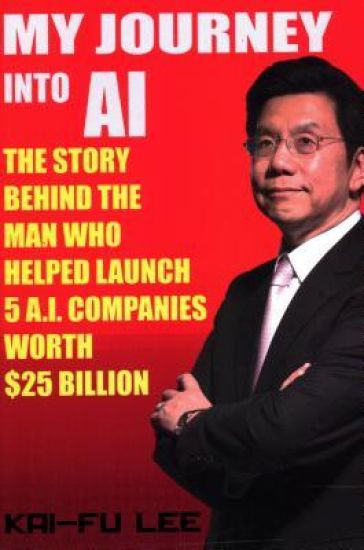
My Journey Into AI

My Journey Into AI

Kai-Fu Lee

Cranberry Press
2019
nidottu
On the Eve of the AI era, it is perfect timing to read an AI expert's autobiography, to learn about Dr. Kai-Fu Lee, the author of "AI Superpowers: China, Silicon Valley & the New World," also available on Amazon. This is the first and only authorized English version of Dr. Lee's autobiography. The original Chinese version of the sold 1.2 million copies in China in 2009 as a best seller of the year over there. Evidently, this autobiography is full of spellbinding stories. A natural-born pioneer, Dr. Lee has explored uncharted territories and developed new fields in the high-tech world. In addition, his Chinese American background has enabled him to effectively bridge corporate America with the China market. He recounts all his career experiences with Apple, Microsoft, and Google as well as his own technological achievements in this amazing autobiography. Dr. Lee was once the focus of a media sensation in 2005 when Microsoft and Google fought over him in court. He shocked the media again in 2009 by resigning from the position of Google China's president. There have been many speculations about the two incidents, behind which some insider stories are exclusively told in this book. The autobiography depicts not only Dr. Lee but also several prominent high-tech leaders he has worked with in the past two decades. It gets up close and personal with Steve Jobs, Bill Gates, Steve Ballmer, Eric Schmidt, Larry Page and Sergey Brin. It contains their anecdotes hardly ever known to the general public.