Kirjojen hintavertailu. Mukana 12 424 370 kirjaa ja 12 kauppaa.

Kirjahaku

Etsi kirjoja tekijän nimen, kirjan nimen tai ISBN:n perusteella.

4 kirjaa tekijältä Kari Karppinen

Rethinking Media Pluralism

Rethinking Media Pluralism

Kari Karppinen

Fordham University Press
2013
sidottu
Access to a broad range of different political views and cultural expressions is often regarded as a self-evident value in both theoretical and political debates on media and democracy. Pluralism is commonly accepted as a guiding principle of media policy in addressing media concentration, the role of public service media, or more recently such questions as how to respond to search engines, social networking sites, and citizen media. However, opinions on the meaning and nature of media pluralism as a concept vary widely, and definitions of it can easily be adjusted to suit different political purposes. Rethinking Media Pluralism contends that the notions of media pluralism and diversity have been reduced to empty catchphrases or conflated with consumer choice and market competition. In this narrow logic, key questions about social and political values, democracy, and citizenship are left unexamined. In this provocative new book, Kari Karppinen argues that media pluralism needs to be rescued from its depoliticized uses and re-imagined more broadly as a normative value that refers to the distribution of communicative power in the public sphere. Instead of something that could simply be measured through the number of media outlets available, media pluralism should be understood in terms of its ability to challenge inequalities and create a more democratic public sphere.
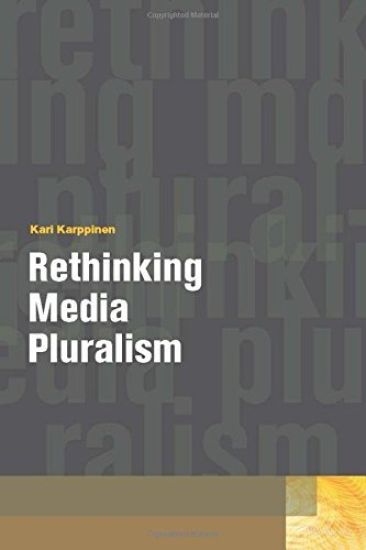
Rethinking Media Pluralism

Rethinking Media Pluralism

Kari Karppinen

Fordham University Press
2013
pokkari
Access to a broad range of different political views and cultural expressions is often regarded as a self-evident value in both theoretical and political debates on media and democracy. Pluralism is commonly accepted as a guiding principle of media policy in addressing media concentration, the role of public service media, or more recently such questions as how to respond to search engines, social networking sites, and citizen media. However, opinions on the meaning and nature of media pluralism as a concept vary widely, and definitions of it can easily be adjusted to suit different political purposes. Rethinking Media Pluralism contends that the notions of media pluralism and diversity have been reduced to empty catchphrases or conflated with consumer choice and market competition. In this narrow logic, key questions about social and political values, democracy, and citizenship are left unexamined. In this provocative new book, Kari Karppinen argues that media pluralism needs to be rescued from its depoliticized uses and re-imagined more broadly as a normative value that refers to the distribution of communicative power in the public sphere. Instead of something that could simply be measured through the number of media outlets available, media pluralism should be understood in terms of its ability to challenge inequalities and create a more democratic public sphere.
Kenen media?

Kenen media?

Kari Karppinen; Marko Ala-Fossi; Atte ym. Alén-Savikko

VASTAPAINO
2015
nidottu
Viestintäpolitiikka koskettaa yhä useammin ihmisten arkielämää jopa heidän tietämättään. Poliittiset päätökset vaikuttavat jokaisen mahdollisuuksiin saada ja jakaa tietoa, ilmaista itseään ja päättää omasta yksityisyydestään. Viestintäkysymysten ajankohtaisuudesta ja poliittisuudesta kertovat esimerkiksi internetin hallinnan, yksityisyydensuojan, tekijänoikeuksien tai julkisen palvelun tiedonvälityksen herättämä keskustelu. Päätöksenteko on tavoitteellista toimintaa, ja viestintää koskeviin päätöksiin vaikuttavat vahvasti yhteiskunnalliset valtarakenteet, intressit ja ihanteet. Mitä esimerkiksi tarkoitetaan kun puolustetaan sanavapautta, demokratiaa tai vapaita markkinoita? Vaikeasti rajattavasta aiheesta ei siksi saa selkoa käymällä läpi pelkkiä lakitekstejä, vaan on tutkittava niiden laatijoiden intressejä sekä niiden oikeuttamiseksi esitettyjä argumentteja. Sananvapauden ja demokratian nimissä voidaan ajaa hyvin monenlaisia linjauksia."Kenen media? Johdatus viestintäpolitiikan tutkimukseen" johdattaa lukijan viestintäpolitiikan tutkimuksen peruskäsitteisiin, tutkimusotteisiin sekä ajankohtaisiin kiistoihin ja ilmiöihin. Viestintäpolitiikan tutkimuksessa yhdistyvät muun muassa viestinnän, oikeustieteen ja politiikan tutkimuksen menetelmät ja lähestymistavat. Kirja painottaa joukkoviestimiä koskevaa päätöksentekoa, tekijänoikeuksia tai televiestintää ja sen yksityisyydensuojaa unohtamatta.
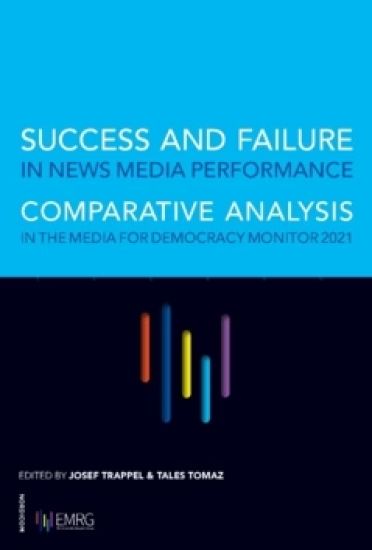
Success and failure in news media performance : comparative analysis in the media for democracy monitor 2021

Success and failure in news media performance : comparative analysis in the media for democracy monitor 2021

Eva Mayerhöffer; Marinella Belluati; Brooks DeCillia; Leen d’Haenens; Alice Baroni; Wai Han Lo; Claudia Padovani; Achilleas Karadimitriou; Christine Horz-Ishak; Torbjörn van Krogh; Christian Ruggiero; Cecilia Biancalana; Heinz Bonfadelli; Valgerður Jóhannsdóttir; Lars Nord; Hanne Vandenberghe; Werner A. Meier; Joaquim Fidalgo; John Grönvall; Barbara Thomass; Mauro Bomba; Francesco Marrazzo; Gordon Ramsay; Enrique Núñez-Mussa; Kari Karppinen; Martin Moore

Nordicom
2022
nidottu
The Media for Democracy Monitor (MDM) assesses the performance of leading news media in mature democracies with regard to three core dimensions of democracy: freedom, equality, and control. After monitoring 10 countries in 2011, the MDM project expanded to cover leading news media of 18 democracies in 2021. In this book, the most salient results from the MDM were selected to undergo cross-country and longitudinal comparison, searching for patterns and tendencies across countries, with a particular focus on the influence of digitalisation. Some of the key results are the ubiquitousness of the news media’s financial crisis, increasing consumption gaps as younger generations prefer online platforms, and persisting gender inequalities, both in news content and in newsrooms. However, the volume also shows that the reach of news media remains high, the watchdog role and investigative journalism are increasingly relevant in daily practice, and that public service media, in general, continue to play a vital role for democracy. These results have implications for media policies, regulations, and practices to improve news quality and, ultimately, democracy worldwide.