Kirjojen hintavertailu. Mukana 11 244 527 kirjaa ja 12 kauppaa.

Kirjahaku

Etsi kirjoja tekijän nimen, kirjan nimen tai ISBN:n perusteella.

137 kirjaa tekijältä Karl Barth

Karl Barth

Karl Barth

Karl Barth

Cambridge University Press
2009
nidottu
This short volume, which emerged from the Karl Barth centenary year in 1986, brings together a collection of essays which makes an important contribution to Barth interpretation. Few would dispute the fact that Karl Barth is one of the great figures of twentieth-century theology, and two decades after his death he continues to fascinate those who study the field and his own thought in the magisterial, unfinished Church Dogmatics. Yet while his impact and influence upon modern theology has been great, Barth has been subject, too, to suspicion and sometimes to fierce opposition. The contributors to this book examine and refute some of the more simplistic reasons why the thought of Karl Barth has had a somewhat limited appeal in modern English-language theology. Writing form a variety of ecclesiastical persuasions, Reformed, Lutheran, Anglican and Roman Catholic, the authors seek to demonstrate at a fundamental level the continuing important of some of Barth's major concerns. Collectively the essays constitute a positive introduction to Barth, to his place in the history of the philosophy of religion, as a constructive theologian, as a Churchman and in specific relation to the modern history of English-language theology.
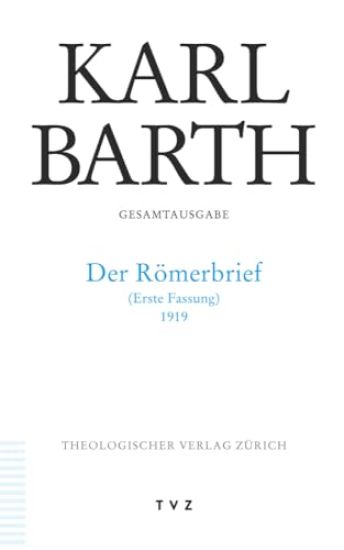
Karl Barth: Die Kirchliche Dogmatik. Studienausgabe: Band 2: I.1 8-12: Die Offenbarung Gottes I
Karl Barth (1886-1968) studierte Theologie in Bern, Berlin, Tubingen, Marburg und war von 1909 bis 1921 Pfarrer in Genf und Safenwil. Mit seiner Auslegung des Romerbriefes (1919, 1922) begann eine neue Epoche der evangelischen Theologie. Dieses radikale Buch trug ihm einen Ruf als Honorarprofessor nach Gottingen ein, spater wurde er Ordinarius in Munster und Bonn. Er war Mitherausgeber von Zwischen den Zeiten (1923-1933), der Zeitschrift der Dialektischen Theologie. Karl Barth war der Autor der Barmer Theologischen Erklarung und Kopf des Widerstands gegen die Gleichschaltung der Kirchen durch den Nationalsozialismus. 1935 wurde Barth von der Bonner Universitat wegen Verweigerung des bedingungslosen Fuhrereids entlassen. Er bekam sofort eine Professur in Basel, blieb aber mit der Bekennenden Kirche in enger Verbindung. Sein Hauptwerk, Die Kirchliche Dogmatik, ist die bedeutendste systematisch-theologische Leistung des 20. Jahrhunderts.
Karl Barth Gesamtausgabe: Abteilung II. Akademische Werke. Der Romerbrief. Zweite Fassung 1922
Karl Barths zweite, vollig neu geschriebene Fassung der Auslegung des Romerbriefs ist das Grundungsdokument der Dialektischen Theologie. Sie hat eine neue Epoche eingeleitet: eine Theologie in der Moderne. Hatte die erste Fassung von 1919 noch durch das Historische hindurchsehen wollen in den Geist der Bibel, so will die 1922 geschriebene zweite Fassung konsequent bis zu dem Punkt vorstossen, wo ich nahezu nur noch vor dem Ratsel der Sache, nahezu nicht mehr vor dem Ratsel der historischen Urkunde als solcher stehe. Die Edition dieses klassischen Werks in der Karl Barth-Gesamtausgabe bietet neben einem textkritischen Vergleich der Auflagen von 1922 und 1923 Erlauterungen zu den theologiegeschichtlichen, literarischen, historischen und zeitgeschichtlichen Anspielungen.
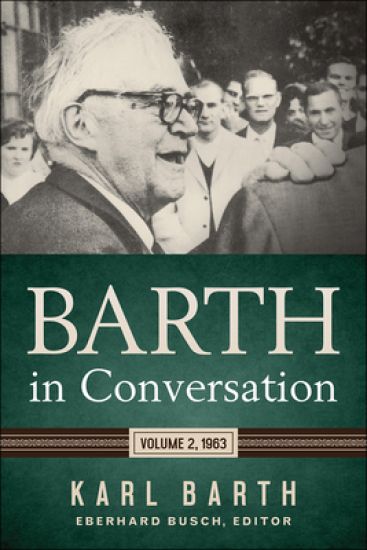
Barth in Conversation

Barth in Conversation

Karl Barth

Westminster/John Knox Press,U.S.
2018
sidottu
In recognition of Karl Barth's stature as a theologian and public figure in the life of Europe and the West, Swiss publisher Theologischer Verlag Zurich (TVZ) published Conversations, a collection of correspondence, articles, interviews, and other short-form writings by Barth. Collected in three volumes, Conversations reveals the depth and breadth of Barth's theological thought, as well as his humor and humanity. Now, for the first time in English, the second of those volumes is offered here. Covering the year 1963, Volume 2 highlights a period in which Barth was especially active, particularly in regard to ecumenism and issues related to the Cold War. Within these pages, scholars and students will find a comprehensive view into Barth's life and beliefs about theology and its role in modern society.
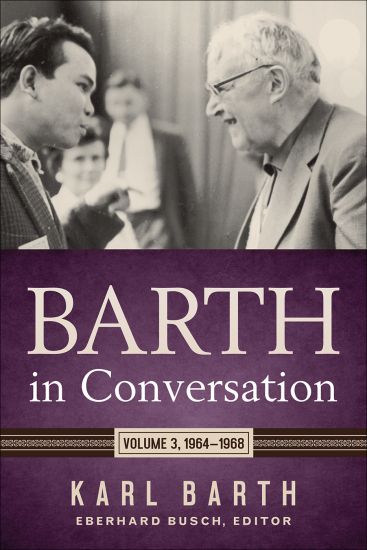
Barth in Conversation: Volume 3: 1964-1968

Barth in Conversation: Volume 3: 1964-1968

Karl Barth

WESTMINSTER JOHN KNOX PRESS
2019
sidottu
In recognition of Karl Barths stature as a theologian and public figure in the life of Europe and the West, Swiss publisher Theologischer Verlag Zurich (TVZ) published Conversations, a collection of correspondence, articles, interviews, and other short-form writings by Barth. Collected in three volumes, Conversationsreveals the depth and breadth of Barths theological thought as well as his humor and humanity. Now, for the first time in English, the third and final volume is offered here. Volume 3 covers the period from 1964 to 1968, the year of Barths death. As such, it represents the culmination of the great theologians thoughts on a broad range of subjects, from the challenges of living as the church in an increasingly secular world to the distinctive joys and challenges of the pastoral vocation.
Barth in Conversation

Barth in Conversation

Karl Barth

WESTMINSTER/JOHN KNOX PRESS,U.S.
2018
pokkari
In recognition of Karl Barth's stature as a theologian and public figure in the life of Europe and the West, Swiss publisher Theologischer Verlag Zurich (TVZ) published Conversations, a collection of correspondence, articles, interviews, and other short-form writings by Barth. Collected in three volumes.
The Early Barth - Lectures and Shorter Works: Volume 2, 1909-1914
The Early Barth series spotlights the theological restlessness of a thinker on the cusp of reshaping twentieth-century Christian thought. Karl Barth was the most influential theologian of the twentieth century, and his work continues to inspire both fresh theological thinking and critical debate. The period covered by the volumes in the Early Barth series--1905 to 1933--saw Barth emerge from his training under such theological giants as Adolf von Harnack and Wilhelm Herrmann; assert his rejection of liberal Protestant theology in his towering commentary on Romans; and work through an earlier uncertainty to become a critic on theological grounds of the rise of Nazism. These volumes contain English translations of essays, lectures, academic papers, correspondences, editorials, and other writings that were not previously translated into English, and they provide insight into the development of Barth's theology during this crucial period of his life. Volume 2 of The Early Barth--Lectures and Shorter Works covers the period in Barth's career when he served as a pastor, first in Geneva and then in Safenwil, Swizerland, and up through the point where his theology takes a decisive turn in response to the outbreak of the First World War. It includes substantive footnotes offering historical context and comparative documents, as well as annotations at the beginning of each writing, providing background information that contextualizes the Barth piece, Barth's purpose for writing it, his approach and sources, its reception, and more. The works by Barth in this volume include: Reformation (1909) Review of E. Schrenk, Seelsorgerliche Briefe f r allerlei Leute (1909) Did Jesus Live? A Retrospective Easter Meditation (1910) Survey of Protestant Mission (1910) Biographical Sketches from the History of the Christian Religion (1910) Ideas and Thoughts on Philosophy of Religion (1910) Spittler, Christian Friedrich (1910) Stockmeyer, Immanuel (1910) The Christian Faith and History (1910) Something about the Church: Especially about the German Reformed Church in Geneva and What to Make of It (1910) Monsieur Tout le Monde (1910/11) Modern Pastoral Care and Its Psychological and Religious Foundations (1910/11) Gerhard Tersteegen Essay] (1910) God Disposes, but Humans Should Still Propose From Calvin's Institutes (1559) (1911) John Mott and the Student Christian Movement (1911) Novalis Essay] (1911) The Reemergence of Metaphysics in Theology (1911) Human Rights and Civic Duty (1911) Jesus Christ and the Social Movement (1911) Answer to the Open Letter of Mr. W. H ssy in Aarburg, W. H ssy, Open Letter to Mr. Karl Barth, Pastor in Safenwil Religion and Science (1912) Review of Karl Heim, Das Gewissheitsproblem in der systematischen Theologie bis zu Schleiermacher (1912) Objection regarding Military Aircraft (1913) Socrates (1913) The Workers' Question (1913/1914) Reformation in Bern (1913/14) Aargau Reformed Church Synod I] (1913) The Blessing of a Christian Home (1913) Gospel and Socialism (1914)
Dogmatics in Outline

Dogmatics in Outline

Karl Barth

HARPER PERENNIAL
1959
nidottu
Barth stands before us as the greatest theologian of the twentieth century, yet the massive corpus of work which he left behind, the multi volume Church Dogmatics, can seem daunting and formidable to readers today. Fortunately his Dogmatics in Outline first published in English in 1949, contains in brilliantly concentrated form even in shorthand, the essential tenets of his thinking. Built around the assertions made in the Apostles Creed the book consists of a series of reflections on the foundation stones of Christian doctrine. Because Dogmatics in Outline derives from very particular circumstances namely the lectures Barth gave in war-shattered Germany in 1946, it has an urgency and a compassion which lend the text a powerful simplicity. Despite its brevity the book makes a tremendous impact, which in this new edition will now be felt by a fresh generation of readers.
The Epistle to the Romans

The Epistle to the Romans

Karl Barth

Oxford University Press Inc
1968
nidottu
Named one of Church Times's Best Christian BooksThis volume provides a much-needed English translation of the sixth edition of what is considered the fundamental text for fully understanding Barthianism. Barth--who remains a powerful influence on European and American theology--argues that the modern Christian preacher and theologian face the same basic problems that confronted Paul. Assessing the whole Protestant argument in relation to modern attitudes and problems, he focuses on topics such as Biblical exegesis; the interrelationship between theology, the Church, and religious experience; the relevance of the truth of the Bible to culture; and what preachers should preach.
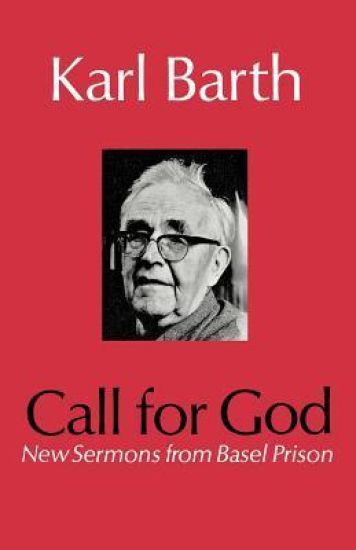
Call for God

Call for God

Karl Barth

SCM Press
2012
nidottu
This second collection of sermons preached by Karl Barth in Basel prison won the same high praise as its predecessor, Deliverance to the Captives. 'In a mere twelve sermons much of Barth's greatness comes through, his faith, his heart and compassion', wrote the Times Literary Supplement, and the Church of England Newspaper remarked; 'We find revealed here the deep and pastoral concern which lies behind the theological genius of Barth'. Whether beginning from the Old Testament or the New, Barth has a unique gift of becoming a vehicle for conveying the majesty and the glory of God who is at the same time the God of mercy and loving-kindness.
Dogmatics in Outline

Dogmatics in Outline

Karl Barth

SCM PRESS
2001
nidottu
Barth stands before us as the greatest theologian of the twentieth century, yet the massive corpus of work which he left behind, the multi volume Church Dogmatics, can seem daunting and formidable to readers today. Fortunately his Dogmatics in Outline first published in English in 1949, contains in brilliantly concentrated form even in shorthand, the essential tenets of his thinking. Built around the assertions made in the Apostles Creed the book consists of a series of reflections on the foundation stones of Christian doctrine. Because Dogmatics in Outline derives from very particular circumstances namely the lectures Barth gave in war-shattered Germany in 1946, it has an urgency and a compassion which lend the text a powerful simplicity. Despite its brevity the book makes a tremendous impact, which in this new edition will now be felt by a fresh generation of readers.
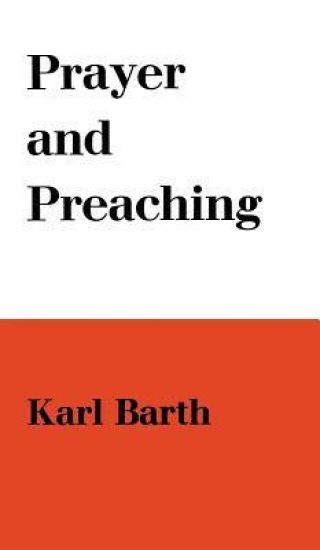
Prayer and Preaching

Prayer and Preaching

Karl Barth

SCM Press
2012
nidottu
In a Preface, Professor James S. Stewart, Moderator of the General Assembly of the Church of Scotland, writes: `This little book demonstrates wonderfully Barth's characteristic union of simplicity and profundity. Certainly there is in these pages a Word from the Lord for the revitalizing of the Church.' The book is based on two series of informal lectures, published in the USA as Prayer and The Preaching of the Gospel. The first series studied Christian prayer, and particularly the Lord's Prayer as interpreted by Luther and Calvin. The second series ventured into the field of practical theology, discussing the essential characteristics of preaching and how to prepare a sermon. Here one who is mighty in the pulpit shows preachers that they must trust in Scripture itself; and lays bare his own attitude to the humbling but possible task of proclaiming the Word of God. Even Christians not responsible for composing sermons are responsible for hearing God through them, and they, too, will be helped by these intimately spiritual pages. Specimen sermons are added.