Kirjojen hintavertailu. Mukana 11 342 296 kirjaa ja 12 kauppaa.

Kirjahaku

Etsi kirjoja tekijän nimen, kirjan nimen tai ISBN:n perusteella.

81 kirjaa tekijältä Karl Jaspers

Kant

Kant

Karl Jaspers

Mariner Books
1966
nidottu
A masterful exploration of Kant’s intellectual development, theory of knowledge, politics, and ethics. Edited by Hannah Arendt; Index. Translated by Ralph Manheim.
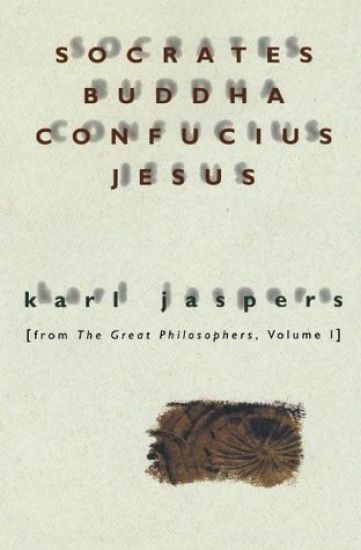
Socrates, Buddha, Confucius, Jesus

Socrates, Buddha, Confucius, Jesus

Karl Jaspers

HARPERCOLLINS PUBLISHERS INC
1966
nidottu
A part of Jaspers’s planned universal history of philosophy, focusing on the four paradigmatic individuals who have exerted a historical influence of incomparable scope and depth. Edited by Hannah Arendt; Index. Translated by Ralph Manheim.
Way to Wisdom

Way to Wisdom

Karl Jaspers

Yale University Press
2003
pokkari
One of the founders of existentialism, the eminent philosopher Karl Jaspers here presents for the general reader an introduction to philosophy. In doing so, he also offers a lucid summary of his own philosophical thought. In Jaspers’ view, the source of philosophy is to be found “in wonder, in doubt, in a sense of forsakenness,” and the philosophical quest is a process of continual change and self-discovery. In a new foreword to this edition, Richard M. Owsley provides a brief overview of Jaspers’ life and achievement.“An eloquent expression of a great hope that philosophy may again become an activity really relevant not only to the perennial problems of life and death but to the unusual configurations of such problems in our time.”—Julian N. Hartt, Yale Review“Original, sincere, cultivated, and stimulating.”—Philosophy
Leonardo, Descartes, Max Weber (Routledge Revivals)
First published in 1965, this collection of three essays by influential German philosopher Karl Jaspers deals with the response of the philosophical mind to the world of reality, with the search for truth. In Leonardo, this search is shown in the thinking and the works of a supreme artist whose means of apperception are the senses.The essay on Max Weber commemorates a man Jaspers knew personally and ardently admired.The main essay in the collection is an exhaustive, three part study of Descartes: analysing Descartes’ new philosophical operation, Descartes’ Method, and the position of his philosophy within the wider historical context of philosophical thought.
Leonardo, Descartes, Max Weber (Routledge Revivals)
First published in 1965, this collection of three essays by influential German philosopher Karl Jaspers deals with the response of the philosophical mind to the world of reality, with the search for truth. In Leonardo, this search is shown in the thinking and the works of a supreme artist whose means of apperception are the senses. The essay on Max Weber commemorates a man Jaspers knew personally and ardently admired. The main essay in the collection is an exhaustive, three part study of Descartes: analysing Descartes’ new philosophical operation, Descartes’ Method, and the position of his philosophy within the wider historical context of philosophical thought.
Man in the Modern Age (Routledge Revivals)
First published in English in 1933, this detailed philosophical examination of the contemporary state and nature of mankind is a seminal work by influential German philosopher Karl Jaspers. Elucidating his theories on a variety of topics pertaining to contemporary and future human existence, Man in the Modern Age is an ambitious and wide-ranging work, which meditates upon such diverse subjects as the tension between mass-order and individual human life, our present conception of human life and the potential for mankind’s future existence. Written shortly before the accession to power of Hitler and National Socialism, this is not only an important philosophical work, but also an insightful and intriguing historical document.
Man in the Modern Age (Routledge Revivals)
First published in English in 1933, this detailled philosophical examination of the contemporary state and nature of mankind is a seminal work by influential German philsopher Karl Jaspers. Elucidating his theories on a variety of topics pertaining to contemporary and future human existence, Man in the Modern Age is a key text by a man whose influence in the field continues to be felt.
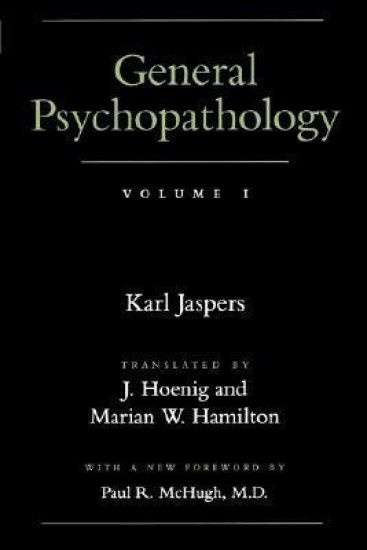
General Psychopathology

General Psychopathology

Karl Jaspers

Johns Hopkins University Press
1998
pokkari
Volume 1 In 1910, Karl Jaspers wrote a seminal essay on morbid jealousy in which he laid the foundation for the psychopathological phenomenology that through his work and the work of Hans Gruhle and Kurt Schneider, among others, would become the hallmark of the Heidelberg school of psychiatry. In "General Psychopathology," his most important contribution to the Heidelberg school, Jaspers critiques the scientific aspirations of psychotherapy, arguing that in the realm of the human, the explanation of behavior through the observation of regularity and patterns in it ( "Erkldrende Psychologie") must be supplemented by an understanding of the "meaning-relations" experienced by human beings ( "Verstehende Psychologie").
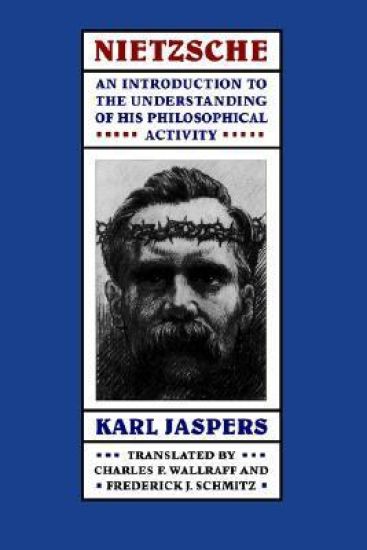
Nietzsche

Nietzsche

Karl Jaspers

Johns Hopkins University Press
1997
pokkari
Nietzsche claimed to be a philosopher of the future, but he was appropriated as a philosopher of Nazism. His work inspired a long study by Martin Heidegger and essays by a host of lesser disciples attached to the Third Reich. In 1935, however, Karl Jaspers set out to "marshall against the National Socialists the world of thought of the man they had proclaimed as their own philosopher." The year after publishing Nietzsche, Jaspers was discharged from his professorship at Heidelberg University by order of the Nazi leadership. Jaspers does not fall into the same trap as idealogues do, citing bits and pieces from Nietzsche's work to reinforce already held opinions. Instead, he openly shows the wide range of Nietzsche's views, including his endorsement of wars and warriors, his prophecies of world struggle and "new masters," and the cruel arrogance of the supermen. Yet Jaspers finds Nietzsche's philosophy to be extraordinary not only because he foresaw all the monstrosities of the twentieth century, but also because he saw through them. "The appearance which Nietzsche's work presents can be expressed figuratively: it is as though a mountain wall had been dynamited; the rock, already more or less shaped, conveys the idea of a whole. But the building for the sake of which the dynamiting seems to have been done has not been erected. However, the fact that the work lies about like a heap of ruins does not appear to conceal its spirit from the one who happens to have found the key to the possibilities of construction; for him, many fragments fit together. But not unambiguously; many functionally suitable pieces are present in numerous, only slightly varied repetitions, others reveal themselves as precious and unique forms, as though each were meant to furnish a cornerstone somewhere or a keystone for an arch."-Karl Jaspers, from the introduction
General Psychopathology

General Psychopathology

Karl Jaspers

Johns Hopkins University Press
1998
pokkari
Volume 2 In 1910, Karl Jaspers wrote a seminal essay on morbid jealousy in which he laid the foundation for the psychopathological phenomenology that through his work and the work of Hans Gruhle and Kurt Schneider, among others, would become the hallmark of the Heidelberg school of psychiatry. In "General Psychopathology," his most important contribution to the Heidelberg school, Jaspers critiques the scientific aspirations of psychotherapy, arguing that in the realm of the human, the explanation of behavior through the observation of regularity and patterns in it ( "Erkldrende Psychologie") must be supplemented by an understanding of the "meaning-relations" experienced by human beings ( "Verstehende Psychologie").
Philosophy of Existence

Philosophy of Existence

Karl Jaspers

University of Pennsylvania Press
1971
pokkari
Philosophy of Existence was first presented to the public as a series of lectures invited by The German Academy of Frankfurt. In preparing these lectures Jaspers, whom the Nazis had already dismissed from his professorship at Heidelberg, knew that he was speaking in Germany for the last time. Jaspers used the occasion to offer an account of the cultural and intellectual situation from which existentialism emerged as well as a summary of his own philosophy. The book serves three purposes today: it brings the many strands of the existential movement into focus; it provides an overview of Jaspers's own philosophical position; and it demonstrates by example that philosophy need not be irrational, antiscientific, journalistic, or homiletic in order to be existential and engagÉ. In this short book Jaspers provides a corrective for the popular view of existentialism as a pessimistic, irrationalist philosophy. He maintains that it is, rather part of mainstream of Western philosophy-the form that philosophy has taken in our day.
The Question of German Guilt

The Question of German Guilt

Karl Jaspers

Fordham University Press
2001
sidottu
Shortly after the Nazi government fell, a philosophy professor at Heidelberg University lectured on a subject that burned the consciousness and conscience of thinking Germans. "Are the German people guilty?" These lectures by Karl Jaspers, an outstanding European philosopher, attracted wide attention among German intellectuals and students; they seemed to offer a path to sanity and morality in a disordered world. Jaspers, a life-long liberal, attempted in this book to discuss rationally a problem that had thus far evoked only heat and fury. Neither an evasive apology nor a wholesome condemnation, his book distinguished between types of guilt and degrees of responsibility. He listed four categories of guilt: criminal guilt (the commitment of overt acts), political guilt (the degree of political acquiescence in the Nazi regime), moral guilt (a matter of private judgment among one's friends), and metaphysical guilt (a universally shared responsibility of those who chose to remain alive rather than die in protest against Nazi atrocities). Karl Jaspers (1883–1969) took his degree in medicine but soon became interested in psychiatry. He is the author of a standard work of psychopathology, as well as special studies on Strindberg, Van Gogh and Nietsche. After World War I he became Professor of Philosophy at Heidelberg, where he achieved fame as a brilliant teacher and an early exponent of existentialism. He was among the first to acquaint German readers with the works of Kierkegaard. Jaspers had to resign from his post in 1935. From the total isolation into which the Hitler regime forced him, Jaspers returned in 1945 to a position of central intellectual leadership of the younger liberal elements of Germany. In his first lecture in 1945, he forcefully reminded his audience of the fate of the German Jews. Jaspers's unblemished record as an anti-Nazi, as well as his sentient mind, have made him a rallying point center for those of his compatriots who wish to reconstruct a free and democratic Germany.
The Question of German Guilt

The Question of German Guilt

Karl Jaspers

Fordham University Press
2001
pokkari
Shortly after the Nazi government fell, a philosophy professor at Heidelberg University lectured on a subject that burned the consciousness and conscience of thinking Germans. "Are the German people guilty?" These lectures by Karl Jaspers, an outstanding European philosopher, attracted wide attention among German intellectuals and students; they seemed to offer a path to sanity and morality in a disordered world. Jaspers, a life-long liberal, attempted in this book to discuss rationally a problem that had thus far evoked only heat and fury. Neither an evasive apology nor a wholesome condemnation, his book distinguished between types of guilt and degrees of responsibility. He listed four categories of guilt: criminal guilt (the commitment of overt acts), political guilt (the degree of political acquiescence in the Nazi regime), moral guilt (a matter of private judgment among one's friends), and metaphysical guilt (a universally shared responsibility of those who chose to remain alive rather than die in protest against Nazi atrocities). Karl Jaspers (1883–1969) took his degree in medicine but soon became interested in psychiatry. He is the author of a standard work of psychopathology, as well as special studies on Strindberg, Van Gogh and Nietsche. After World War I he became Professor of Philosophy at Heidelberg, where he achieved fame as a brilliant teacher and an early exponent of existentialism. He was among the first to acquaint German readers with the works of Kierkegaard. Jaspers had to resign from his post in 1935. From the total isolation into which the Hitler regime forced him, Jaspers returned in 1945 to a position of central intellectual leadership of the younger liberal elements of Germany. In his first lecture in 1945, he forcefully reminded his audience of the fate of the German Jews. Jaspers's unblemished record as an anti-Nazi, as well as his sentient mind, have made him a rallying point center for those of his compatriots who wish to reconstruct a free and democratic Germany.
Allgemeine Psychopathologie Ein Leitfaden Fur Studierende, Arzte Und Psychologen (1913)
""Allgemeine Psychopathologie"" ist ein Leitfaden f�����r Studierende, �����rzte und Psychologen, der erstmals im Jahr 1913 von Karl Jaspers ver������ffentlicht wurde. In diesem Buch untersucht Jaspers die verschiedenen Formen von psychischen St������rungen und beschreibt ihre Symptome, Ursachen und Behandlungsm������glichkeiten. Er diskutiert auch die philosophischen und ethischen Fragen im Zusammenhang mit der Psychopathologie und untersucht die Beziehung zwischen Geist und K������rper. Das Buch hat einen gro�����en Einfluss auf die Entwicklung der Psychiatrie und der Psychologie gehabt und ist bis heute ein wichtiger Beitrag zur Forschung auf diesem Gebiet. Es ist ein unverzichtbares Werk f�����r jeden, der sich f�����r die Psychopathologie und die menschliche Psyche interessiert.This Is A New Release Of The Original 1913 Edition.This scarce antiquarian book is a facsimile reprint of the old original and may contain some imperfections such as library marks and notations. Because we believe this work is culturally important, we have made it available as part of our commitment for protecting, preserving, and promoting the world's literature in affordable, high quality, modern editions, that are true to their original work.
Psychologie Der Weltanschauungen (1919)

Psychologie Der Weltanschauungen (1919)

Karl Jaspers

Literary Licensing, LLC
2014
sidottu
""Psychologie der Weltanschauungen"" ist ein Buch von Karl Jaspers, das im Jahr 1919 ver������ffentlicht wurde. Es ist ein Werk �����ber die Psychologie der Weltanschauungen, die sich mit der Erforschung der menschlichen Wahrnehmung und des Denkens befasst. Jaspers untersucht die verschiedenen Weltanschauungen, die in der Geschichte der Menschheit entstanden sind, und analysiert ihre psychologischen Grundlagen. Dabei besch�����ftigt er sich mit Themen wie Religion, Philosophie, Wissenschaft und Kunst. Das Buch ist ein Klassiker der Psychologie und der Philosophie und hat einen gro�����en Einfluss auf die Entwicklung dieser Disziplinen gehabt. Es ist ein wichtiger Beitrag zur Erforschung der menschlichen Natur und der menschlichen Erfahrungswelt.This Is A New Release Of The Original 1919 Edition.This scarce antiquarian book is a facsimile reprint of the old original and may contain some imperfections such as library marks and notations. Because we believe this work is culturally important, we have made it available as part of our commitment for protecting, preserving, and promoting the world's literature in affordable, high quality, modern editions, that are true to their original work.