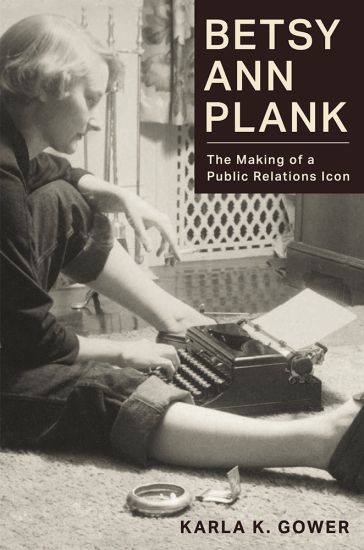
In 1973, Betsy Ann Plank became the first woman to chair the Public Relations Society of America in its twenty-five-year history. It was a tumultuous time to assume the national association’s leadership. Civil society seemed to be fraying at the edges, and trust in institutions and businesses had plummeted in the aftermath of Watergate. Yet Plank was ready to take on the task at hand. Throughout the span of her sixty-three-year career, she broke new ground on numerous occasions through her bold leadership and tireless service to others. Plank rose to the highest level of the field’s national association at a time when its leadership and membership were predominantly male. This book explores how she managed to navigate the very real barriers of gender-based discrimination that existed in public relations at least through the 1970s, and how she ultimately became devoted to public relations education.
We are living in what one author describes as ""highly promotional times."" Governments and corporations, nonprofits and special interest groups, all have spin doctors trying to turn the news to their advantage. This increasingly incestuous connection between the practitioners of public relations and journalism has resulted in a troubling shift in power. ""Public Relations and the Press"" examines how this shift came to be and explores the questions it raises about the role of media in a democratic society and the future of journalism. A democracy works when individuals have access to reliable information upon which to base decisions - information that in our day comes from the mass media. But what if journalists do not have the wherewithal to question their sources and evaluate the information they provide? This, Karla K. Gower explains, is precisely what happens when economic and competitive pressures shift power from the journalist to the source - and the source, not the journalist, controls the flow of information to the public. Gowers describes a situation in which people, ""informed"" by practitioners of public relations, do not have sufficient information to make valid decisions. At stake is the core credibility of the press itself, and therefore the essential claim of journalism to a privileged role in a democratic social order.
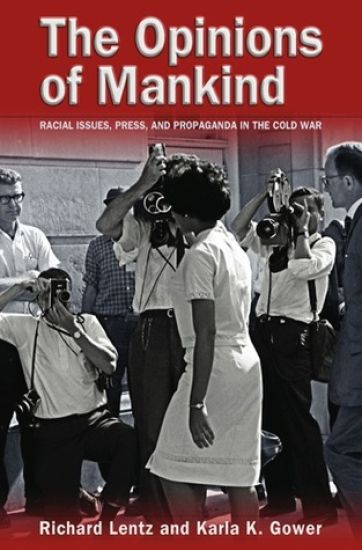
During the Cold War, the Soviets were quick to publicize any incident of racial hostility in the United States. Since violence by white Americans against minorities was the perfect foil to America's claim to be defenders of freedom, news of these occurrences was exploited to full advantage by the Russians. But how did the Soviets gain primary knowledge of race riots in small American towns? Certainly, the Soviets had reporter's stationed state-side, in big cities like New York, but research reveals that the majority of their information came directly from U.S. media sources. Throughout this period, the American press provided the foreign media with information about racially charged events in the United States. Such news coverage sometimes put Washington at a disadvantage, making it difficult for government officials to assuage foreign reactions to the injustices occurring on U.S. soil. Yet in other instances, the domestic press helped to promote favourable opinions aboard by articulating themes of racial progress. While still acknowledging racial abuses, these press spokesmen asserted that the situation in America was improving. Such paradoxical messages, both aiding and thwarting the efforts of the U.S. government, are the subject of The Opinions of Mankind: Racial Issues, Press, and Propaganda in the Cold War. The study, by scholars Richard Lentz and Karla K. Gower, describes and analyzes the news discourse regarding U.S. racial issues from 1946 to 1965. The Opinions of Mankind not only delves into the dissemination of race-related news to foreign outlets but also explores the impact foreign perceptions of domestic racism had on the U.S. government and its handling of foreign relations during the period. What emerges is an original, insightful contribution to Cold War studies. While other books examine race and foreign affairs during this period of American history, The Opinions of Mankind is the first to approach the subject from the standpoint of press coverage and its impact on world public opinion. This exhaustively researched and compellingly written volume will appeal to media scholars, political historians, and general readers alike. By taking a unique approach to the study of this period, The Opinions of Mankind presents the workings behind the battles for public opinion that took place between 1946 and 1965.