Kirjojen hintavertailu. Mukana 11 213 693 kirjaa ja 12 kauppaa.

Kirjahaku

Etsi kirjoja tekijän nimen, kirjan nimen tai ISBN:n perusteella.

11 kirjaa tekijältä Kasper Lippert-Rasmussen

Erik Rasmussen

Erik Rasmussen

Kasper Lippert-Rasmussen

Jurist- og økonom-
2014
nidottu
Erik Rasmussen (1917-1995) anses af mange for at være dansk statskundskabs ophavsmand. Som en af landets to første professorer i faget var han i årene 1959-1984 med til at opbygge Institut for Statskundskab ved Aarhus Universitet. Hans lærebog, Komparativ Politik (1968-69), var obligatorisk for de første generationer af cand. scient. pol.’er og med til at skole disse i den videnskabelige værdirelativisme, strukturfunktionalismen og David Easton’s opfattelse af politik og det politiske system. I sine senere år søgte Rasmussen især at kaste et kritisk lys over, hvad han anså for at være sin samtids uigennemtænkte »lighedsentusiasme«. Rasmussen var historiker af uddannelse og havde et udsædvanligt bredt videnskabeligt udsyn. Gennem hele sit akademiske virke var han stærkt optaget af videnskabsteoretiske aspekter ved statskundskaben.IndholdsoversigtRasmussenRedaktionelt forordKapitel 1. Erik Rasmussens liv og virkeKapitel 2. Den videnskabelige værdirelativismeKapitel 3. Videnskabelighed og intersubjektivitetKapitel 4. Hvad er politologi?Kapitel 5. Politiske systemer og strukturfunktionsanalysenKapitel 6. LighedKapitel 7. PerspektiveringKapitel 8. BegrebslisteKapitel 9. TekstudsnitLitteratur
Making Sense of Affirmative Action

Making Sense of Affirmative Action

Kasper Lippert-Rasmussen

Oxford University Press Inc
2020
sidottu
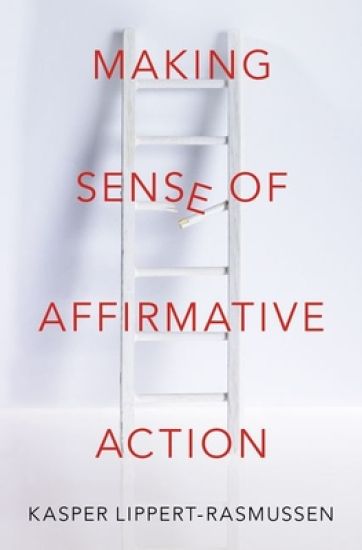
Kasper Lippert-Rasmussen here poses the question: "Is affirmative action morally (un)justifiable?" As a phrase that frequently surfaces in major headlines, affirmative action is a highly controversial and far-reaching issue, yet most of the recent scholarly literature surrounding the topic tends to focus on defending one side or another in a particular case of affirmative action. Lippert-Rasmussen instead takes a wide-angle view, addressing each of the prevailing contemporary arguments for and against affirmative action. In his introduction, he proposes an amended definition of affirmative action and considers what forms, from quotas to outreach strategies, may fall under this revised definition. He then analyzes the strengths and weaknesses of each position, relative to each other, and applies recent discussions in political philosophy to assess if and how each argument might justify different conclusions given different cases or philosophical frameworks. Each chapter investigates an argument for or against affirmative action. The six arguments for it consist of compensation, anti-discrimination, equality of opportunity, role model, diversity, and integration. The five arguments against it are reverse discrimination, stigma, mismatch, publicity, and merit. Lippert-Rasmussen also expands the discussion to include affirmative action for groups beyond the prototypical examples of African Americans and women, and to consider health and minority languages as possible criteria for inclusion in affirmative action initiatives. Based on the comparative strength of anti-discrimination and equality of opportunity arguments, Making Sense of Affirmative Action ultimately makes a case in favor of affirmative action; however, its originality lies in Lippert-Rasmussen's careful exploration of moral justifiability as a contextual evaluative measure and his insistence that complexity and a comparative focus are inherent to this important issue.
The Beam and the Mote

The Beam and the Mote

Kasper Lippert-Rasmussen

OXFORD UNIVERSITY PRESS INC
2023
sidottu
“Thou hypocrite, first cast out the beam out of thine own eye; and then shalt thou see clearly to cast out the mote out of thy brother's eye” says the Bible. In other words: there is something problematic about one person blaming another, when the blamer's faults are even greater. Many believe that even if one has done something blameworthy, one can dismiss blame when coming from a hypocritical blamer. Kasper Lippert-Rasmussen examines the nature and ethics of standingless, hypocritical blame. It argues that hypocrites lack standing to blame in virtue of their lack of commitment to the norms to which they appeal in their blame; that hypocritical blame is pro tanto morally wrong because it involves treating the blamee as an inferior; and that there are many other sources of lacking standing to blame than hypocrisy, e.g., complicity. Lippert-Rasmussen extrapolates these analyses to other moral responses, notably praising and forgiving. So far, philosophers interested in standing have focused narrowly on blaming, but many other moral responses require standing as well. Indeed, Lippert-Rasmussen argues that considerations about standing apply to illocutionary acts not involving appeals to moral norms, e.g., non-moral encouragements and epistemic blame. In closing, Lippert-Rasmussen uses insights related to the idea of standing as a basis for making a grand claim about how part of morality is interpersonal in a sense often ignored in discussions of mainstream first-order moral theories, and to elucidate the nature of the moral wrong involved in relying on negative statistical generalizations about certain groups of people.
Born Free and Equal?

Born Free and Equal?

Kasper Lippert-Rasmussen

Oxford University Press Inc
2013
sidottu
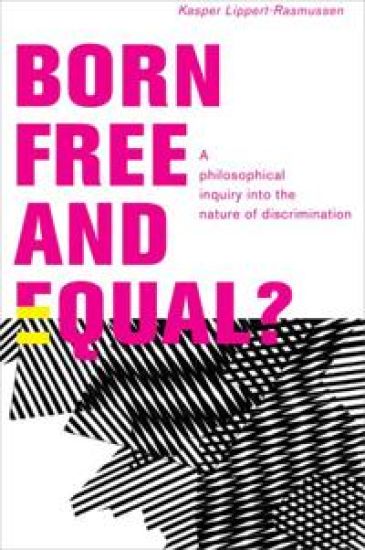
What is discrimination? There are certain instances of differential treatment that almost anyone would describe as discriminatory; yet upon deeper examination, this near-unanimity gives way to disagreement and difference. For instance, is it discrimination when hospitals hire non-smokers only? Not only do people differ on which cases of differential treatment they see as discriminatory, they also disagree about when discrimination is morally wrong; what makes it morally wrong; and, indeed, about whether all forms of discrimination are morally wrong! Finally, many disagree over what should be done about wrongful discrimination-especially about what the state could permissibly do to eliminate wrongful discrimination, e.g. in people's love lives. This book addresses these issues. It argues that there are different concepts of discrimination and that different purposes pertaining to different contexts determine which one is the most useful. It gives special attention to a concept of discrimination that ties discrimination to differential treatment of people on the basis of their membership in socially salient groups. Second, it argues that when discrimination is wrong, it is so first and foremost because of its harmful effects. Third, it takes issue with some of the standard devices used to counteract discrimination and submits that combating discrimination requires more than state actions. Finally, it argues that states may sometimes permissibly discriminate. "[Lippert-Rasmussen] is a master of advancing discussion on a topic by showing that where the rest of us saw only two or three possible positions, there are many positions, often smeared together in a confused way in prior writings on the topic. The different views need to be carefully distinguished, and we then need to look carefully at what can be said for and against each in turn. When we do this, our view of the issues significantly shifts. This method and its fruits are evident throughout the book… [The] author's analytical skill and creative imagination in following through this method make the book a pleasure to read. " -Richard J. Arneson, Professor of Philosophy, University of California, San Diego
Relational Egalitarianism

Relational Egalitarianism

Kasper Lippert-Rasmussen

Cambridge University Press
2018
sidottu
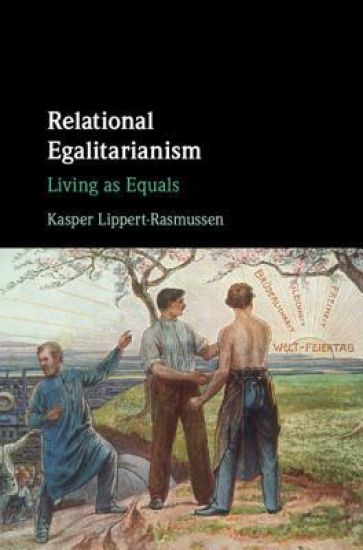
Over the last twenty years, many political philosophers have rejected the idea that justice is fundamentally about distribution. Rather, justice is about social relations, and the so-called distributive paradigm should be replaced by a new relational paradigm. Kasper Lippert-Rasmussen seeks to describe, refine, and assess these thoughts and to propose a comprehensive form of egalitarianism which includes central elements from both relational and distributive paradigms. He shows why many of the challenges that luck egalitarianism faces reappear, once we try to specify relational egalitarianism more fully. His discussion advances understanding of the nature of the relational ideal, and introduces new conceptual tools for understanding it and for exploring the important question of why it is desirable in the first place to relate as equals. Even severe critics of the distributive understanding of justice will find that this book casts important new light on the ideal to which they subscribe.
Relational Egalitarianism

Relational Egalitarianism

Kasper Lippert-Rasmussen

Cambridge University Press
2020
pokkari
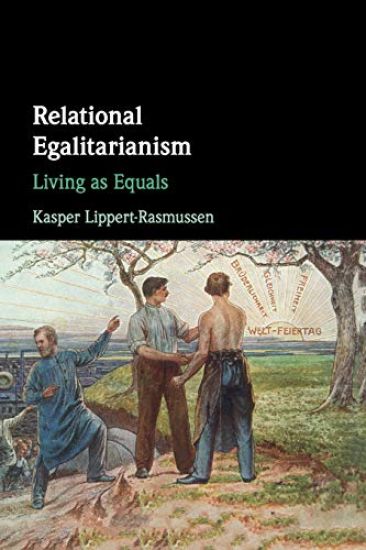
Over the last twenty years, many political philosophers have rejected the idea that justice is fundamentally about distribution. Rather, justice is about social relations, and the so-called distributive paradigm should be replaced by a new relational paradigm. Kasper Lippert-Rasmussen seeks to describe, refine, and assess these thoughts and to propose a comprehensive form of egalitarianism which includes central elements from both relational and distributive paradigms. He shows why many of the challenges that luck egalitarianism faces reappear, once we try to specify relational egalitarianism more fully. His discussion advances understanding of the nature of the relational ideal, and introduces new conceptual tools for understanding it and for exploring the important question of why it is desirable in the first place to relate as equals. Even severe critics of the distributive understanding of justice will find that this book casts important new light on the ideal to which they subscribe.
Luck Egalitarianism

Luck Egalitarianism

Kasper Lippert-Rasmussen

Bloomsbury Academic
2015
nidottu
Kasper Lippert-Rasmussen tackles all the major questions concerning luck egalitarianism, providing deep, penetrating and original discussion of recent academic discourses on distributive justice as well as responses to some of the main objections in the literature. It offers a new answer to the “Why equality?” and “Equality of what?” questions, and provides a robust luck egalitarian response to the recent criticisms of luck egalitarianism by social relations egalitarians. This systematic, theoretical introduction illustrates the broader picture of distributive justice and enables the reader to understand the core intuitions underlying, or conflicting with, luck egalitarianism.
Luck Egalitarianism

Luck Egalitarianism

Kasper Lippert-Rasmussen

Bloomsbury Academic
2015
sidottu
Kasper Lippert-Rasmussen tackles the major questions concerning luck egalitarianism, providing deep, penetrating and original discussion of recent academic discourses on distributive justice as well as responses to some of the main objections in the literature. He offers a new answer to the “Why equality?” and “Equality of what?” questions, and provides a robust luck egalitarian response to the recent criticisms of luck egalitarianism by social relations egalitarians. This systematic, theoretical introduction illustrates the broader picture of distributive justice and enables the reader to understand the core intuitions underlying, or conflicting with, luck egalitarianism.
Deontology, Responsibility & Equality

Deontology, Responsibility & Equality

Kasper Lippert-Rasmussen

Museum Tusculanum Press
2005
nidottu
Three questions that loom large in moral and political philosophy are these: Can deontological moral constraints be justified? When, if ever, are we morally responsible for what we do? How is the ideal of equality best configured? 'Deontology, Responsibility and Equality' deals with selected aspects of these three broad questions. It discusses critically certain attempts by Frances Kamm and Thomas Nagel (among others) to account for the impermissibility of minimising violations in terms of moral status. Also, it challenges the view that there is a morally relevant difference between doing and allowing harm and, especially, between killing and letting die. In relation to the second question, it concentrates on recent developments within compatibilist accounts of moral responsibility prompted by the work of Harry Frankfurt. It challenges his purported refutation of the principle of alternative possibilities as well as certain positive compatibilist, identification-based accounts of responsibility. Finally, with respect to the last question, the book focuses on how we should understand the ideal of equality of opportunity and the moral significance of the distinction between social and natural inequalities. It defends equality of outcome over equality of opportunity and the view that natural inequalities are, if bad, no less bad than social inequalities. This book has been accepted at the University of Copenhagen for a public defence as a Dr Phil dissertation.
Wrongful Discrimination

Wrongful Discrimination

Kasper Lippert-Rasmussen

Cambridge University Press
2025
sidottu
In a generic sense, to discriminate is to differentiate. Generic discrimination is not wrongful. But many instances of a more specific form of discrimination – differentiating between people because they are members of different socially salient groups (henceforth: group discrimination) – are wrongful. This means that people subjected to group discrimination are often wronged, and this bears importantly on whether such acts are morally impermissible. The three main accounts of what makes group discrimination wrongful appeal to considerations of harm, disrespect, and social relations of inequality, respectively. While each of them can explain the wrongfulness of some paradigmatic instances of wrongful direct discrimination, they explain the wrongfulness of a set of three important non-paradigmatic forms of discrimination – indirect discrimination, implicit bias, and algorithmic discrimination – less well. Overall, the prospects of a monistic account of the wrongfulness of discrimination are bleak.
Wrongful Discrimination

Wrongful Discrimination

Kasper Lippert-Rasmussen

Cambridge University Press
2025
pokkari
In a generic sense, to discriminate is to differentiate. Generic discrimination is not wrongful. But many instances of a more specific form of discrimination – differentiating between people because they are members of different socially salient groups (henceforth: group discrimination) – are wrongful. This means that people subjected to group discrimination are often wronged, and this bears importantly on whether such acts are morally impermissible. The three main accounts of what makes group discrimination wrongful appeal to considerations of harm, disrespect, and social relations of inequality, respectively. While each of them can explain the wrongfulness of some paradigmatic instances of wrongful direct discrimination, they explain the wrongfulness of a set of three important non-paradigmatic forms of discrimination – indirect discrimination, implicit bias, and algorithmic discrimination – less well. Overall, the prospects of a monistic account of the wrongfulness of discrimination are bleak.