Kirjojen hintavertailu. Mukana 11 342 296 kirjaa ja 12 kauppaa.

Kirjahaku

Etsi kirjoja tekijän nimen, kirjan nimen tai ISBN:n perusteella.

5 kirjaa tekijältä Kate Flint

The Woman Reader 1837-1914

The Woman Reader 1837-1914

Kate Flint

Clarendon Press
1995
nidottu
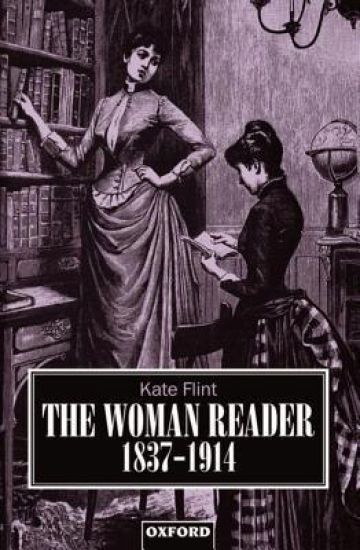
Why was the topic of women and reading so controversial for the Victorians and Edwardians? What was it assumed that women read, and what advice was given about where, when, and how to read? Kate Flint examines texts ranging from fiction, painting, and poetry, through medical and psychoanalytic works, advice manuals and periodicals, to autobiographies and contemporary social research, in her detailed and highly praised study of this central cultural debate in nineteenth-century society. Engaging also in recent feminist theory, she explores the manipulation of the figure of the woman reader in well-known works like Charlotte Bronte's Shirley and Virginia Woolf's The Voyage Out, in sensation novels and New Woman fiction, and in stories found in series such as The Princess's Novelettes. This is supported by evidence from actual readers - working women, as well as the privileged - as to how they understood their own highly varied reading experiences. This ground-breaking work provides an invaluable source for scholars and students of nineteenth-century culture, and will be essential reading for all interested in current critical debates on women and reading.
Flash!

Flash!

Kate Flint

Oxford University Press
2017
sidottu
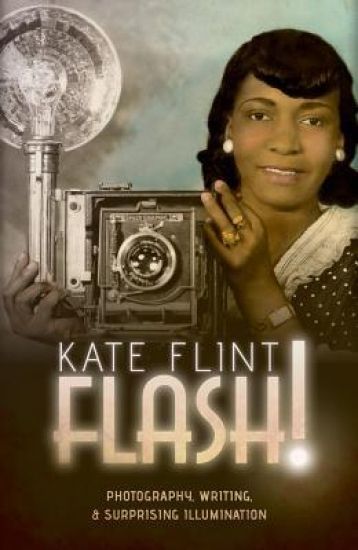
Flash! presents a fascinating cultural history of flash photography, from its mid-nineteenth century beginnings to the present day. All photography requires light, but the light of flash photography is quite distinctive: artificial, sudden, shocking, intrusive, and extraordinarily bright. Associated with revelation and wonder, it has been linked to the sublimity of lightning. Yet it has also been reviled: it's inseparable from anxieties about intrusion and violence, it creates a visual disturbance, and its effects are often harsh and create exaggerated contrasts. Flash! explores flash's power to reveal shocking social conditions, its impact on the representation of race, its illumination of what would otherwise remain hidden in darkness, and its capacity to put on display the most mundane corners of everyday life. It looks at flash's distinct aesthetics, examines how paparazzi chase celebrities, how flash is intimately linked to crime, how flash has been used to light up - and interrupt - countless family gatherings, how flash can 'stop time' allowing one to photograph rapidly moving objects or freeze in a strobe, and it considers the biggest flash of all, the atomic bomb. Examining the work of professionals and amateurs, news hounds and art photographers, photographers of crime and of wildlife, the volume builds a picture of flash's place in popular culture, and its role in literature and film. Generously illustrated throughout, Flash! brings out the central role of this medium to the history of photography and challenges some commonly held ideas about the nature of photography itself.
The Victorians and the Visual Imagination

The Victorians and the Visual Imagination

Kate Flint

Cambridge University Press
2008
pokkari
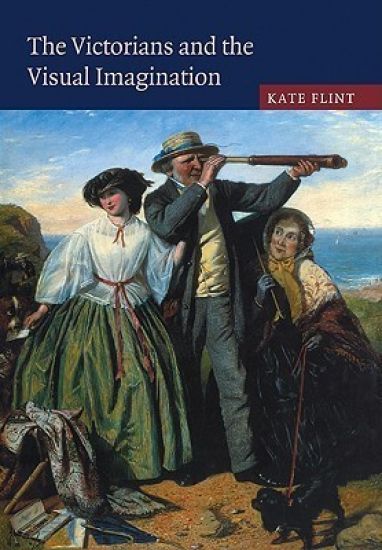
The Victorians and the Visual Imagination is an exciting and innovative exploration of the Victorians' attitudes towards sight. Tantalized by physiologists who proved the unreliability of the eye, intrigued by the role of subjectivity within vision, and provoked by new technologies of spectatorship, the Victorians were also imaginatively stirred by the sense of a world which lay just out of human sight. This interdisciplinary study draws on writers as diverse as George Eliot, Elizabeth Barrett Browning and Rudyard Kipling as well as Pre-Raphaelite and realist painters including Millais, Burne-Jones, William Powell Frith and Whistler, and a host of Victorian scientists, cultural commentators and art critics. Its topics include blindness, the location of memory, hallucination, dust, and the importance of the horizon - a dazzling eclectic range of subjects linked together by the operations of the eye and brain.
The Transatlantic Indian, 1776-1930

The Transatlantic Indian, 1776-1930

Kate Flint

Princeton University Press
2020
pokkari
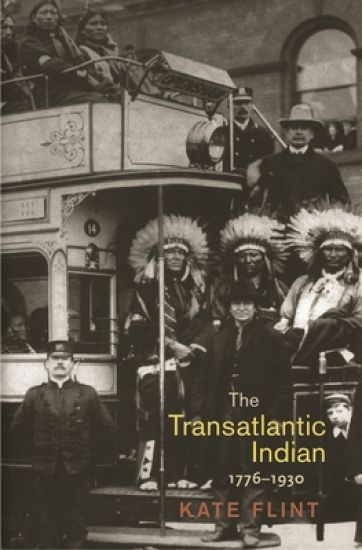
This book takes a fascinating look at the iconic figure of the Native American in the British cultural imagination from the Revolutionary War to the early twentieth century, and examining how Native Americans regarded the British, as well as how they challenged their own cultural image in Britain during this period. Kate Flint shows how the image of the Indian was used in English literature and culture for a host of ideological purposes, and she reveals its crucial role as symbol, cultural myth, and stereotype that helped to define British identity and its attitude toward the colonial world.Through close readings of writers such as Charles Dickens, Elizabeth Gaskell, and D. H. Lawrence, Flint traces how the figure of the Indian was received, represented, and transformed in British fiction and poetry, travelogues, sketches, and journalism, as well as theater, paintings, and cinema. She describes the experiences of the Ojibwa and Ioway who toured Britain with George Catlin in the 1840s; the testimonies of the Indians in Buffalo Bill's Wild West Show; and the performances and polemics of the Iroquois poet Pauline Johnson in London. Flint explores transatlantic conceptions of race, the role of gender in writings by and about Indians, and the complex political and economic relationships between Britain and America.The Transatlantic Indian, 1776-1930 argues that native perspectives are essential to our understanding of transatlantic relations in this period and the development of transnational modernity.
Elizabeth Gaskell

Elizabeth Gaskell

Kate Flint

Liverpool University Press
1994
nidottu
This original study of Elizabeth Gaskell places the woman and her writings within their full Victorian context. Recent critical appraisal has focused both on her role as a novelist of industrial England, and on her awareness of the position of women and the problems of the woman writer in that society. Kate Flint’s perceptive book shows that for Elizabeth Gaskell the condition of women was inseparable from the broader issues of social change. Books such as Mary Barton, Cranford, North and South and Wives and Daughters continually analyse and interrogate questions of power, authority and the expression and transmission of human values, and challenge many widely-held pre-conceptions of the age. Dr Flint shows how recent feminist criticism and theories of narrative work together to illuminate the radical and experimental nature of Mrs Gaskell’s fiction.