Kirjojen hintavertailu. Mukana 11 244 527 kirjaa ja 12 kauppaa.

Kirjahaku

Etsi kirjoja tekijän nimen, kirjan nimen tai ISBN:n perusteella.

8 kirjaa tekijältä Kate Kirkpatrick

Sartre on Sin

Sartre on Sin

Kate Kirkpatrick

Oxford University Press
2017
sidottu
Sartre on Sin: Between Being and Nothingness argues that Jean-Paul Sartre's early, anti-humanist philosophy is indebted to the Christian doctrine of original sin. On the standard reading, Sartre's most fundamental and attractive idea is freedom: he wished to demonstrate the existence of human freedom, and did so by connecting consciousness with nothingness. Focusing on Being and Nothingness, Kate Kirkpatrick demonstrates that Sartre's concept of nothingness (le néant) has a Christian genealogy which has been overlooked in philosophical and theological discussions of his work. Previous scholars have noted the resemblance between Sartre's and Augustine's ontologies: to name but one shared theme, both thinkers describe the human as the being through which nothingness enters the world. However, there has been no previous in-depth examination of this 'resemblance'. Using historical, exegetical, and conceptual methods, Kirkpatrick demonstrates that Sartre's intellectual formation prior to his discovery of phenomenology included theological elements-especially concerning the compatibility of freedom with sin and grace. After outlining the French Augustinianisms by which Sartre's account of the human as 'between being and nothingness' was informed, Kirkpatrick offers a close reading of Being and Nothingness which shows that the psychological, epistemological, and ethical consequences of Sartre's le néant closely resemble the consequences of its theological predecessor; and that his account of freedom can be read as an anti-theodicy. Sartre on Sin illustrates that Sartre' s insights are valuable resources for contemporary hamartiology.
Sartre on Sin

Sartre on Sin

Kate Kirkpatrick

Oxford University Press
2019
nidottu
Sartre on Sin: Between Being and Nothingness argues that Jean-Paul Sartre's early, anti-humanist philosophy is indebted to the Christian doctrine of original sin. On the standard reading, Sartre's most fundamental and attractive idea is freedom: he wished to demonstrate the existence of human freedom, and did so by connecting consciousness with nothingness. Focusing on Being and Nothingness, Kate Kirkpatrick demonstrates that Sartre's concept of nothingness (le néant) has a Christian genealogy which has been overlooked in philosophical and theological discussions of his work. Previous scholars have noted the resemblance between Sartre's and Augustine's ontologies: to name but one shared theme, both thinkers describe the human as the being through which nothingness enters the world. However, there has been no previous in-depth examination of this 'resemblance'. Using historical, exegetical, and conceptual methods, Kirkpatrick demonstrates that Sartre's intellectual formation prior to his discovery of phenomenology included theological elements-especially concerning the compatibility of freedom with sin and grace. After outlining the French Augustinianisms by which Sartre's account of the human as 'between being and nothingness' was informed, Kirkpatrick offers a close reading of Being and Nothingness which shows that the psychological, epistemological, and ethical consequences of Sartre's le néant closely resemble the consequences of its theological predecessor; and that his account of freedom can be read as an anti-theodicy. Sartre on Sin illustrates that Sartre' s insights are valuable resources for contemporary hamartiology.
Sartre and Theology

Sartre and Theology

Kate Kirkpatrick

T. T.Clark Ltd
2017
nidottu
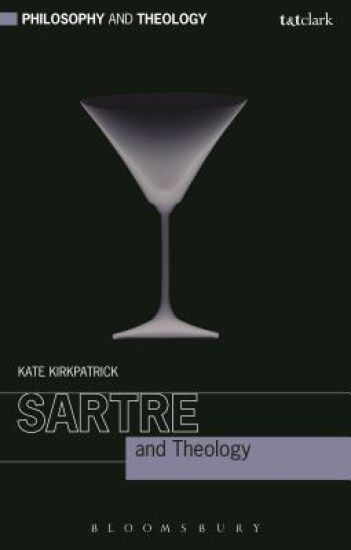
Jean-Paul Sartre was one of the twentieth century's most prominent atheists. But his philosophy was informed by theological writers and themes in ways that have not previously been acknowledged. In Sartre and Theology, Kirkpatrick examines Sartre's philosophical formation and rarely discussed early work, demonstrating how, and which, theology shaped Sartre's thinking. She also shows that Sartre's philosophy - especially Being and Nothingness and Existentialism is A Humanism - contributed to several prominent twentieth-century theologies, examining Catholic, Protestant, Orthodox, and Liberation theologians rebuttals and appropriations of Sartre. For philosophers, this work opens up an unmined vein of influence on Sartre's work which illuminates his conceptual divergences from the German phenomenological tradition. And for theologians, it offers insights into a theologically informed atheism which provoked responses from some of the twentieth-century's greatest theologians - an atheism from which we can still learn much today.
Sartre and Theology

Sartre and Theology

Kate Kirkpatrick

T. T.Clark Ltd
2017
sidottu
Jean-Paul Sartre was one of the twentieth century's most prominent atheists. But his philosophy was informed by theological writers and themes in ways that have not previously been acknowledged. In Sartre and Theology, Kirkpatrick examines Sartre's philosophical formation and rarely discussed early work, demonstrating how, and which, theology shaped Sartre's thinking. She also shows that Sartre's philosophy - especially Being and Nothingness and Existentialism is A Humanism - contributed to several prominent twentieth-century theologies, examining Catholic, Protestant, Orthodox, and Liberation theologians rebuttals and appropriations of Sartre.For philosophers, this work opens up an unmined vein of influence on Sartre's work which illuminates his conceptual divergences from the German phenomenological tradition. And for theologians, it offers insights into a theologically informed atheism which provoked responses from some of the twentieth-century's greatest theologians - an atheism from which we can still learn much today.
Praying through Grief

Praying through Grief

Kate Kirkpatrick

Lion Books
2010
sidottu
This book is a compilation of prayers, poems, and reflections on grief and grieving, to help the grieving person to put his or her feelings into words. With classic texts from the Bible and other prayers and poems from around the world, this book makes the perfect gift for a bereaved person and will be an indispensable resource for those working with the bereaved (e.g. pastors, funeral directors, chaplains, etc.). The content is organised thematically with chapters on, for example: - 'Give Sorrow Words' - Love Immortal - 'Do Not Stand at My Grave and Weep' - Comfort and Consolation
Becoming Beauvoir

Becoming Beauvoir

Kate Kirkpatrick

Bloomsbury Academic
2019
sidottu
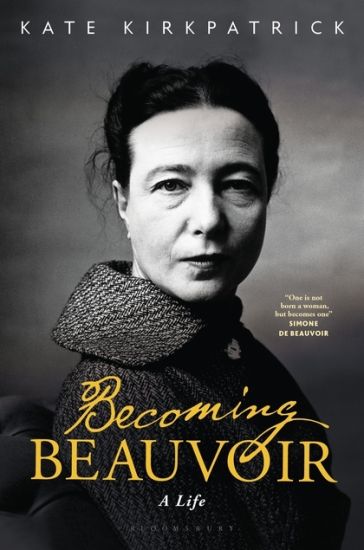
PROSE Award for Excellence in Biography and Autobiography Finalist 2020“One is not born a woman, but becomes one”, Simone de BeauvoirA symbol of liberated womanhood, Simone de Beauvoir’s unconventional relationships inspired and scandalised her generation. A philosopher, writer, and feminist icon, she won prestigious literary prizes and transformed the way we think about gender with The Second Sex. But despite her successes, she wondered if she had sold herself short.Her liaison with Jean-Paul Sartre has been billed as one of the most legendary love affairs of the twentieth century. But for Beauvoir it came at a cost: for decades she was dismissed as an unoriginal thinker who ‘applied’ Sartre’s ideas. In recent years new material has come to light revealing the ingenuity of Beauvoir’s own philosophy and the importance of other lovers in her life. This ground-breaking biography draws on never-before-published diaries and letters to tell the fascinating story of how Simone de Beauvoir became herself.
Becoming Beauvoir

Becoming Beauvoir

Kate Kirkpatrick

Bloomsbury Academic
2020
nidottu
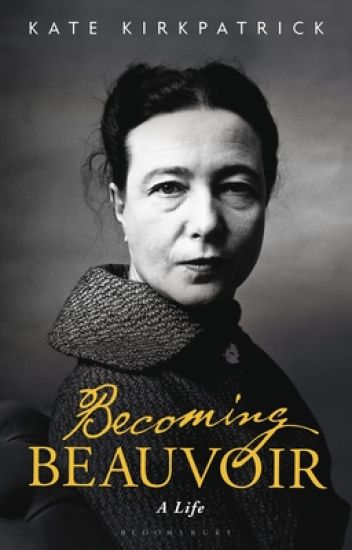
PROSE Award for Excellence in Biography and Autobiography Finalist 2020“One is not born a woman, but becomes one”, Simone de BeauvoirA symbol of liberated womanhood, Simone de Beauvoir’s unconventional relationships inspired and scandalised her generation. A philosopher, writer, and feminist icon, she won prestigious literary prizes and transformed the way we think about gender with The Second Sex. But despite her successes, she wondered if she had sold herself short.Her liaison with Jean-Paul Sartre has been billed as one of the most legendary love affairs of the twentieth century. But for Beauvoir it came at a cost: for decades she was dismissed as an unoriginal thinker who ‘applied’ Sartre’s ideas. In recent years new material has come to light revealing the ingenuity of Beauvoir’s own philosophy and the importance of other lovers in her life. This ground-breaking biography draws on never-before-published diaries and letters to tell the fascinating story of how Simone de Beauvoir became herself.