Kirjojen hintavertailu. Mukana 12 016 292 kirjaa ja 12 kauppaa.

Kirjahaku

Etsi kirjoja tekijän nimen, kirjan nimen tai ISBN:n perusteella.

4 kirjaa tekijältä Kate Lacey

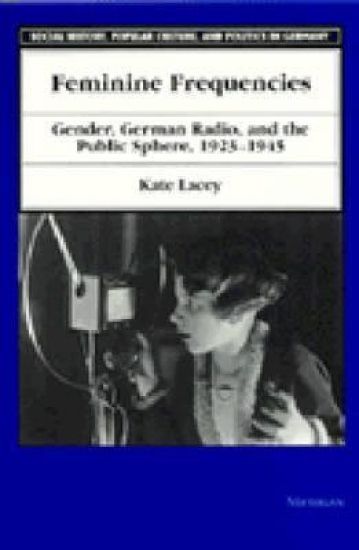
Feminine Frequencies

Feminine Frequencies

Kate Lacey

The University of Michigan Press
1996
nidottu
The years following World War I in Germany saw the simultaneous emergence of radio as a public medium entering the private sphere of the home and the large-scale emergence of women entering the public sphere of politics and production. In Feminine Frequencies, Kate Lacey examines the mutual implications of these important developments and provides a distinctive analysis of radio in the Weimar Republic and the Third Reich which not only restores women to the history of radio, but identifies and investigates the impact of gender politics on the development of German broadcasting.At the heart of the book is an exploration of radio programming for women from the mid-1920s to the end of World War II. Largely through the Frauenfunk, radio transformed women's domestic life, mediated women's experience of modernity and war, and worked to integrate women into the modern consumer culture, the national economy, and eventually the "national community" of the Volksgemeinschaft. At the same time, decisions about how that programming was to operate influenced the way radio was conceived as a broadcast rather than an interactive technology.Ultimately, the cultural practice and propaganda of the Third Reich were anticipated in and enabled by the legacy of broadcasting in the Weimar Republic. Feminine Frequencies confronts the consequences of a missed opportunity to harness the democratic potential of a new medium of communication. Based on original archival research, and interdisciplinary in approach, this book will be of great interest to students and scholars in German studies, women's studies, and media studies.Kate Lacey is Lecturer in Media Studies, School of European Studies, University of Sussex.

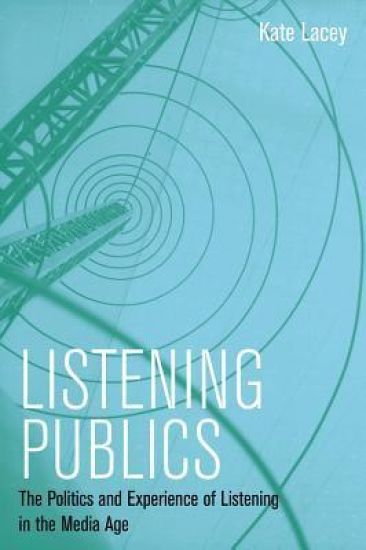
Listening Publics

Listening Publics

Kate Lacey

Polity Press
2013
sidottu
In focusing on the practices, politics and ethics of listening, this wide-ranging book offers an important new perspective on questions of media audiences, publics and citizenship. Listening is central to modern communication, politics and experience, but is commonly overlooked and underestimated in a culture fascinated by the spectacle and the politics of voice. Listening Publics restores listening to media history and to theories of the public sphere. In so doing it opens up profound questions for our understanding of mediated experience, public participation and civic engagement.Taking a cross-national and interdisciplinary approach, the book explores how listening publics have been constituted in relation to successive media technologies from the invention of writing to the digital age. It asks how new practices of listening associated with sound and audiovisual media transform a public world forged in the age of print. Through detailed histories and sophisticated theoretical analysis, Listening Publics demonstrates the embodied and critical activity of listening to be a rich concept with which to rethink the practices, politics and ethics of media communication.
Listening Publics

Listening Publics

Kate Lacey

Polity Press
2013
nidottu
In focusing on the practices, politics and ethics of listening, this wide-ranging book offers an important new perspective on questions of media audiences, publics and citizenship. Listening is central to modern communication, politics and experience, but is commonly overlooked and underestimated in a culture fascinated by the spectacle and the politics of voice. Listening Publics restores listening to media history and to theories of the public sphere. In so doing it opens up profound questions for our understanding of mediated experience, public participation and civic engagement.Taking a cross-national and interdisciplinary approach, the book explores how listening publics have been constituted in relation to successive media technologies from the invention of writing to the digital age. It asks how new practices of listening associated with sound and audiovisual media transform a public world forged in the age of print. Through detailed histories and sophisticated theoretical analysis, Listening Publics demonstrates the embodied and critical activity of listening to be a rich concept with which to rethink the practices, politics and ethics of media communication.