Kirjojen hintavertailu. Mukana 12 390 323 kirjaa ja 12 kauppaa.

Kirjahaku

Etsi kirjoja tekijän nimen, kirjan nimen tai ISBN:n perusteella.

9 kirjaa tekijältä Katherine Frank

Indira

Indira

Katherine Frank

HarperCollins Publishers Ltd
2002
nidottu
A non-partisan biography of one of the most formidable political figures of the twentieth century. Frank's biography deals with power and how this often isolated woman handled it, alongside her family and her emotional life.
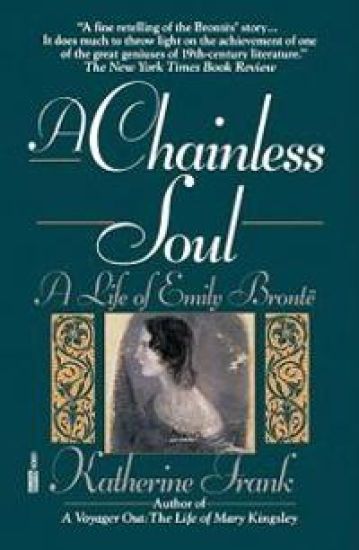
A Chainless Soul

A Chainless Soul

Katherine Frank

Fawcett
1992
nidottu
"A fine retelling of the Brontes' story . . . It does much to throw light on the achievement of one of the greatest geniuses of nineteenth-century literature."--The New York Times Book Review In this compelling, beautifully written book, Emily Bronte emerges for the first time in the full complexity of her nature--the most gifted and intelligent of the Bronte sisters, and also the most passionate, willful, and self-destructive. Katherine Frank, whose biography of Mary Kingsley won wide critical acclaim, brings a novelist's dramatic flair and a brilliant gift for analysis to this bold reinterpretation of Emily Bronte's life: the negligence of her sickly father, her affliction with anorexia, the fierce need to rebel that produced Wuthering Heights and her magnificent poetry. Probing the depths of Emily Bronte's dark nature as no other biographer has done, Frank also sheds new light on her special place in her gifted, doomed family and her consuming relationships with Charlotte and her alcoholic brother, Branwell. A Chainless Soul paints an intimate, vivid, and deeply affecting portrait of one of the greatest, and most misunderstood, artists of nineteenth-century fiction.
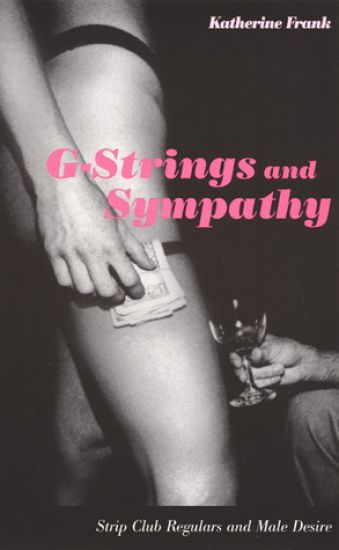
G-Strings and Sympathy

G-Strings and Sympathy

Katherine Frank

Duke University Press
2002
pokkari
Based on her experiences as a stripper in a city she calls Laurelton-a southeastern city renowned for its strip clubs-anthropologist Katherine Frank provides a fascinating insider’s account of the personal and cultural fantasies motivating male heterosexual strip club "regulars." Given that all of the clubs where she worked prohibited physical contact between the exotic dancers and their customers, in G-Strings and Sympathy Frank asks what-if not sex or even touching-the repeat customers were purchasing from the clubs and from the dancers. She finds that the clubs provide an intermediate space-not work, not home-where men can enjoyably experience their bodies and selves through conversation, fantasy, and ritualized voyeurism. At the same time, she shows how the dynamics of male pleasure and privilege in strip clubs are intertwined with ideas about what it means to be a man in contemporary America.Frank’s ethnography draws on her work as an exotic dancer in five clubs, as well as on her interviews with over thirty regular customers-middle-class men in their late-twenties to mid-fifties. Reflecting on the customers’ dual desires for intimacy and visibility, she explores their paradoxical longings for "authentic" interactions with the dancers, the ways these aspirations are expressed within the highly controlled and regulated strip clubs, and how they relate to beliefs and fantasies about social class and gender. She considers how regular visits to strip clubs are not necessarily antithetical to marriage or long-term heterosexual relationships, but are based on particular beliefs about marriage and monogamy that make these clubs desirable venues. Looking at the relative "classiness" of the clubs where she worked-ranging from the city’s most prestigious clubs to some of its dive bars-she reveals how the clubs are differentiated by reputations, dress codes, cover charges, locations, and clientele, and describes how these distinctions become meaningful and erotic for the customers. Interspersed throughout the book are three fictional interludes that provide an intimate look at Frank’s experiences as a stripper-from the outfits to the gestures, conversations, management, coworkers, and, of course, the customers.Focusing on the experiences of the male clients, rather than those of the female sex workers, G-Strings and Sympathy provides a nuanced, lively, and tantalizing account of the stigmatized world of strip clubs.
G-Strings and Sympathy

G-Strings and Sympathy

Katherine Frank

Duke University Press
2002
sidottu
Based on her experiences as a stripper in a city she calls Laurelton-a southeastern city renowned for its strip clubs-anthropologist Katherine Frank provides a fascinating insider’s account of the personal and cultural fantasies motivating male heterosexual strip club "regulars." Given that all of the clubs where she worked prohibited physical contact between the exotic dancers and their customers, in G-Strings and Sympathy Frank asks what-if not sex or even touching-the repeat customers were purchasing from the clubs and from the dancers. She finds that the clubs provide an intermediate space-not work, not home-where men can enjoyably experience their bodies and selves through conversation, fantasy, and ritualized voyeurism. At the same time, she shows how the dynamics of male pleasure and privilege in strip clubs are intertwined with ideas about what it means to be a man in contemporary America.Frank’s ethnography draws on her work as an exotic dancer in five clubs, as well as on her interviews with over thirty regular customers-middle-class men in their late-twenties to mid-fifties. Reflecting on the customers’ dual desires for intimacy and visibility, she explores their paradoxical longings for "authentic" interactions with the dancers, the ways these aspirations are expressed within the highly controlled and regulated strip clubs, and how they relate to beliefs and fantasies about social class and gender. She considers how regular visits to strip clubs are not necessarily antithetical to marriage or long-term heterosexual relationships, but are based on particular beliefs about marriage and monogamy that make these clubs desirable venues. Looking at the relative "classiness" of the clubs where she worked-ranging from the city’s most prestigious clubs to some of its dive bars-she reveals how the clubs are differentiated by reputations, dress codes, cover charges, locations, and clientele, and describes how these distinctions become meaningful and erotic for the customers. Interspersed throughout the book are three fictional interludes that provide an intimate look at Frank’s experiences as a stripper-from the outfits to the gestures, conversations, management, coworkers, and, of course, the customers.Focusing on the experiences of the male clients, rather than those of the female sex workers, G-Strings and Sympathy provides a nuanced, lively, and tantalizing account of the stigmatized world of strip clubs.

Plays Well in Groups

Plays Well in Groups

Katherine Frank

Rowman Littlefield
2013
sidottu
From tribal religious rituals to the Playboy mansion, and from ancient Rome to Burning Man, Plays Well in Groups explores the phenomenon of group sex. Author Katherine Frank draws on surveys, ethnographic research, participant interviews, and more to provide explanations for both, participation in group sex and our complex reactions to it, from fascination to fear. This book looks at group sex across cultures—who has it, and why. Group sex is almost always taboo and often criminalized, and yet it persists across cultures throughout history. Plays Well in Groups looks at the symbolism of orgies, as well as contemporary manifestations of group sex in bathhouses and public sex venues, at BDSM and swinging parties, on Craigslist, and in political scandals, Tantra classes, reality television, and more. Frank explores the many reasons people participate in group sex, from arousal to spiritual transcendence, in this bold study of subversive sexuality.
Plays Well in Groups

Plays Well in Groups

Katherine Frank

Rowman Littlefield
2017
nidottu
Plays Well in Groups provides a historical and cultural history of group sex throughout the ages. From depictions in Paleolithic cave art to the Playboy mansion, Katherine Frank delves into the fields of sociology, biology, anthropology, and psychology to provide explanations for both, participation in group sex and the complex reactions to it—from fascination to fear. This book draws on survey research, ethnographic observation around the world, and interviews with participants to offer a cross-cultural look at the manifestations and meanings of group sex; who has it, and why. Group sex is by definition non-monogamous, although not all kinds of non-monogamy involve group sex. Having sex willingly in the presence of observers, or with multiple participants, crosses a line of social propriety in many societies. Links between ritual sex and spirituality have been found throughout history, and words like “bliss,” “passion,” and “ecstasy” can describe both spiritual and sexual highs. Although anthropologists have identified very few, if any, truly universal taboos, taboos, such as public displays of sexual behavior and multiple, consecutive partners, are still widespread. Frank aims to bring forth some general explanations for these taboos that are present in local and specific explorations of human activity.
Crusoe

Crusoe

Katherine Frank

Vintage Publishing
2012
pokkari
He is troubled with gout and debt, but for now is preoccupied with a younger man on a barren shore - Robinson Crusoe, for which he will principally be remembered. Several miles south, an old man, Robert Knox, is bent over a heavy volume.
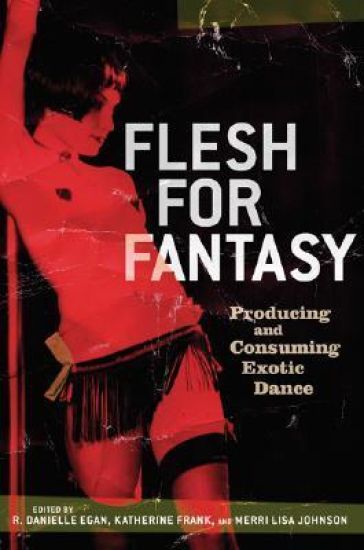
Flesh for Fantasy

Flesh for Fantasy

Katherine Frank; Danielle Egan; Merri Johnson

Thunder's Mouth Press
2005
pokkari
A rising interest in stripping as a form of exercise has attracted celebrities such as Teri Hatcher This book gives a glimpse of what exotic dancing is like from the eyes of the stripper, and reignites the fundamental debate of empowerment vs exploitation. It is useful for those concerned with sexual politics and interested workers in related industries. With a recent burst of feature films, documentaries, and books on strippers, the business of exotic dancing is hotter than ever. Over the last decade, there has been a steadily expanding interest in exotic dance, from its role as an "art form" to its benefits as a means of exercise. While the breadth of discussion generated on this topic has expanded, the fundamental debate remains the same: are female strippers empowering themselves or allowing themselves to be exploited? With her follow-up to "Jane Sexes It Up: True Confessions of Feminist Desire", M. Lisa Johnson moves beyond the old debates, and gives the reader a glimpse of what exotic dancing is like through the eyes of the stripper.The essays in "Flesh for Fantasy" cover everything from workplace policies and conditions, legal restrictions, customer behavior, and the struggle to overcome the stereotypes associated with the profession.