Kirjojen hintavertailu. Mukana 11 342 296 kirjaa ja 12 kauppaa.

Kirjahaku

Etsi kirjoja tekijän nimen, kirjan nimen tai ISBN:n perusteella.

5 kirjaa tekijältä Kathi Weeks

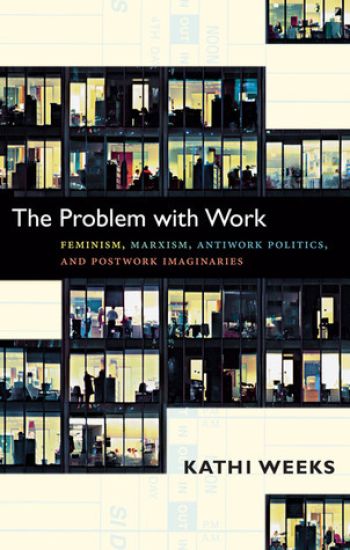
The Problem with Work

The Problem with Work

Kathi Weeks

Duke University Press
2011
sidottu
In The Problem with Work, Kathi Weeks boldly challenges the presupposition that work, or waged labor, is inherently a social and political good. While progressive political movements, including the Marxist and feminist movements, have fought for equal pay, better work conditions, and the recognition of unpaid work as a valued form of labor, even they have tended to accept work as a naturalized or inevitable activity. Weeks argues that in taking work as a given, we have “depoliticized” it, or removed it from the realm of political critique. Employment is now largely privatized, and work-based activism in the United States has atrophied. We have accepted waged work as the primary mechanism for income distribution, as an ethical obligation, and as a means of defining ourselves and others as social and political subjects. Taking up Marxist and feminist critiques, Weeks proposes a postwork society that would allow people to be productive and creative rather than relentlessly bound to the employment relation. Work, she contends, is a legitimate, even crucial, subject for political theory.
The Problem with Work

The Problem with Work

Kathi Weeks

Duke University Press
2011
pokkari
In The Problem with Work, Kathi Weeks boldly challenges the presupposition that work, or waged labor, is inherently a social and political good. While progressive political movements, including the Marxist and feminist movements, have fought for equal pay, better work conditions, and the recognition of unpaid work as a valued form of labor, even they have tended to accept work as a naturalized or inevitable activity. Weeks argues that in taking work as a given, we have “depoliticized” it, or removed it from the realm of political critique. Employment is now largely privatized, and work-based activism in the United States has atrophied. We have accepted waged work as the primary mechanism for income distribution, as an ethical obligation, and as a means of defining ourselves and others as social and political subjects. Taking up Marxist and feminist critiques, Weeks proposes a postwork society that would allow people to be productive and creative rather than relentlessly bound to the employment relation. Work, she contends, is a legitimate, even crucial, subject for political theory.

Constituting Feminist Subjects

Constituting Feminist Subjects

Kathi Weeks

Verso Books
2018
nidottu
Kathi Weeks suggests that one of the most important tasks for contemporary feminist theory is to develop theories of the subject that are adequate to feminist politics. Although the 1980s modernist-postmodernist debate put the problem of feminist subjectivity on the agenda, Weeks contends that limited debate now blocks the further development of feminist theory.Both modernists and postmodernists succeeded in making clear the problems of an already constituted, essentialist subject. What remains as an ongoing project, Weeks contends, is creating a theory of the constitution of subjects to account for the processes of social construction. This book presents one such account. Drawing on a number of different theoretical frameworks, including feminist standpoint theory, socialist feminism and poststructuralist thought, as well as theories of peformativity and self-valorisation, the author proposes a nonessential feminist subject, a theory of constituting subjects.
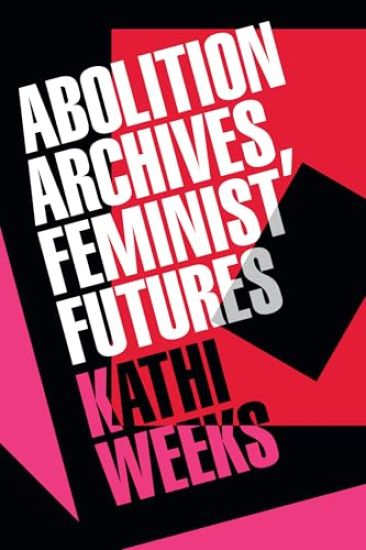
Abolition Archives, Feminist Futures

Abolition Archives, Feminist Futures

Kathi Weeks

DUKE UNIVERSITY PRESS
2026
sidottu
Abolitionist Archives, Feminist Futures takes up the work of three iconic feminist thinkers—Angela Davis, Shulamith Firestone, and Donna Haraway—to ask how each author’s vision of work, the family, and the carceral state can expand contemporary feminism’s ability to structurally analyze social problems. Kathi Weeks examines the archive of this unexpected collection of Marxist feminists whose works are united by their abolitionist approaches, arguing that feminism can gain a broader constituency by taking up anti-capitalist critique and praxis. Across the book’s chapters, Weeks recontextualizes well-known feminist texts in a new and original light, bringing their insight from the past into the present and future of abolitionist politics.
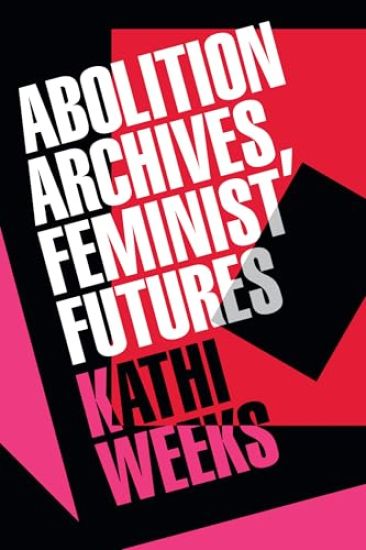
Abolition Archives, Feminist Futures

Abolition Archives, Feminist Futures

Kathi Weeks

DUKE UNIVERSITY PRESS
2026
pokkari
Abolitionist Archives, Feminist Futures takes up the work of three iconic feminist thinkers—Angela Davis, Shulamith Firestone, and Donna Haraway—to ask how each author’s vision of work, the family, and the carceral state can expand contemporary feminism’s ability to structurally analyze social problems. Kathi Weeks examines the archive of this unexpected collection of Marxist feminists whose works are united by their abolitionist approaches, arguing that feminism can gain a broader constituency by taking up anti-capitalist critique and praxis. Across the book’s chapters, Weeks recontextualizes well-known feminist texts in a new and original light, bringing their insight from the past into the present and future of abolitionist politics.