Kirjojen hintavertailu. Mukana 11 244 527 kirjaa ja 12 kauppaa.

Kirjahaku

Etsi kirjoja tekijän nimen, kirjan nimen tai ISBN:n perusteella.

3 kirjaa tekijältä Kathryn S. Freeman

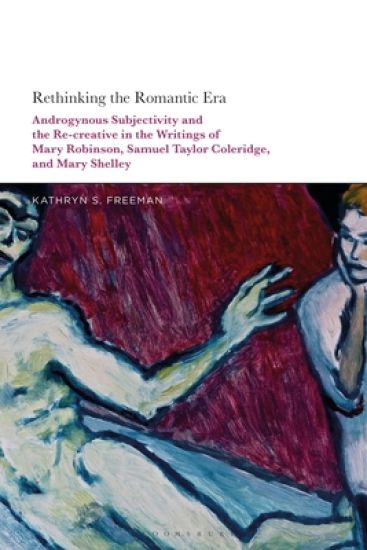
Rethinking the Romantic Era

Rethinking the Romantic Era

Kathryn S. Freeman

Bloomsbury Academic
2021
sidottu
Focusing on Samuel Taylor Coleridge, Mary Robinson and Mary Shelley, this book uses key concepts of androgyny, subjectivity and the re-creative as a productive framework to trace the fascinating textual interactions and dialogues among these authors. It crosses the boundary between male and female writers of the Romantic period by linking representations of gender with late Enlightenment upheavals regarding creativity and subjectivity, demonstrating how these interrelated concerns dismantle traditional binaries separating the canonical and the noncanonical; male and female; poetry and prose; good and evil; subject and object. Through the convergences among the writings of Coleridge, Mary Robinson, and Mary Shelley, the book argues that each dismantles and reconfigures subjectivity as androgynous and amoral, subverting the centrality of the male gaze associated with canonical Romanticism. In doing so, it examines key works from each author's oeuvre, from Coleridge’s “canonical” poems such as Rime of the Ancient Mariner, through Robinson’s lyrical poetry and novels such as Walsingham, to Mary Shelley’s fiction, including Frankenstein, Mathilda, and The Last Man.
Rethinking the Romantic Era

Rethinking the Romantic Era

Kathryn S. Freeman

BLOOMSBURY PUBLISHING PLC
2022
nidottu
Focusing on Samuel Taylor Coleridge, Mary Robinson and Mary Shelley, this book uses key concepts of androgyny, subjectivity and the re-creative as a productive framework to trace the fascinating textual interactions and dialogues among these authors. It crosses the boundary between male and female writers of the Romantic period by linking representations of gender with late Enlightenment upheavals regarding creativity and subjectivity, demonstrating how these interrelated concerns dismantle traditional binaries separating the canonical and the noncanonical; male and female; poetry and prose; good and evil; subject and object. Through the convergences among the writings of Coleridge, Mary Robinson, and Mary Shelley, the book argues that each dismantles and reconfigures subjectivity as androgynous and amoral, subverting the centrality of the male gaze associated with canonical Romanticism. In doing so, it examines key works from each author's oeuvre, from Coleridge’s “canonical” poems such as Rime of the Ancient Mariner, through Robinson’s lyrical poetry and novels such as Walsingham, to Mary Shelley’s fiction, including Frankenstein, Mathilda, and The Last Man.
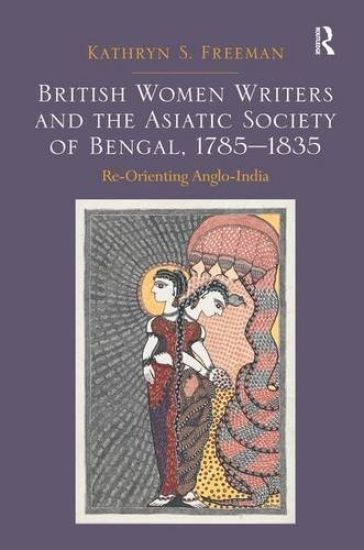
British Women Writers and the Asiatic Society of Bengal, 1785-1835
In her study of newly recovered works by British women, Kathryn Freeman traces the literary relationship between women writers and the Asiatic Society of Bengal, otherwise known as the Orientalists. Distinct from their male counterparts of the Romantic period, who tended to mirror the Orientalist distortions of India, women writers like Phebe Gibbes, Elizabeth Hamilton, Sydney Owenson, Mariana Starke, Eliza Fay, Anna Jones, and Maria Jane Jewsbury interrogated these distortions from the foundation of gender. Freeman takes a three-pronged approach, arguing first that in spite of their marked differences, female authors shared a common resistance to the Orientalists’ intellectual genealogy that allowed them to represent Vedic non-dualism as an alternative subjectivity to the masculine model of European materialist philosophy. She also examines the relationship between gender and epistemology, showing that women’s texts not only shift authority to a feminized subjectivity, but also challenge the recurring Orientalist denigration of Hindu masculinity as effeminate. Finally, Freeman contrasts the shared concern about miscegenation between Orientalists and women writers, contending that the first group betrays anxiety about intermarriage between East Indian Company men and indigenous women while the varying portrayals of intermarriage by women show them poised to dissolve the racial and social boundaries. Her study invites us to rethink the Romantic paradigm of canonical writers as replicators of Orientalists’ cultural imperialism in favor of a more complicated stance that accommodates the differences between male and female authors with respect to India.