Kirjojen hintavertailu. Mukana 11 699 587 kirjaa ja 12 kauppaa.

Kirjahaku

Etsi kirjoja tekijän nimen, kirjan nimen tai ISBN:n perusteella.

20 kirjaa tekijältä Kathy L. Reschke

Pretend Play

Pretend Play

Kathy L. Reschke

BROOKES PUBLISHING CO
2025
lehtivihko, moniste
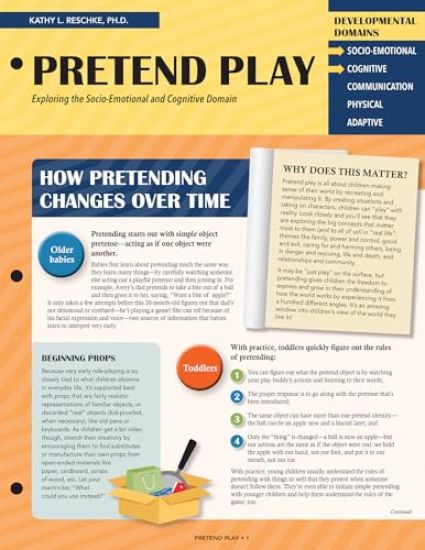
Part of the Quick Reference Guides for Early Childhood Best Practices, this laminated, six-page primer gives early childhood educators practical guidance on enhancing and supporting children’s pretend play skills. Colorful graphics, lists, and tips instantly engage teachers and give them an at-a-glance understanding of:why pretend play mattershow pretend play can promote children’s socio-emotional and cognitive developmenthow to nurture children’s skills as they role-play and interact with peerswhen to be concerned about children’s pretend play, and what to do nextThese developmentally appropriate practices are ready to use with children from birth to five across settings: in homes, classrooms, or professional learning environments.Also available in packs of 5!About the Quick Reference Guides for Early Childhood Best PracticesPerfect for professional learning, these 16 Quick Reference Guides will put practical knowledge and ready-to-use strategies in the hands of every educator in your early childhood program. Developed by an early childhood expert with more than 40 years of experience in the field, these laminated, six-page primers cover specific topics with explicit links to core developmental domains: cognitive, physical, socio-emotional, communication, and adaptive. Teachers of children from birth to five will get tips they can trust on developmentally appropriate practices—not only within developmental domains, but in other key areas with a broad effect on a child’s life (such as mealtime, friendships, and creativity).
Understanding Numbers

Understanding Numbers

Kathy L. Reschke

BROOKES PUBLISHING CO
2025
lehtivihko, moniste
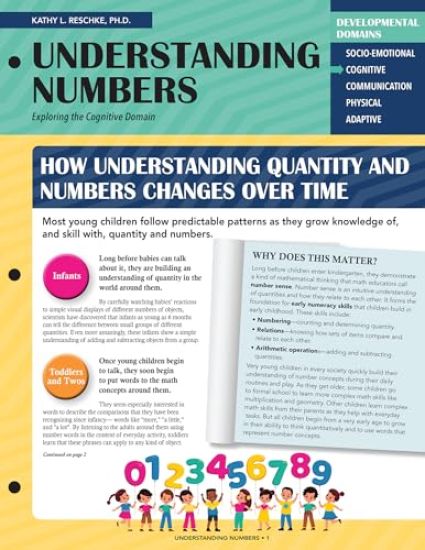
Part of the Quick Reference Guides for Early Childhood Best Practices, this laminated, six-page primer gives early childhood educators practical guidance on building young children’s understanding of number concepts during their daily routines and play. Colorful graphics, lists, and tips instantly engage teachers and give them an at-a-glance understanding of:how children grow in knowledge of and skill with quantity and numbershow to support children in learning to count and using written numbershow to promote emerging number skills using math talk during play, routines, and activitiesThese developmentally appropriate practices are ready to use with children from birth to five across settings: in homes, classrooms, or professional learning environments.Also available in packs of 5!About the Quick Reference Guides for Early Childhood Best PracticesPerfect for professional learning, these 16 Quick Reference Guides will put practical knowledge and ready-to-use strategies in the hands of every educator in your early childhood program. Developed by an early childhood expert with more than 40 years of experience in the field, these laminated, six-page primers cover specific topics with explicit links to core developmental domains: cognitive, physical, socio-emotional, communication, and adaptive. Teachers of children from birth to five will get tips they can trust on developmentally appropriate practices—not only within developmental domains, but in other key areas with a broad effect on a child’s life (such as mealtime, friendships, and creativity).
Early Friendships

Early Friendships

Kathy L. Reschke

BROOKES PUBLISHING CO
2025
lehtivihko, moniste
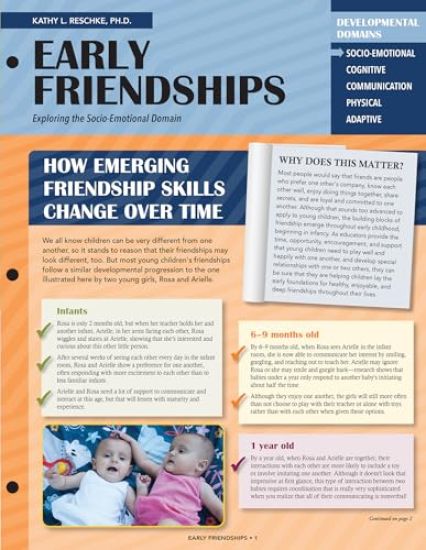
Part of the Quick Reference Guides for Early Childhood Best Practices, this laminated, six-page primer gives early childhood educators practical guidance on helping children lay the early foundations for healthy, enjoyable friendships. Colorful graphics, lists, and tips instantly engage teachers and give them an at-a-glance understanding of:which component skills children need for building friendshipshow emerging friendship skills change over timehow to nurture friendships and support children who may need help developing connectionshow to partner with families to support budding friendshipsThese developmentally appropriate practices are ready to use with children from birth to five across settings: in homes, classrooms, or professional learning environments.Also available in packs of 5!About the Quick Reference Guides for Early Childhood Best PracticesPerfect for professional learning, these 16 Quick Reference Guides will put practical knowledge and ready-to-use strategies in the hands of every educator in your early childhood program. Developed by an early childhood expert with more than 40 years of experience in the field, these laminated, six-page primers cover specific topics with explicit links to core developmental domains: cognitive, physical, socio-emotional, communication, and adaptive. Teachers of children from birth to five will get tips they can trust on developmentally appropriate practices—not only within developmental domains, but in other key areas with a broad effect on a child’s life (such as mealtime, friendships, and creativity).
Early Language: First Sounds and Words

Early Language: First Sounds and Words

Kathy L. Reschke

BROOKES PUBLISHING CO
2025
lehtivihko, moniste
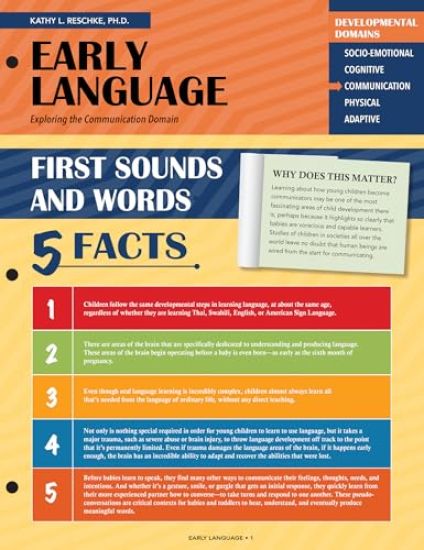
Part of the Quick Reference Guides for Early Childhood Best Practices, this laminated, six-page primer gives early childhood educators practical guidance on supporting early language development in young children. Colorful graphics, lists, and tips instantly engage teachers and give them an at-a-glance understanding of:how baby babbles lead the way to first words and sentenceswhich strategies can best support early language skillshow to promote language skills in young multilingual learnersThese developmentally appropriate practices are ready to use with children from birth to five across settings: in homes, classrooms, or professional learning environments.Also available in packs of 5!About the Quick Reference Guides for Early Childhood Best PracticesPerfect for professional learning, these 16 Quick Reference Guides will put practical knowledge and ready-to-use strategies in the hands of every educator in your early childhood program. Developed by an early childhood expert with more than 40 years of experience in the field, these laminated, six-page primers cover specific topics with explicit links to core developmental domains: cognitive, physical, socio-emotional, communication, and adaptive. Teachers of children from birth to five will get tips they can trust on developmentally appropriate practices—not only within developmental domains, but in other key areas with a broad effect on a child’s life (such as mealtime, friendships, and creativity).
Pretend Play

Pretend Play

Kathy L. Reschke

BROOKES PUBLISHING CO
2025
lehtivihko, moniste
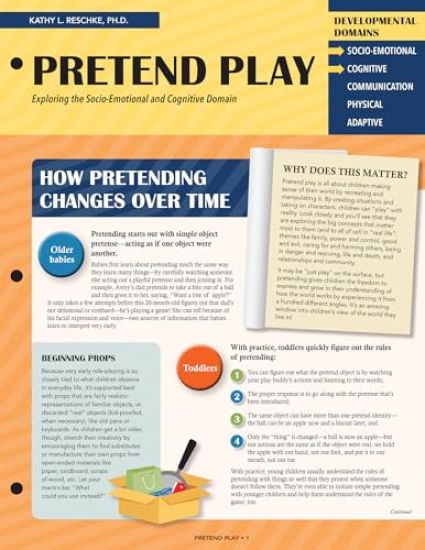
Part of the Quick Reference Guides for Early Childhood Best Practices, this convenient pack of 5 laminated, six-page primers gives early childhood educators practical guidance on enhancing and supporting children’s pretend play skills. Colorful graphics, lists, and tips instantly engage teachers and give them an at-a-glance understanding of: why pretend play matters how pretend play can promote children’s socio-emotional and cognitive development how to nurture children’s skills as they role-play and interact with peers when to be concerned about children’s pretend play, and what to do next These developmentally appropriate practices are ready to use with children from birth to five across settings: in homes, classrooms, or professional learning environments. Also available as an individual guide! About the Quick Reference Guides for Early Childhood Best Practices Perfect for professional learning, these 16 Quick Reference Guides will put practical knowledge and ready-to-use strategies in the hands of every educator in your early childhood program. Developed by an early childhood expert with more than 40 years of experience in the field, these laminated, six-page primers cover specific topics with explicit links to core developmental domains: cognitive, physical, socio-emotional, communication, and adaptive. Teachers of children from birth to five will get tips they can trust on developmentally appropriate practices—not only within developmental domains, but in other key areas with a broad effect on a child’s life (such as mealtime, friendships, and creativity). Explore all the Quick Reference Guides here!
Understanding Numbers

Understanding Numbers

Kathy L. Reschke

BROOKES PUBLISHING CO
2025
lehtivihko, moniste
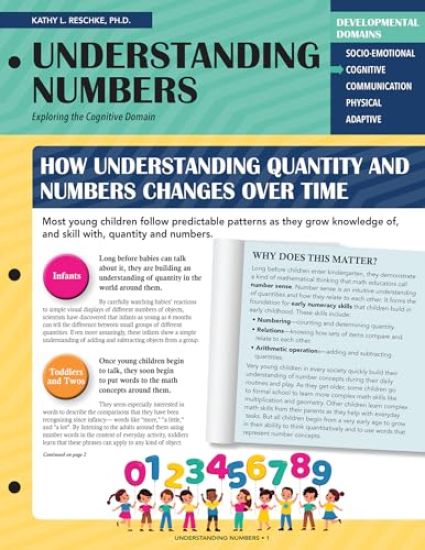
Part of the Quick Reference Guides for Early Childhood Best Practices, this convenient pack of 5 laminated, six-page primers gives early childhood educators practical guidance on building young children’s understanding of number concepts during their daily routines and play. Colorful graphics, lists, and tips instantly engage teachers and give them an at-a-glance understanding of: how children grow in knowledge of and skill with quantity and numbers how to support children in learning to count and using written numbers how to promote emerging number skills using math talk during play, routines, and activities These developmentally appropriate practices are ready to use with children from birth to five across settings: in homes, classrooms, or professional learning environments. Also available as an individual guide! About the Quick Reference Guides for Early Childhood Best Practices Perfect for professional learning, these 16 Quick Reference Guides will put practical knowledge and ready-to-use strategies in the hands of every educator in your early childhood program. Developed by an early childhood expert with more than 40 years of experience in the field, these laminated, six-page primers cover specific topics with explicit links to core developmental domains: cognitive, physical, socio-emotional, communication, and adaptive. Teachers of children from birth to five will get tips they can trust on developmentally appropriate practices—not only within developmental domains, but in other key areas with a broad effect on a child’s life (such as mealtime, friendships, and creativity). Explore all the Quick Reference Guides here!
Early Friendships

Early Friendships

Kathy L. Reschke

BROOKES PUBLISHING CO
2025
lehtivihko, moniste
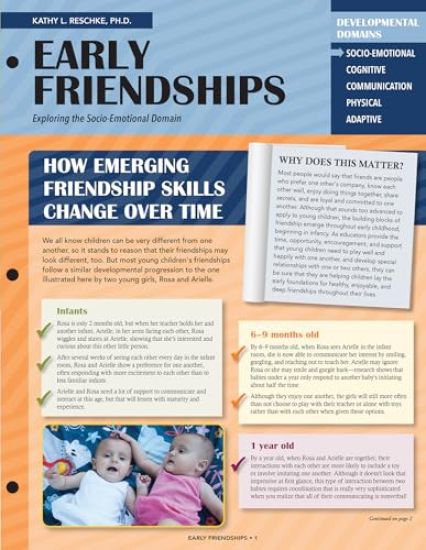
Part of the Quick Reference Guides for Early Childhood Best Practices, this convenient pack of 5 laminated, six-page primers gives early childhood educators practical guidance on helping children lay the early foundations for healthy, enjoyable friendships. Colorful graphics, lists, and tips instantly engage teachers and give them an at-a-glance understanding of: which component skills children need for building friendships how emerging friendship skills change over time how to nurture friendships and support children who may need help developing connections how to partner with families to support budding friendships These developmentally appropriate practices are ready to use with children from birth to five across settings: in homes, classrooms, or professional learning environments. Also available as an individual guide! About the Quick Reference Guides for Early Childhood Best Practices Perfect for professional learning, these 16 Quick Reference Guides will put practical knowledge and ready-to-use strategies in the hands of every educator in your early childhood program. Developed by an early childhood expert with more than 40 years of experience in the field, these laminated, six-page primers cover specific topics with explicit links to core developmental domains: cognitive, physical, socio-emotional, communication, and adaptive. Teachers of children from birth to five will get tips they can trust on developmentally appropriate practices—not only within developmental domains, but in other key areas with a broad effect on a child’s life (such as mealtime, friendships, and creativity). Explore all the Quick Reference Guides here!
Early Language

Early Language

Kathy L. Reschke

BROOKES PUBLISHING CO
2025
lehtivihko, moniste
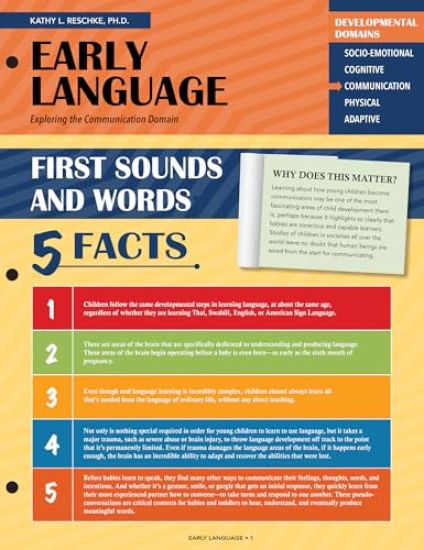
Part of the Quick Reference Guides for Early Childhood Best Practices, this convenient pack of 5 laminated, six-page primers gives early childhood educators practical guidance on supporting early language development in young children. Colorful graphics, lists, and tips instantly engage teachers and give them an at-a-glance understanding of: how baby babbles lead the way to first words and sentences which strategies can best support early language skills how to promote language skills in young multilingual learners These developmentally appropriate practices are ready to use with children from birth to five across settings: in homes, classrooms, or professional learning environments. Also available as an individual guide! About the Quick Reference Guides for Early Childhood Best Practices Perfect for professional learning, these 16 Quick Reference Guides will put practical knowledge and ready-to-use strategies in the hands of every educator in your early childhood program. Developed by an early childhood expert with more than 40 years of experience in the field, these laminated, six-page primers cover specific topics with explicit links to core developmental domains: cognitive, physical, socio-emotional, communication, and adaptive. Teachers of children from birth to five will get tips they can trust on developmentally appropriate practices—not only within developmental domains, but in other key areas with a broad effect on a child’s life (such as mealtime, friendships, and creativity). Explore all the Quick Reference Guides here!
Creativity

Creativity

Kathy L. Reschke

BROOKES PUBLISHING CO
2025
lehtivihko, moniste
Part of the Quick Reference Guides for Early Childhood Best Practices, this convenient pack of 5 laminated, six-page primers gives early childhood educators practical guidance on how to recognize and foster creative thinking in young children. Colorful graphics, lists, and tips instantly engage teachers and give them an at-a-glance understanding of: why nurturing young children’s creativity matters—and why it’s not synonymous with artistic talent which key characteristics creative people share how to encourage children’s creativity in multiple ways throughout the school day These developmentally appropriate practices are ready to use with children from birth to five across settings: in homes, classrooms, or professional learning environments. Also available as an individual guide! About the Quick Reference Guides for Early Childhood Best Practices Perfect for professional learning, these 16 Quick Reference Guides will put practical knowledge and ready-to-use strategies in the hands of every educator in your early childhood program. Developed by an early childhood expert with more than 40 years of experience in the field, these laminated, six-page primers cover specific topics with explicit links to core developmental domains: cognitive, physical, socio-emotional, communication, and adaptive. Teachers of children from birth to five will get tips they can trust on developmentally appropriate practices—not only within developmental domains, but in other key areas with a broad effect on a child’s life (such as mealtime, friendships, and creativity). Explore all the Quick Reference Guides here!
Doing the Right Thing

Doing the Right Thing

Kathy L. Reschke

BROOKES PUBLISHING CO
2025
lehtivihko, moniste
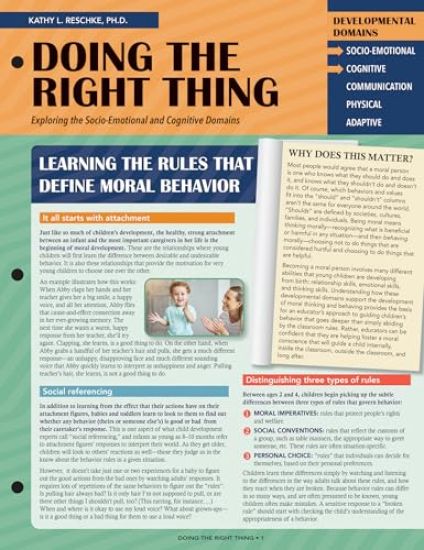
Part of the Quick Reference Guides for Early Childhood Best Practices, this convenient pack of 5 laminated, six-page primers gives early childhood educators practical guidance on how to help foster a moral conscience that will guide a child internally, inside and outside the classroom. Colorful graphics, lists, and tips instantly engage teachers and give them an at-a-glance understanding of: how children learn the rules that define moral behavior how to encourage moral behaviors such as sharing and taking turns what to do when children make the wrong choice which children’s books are best for starting conversations about moral choices These developmentally appropriate practices are ready to use with children from birth to five across settings: in homes, classrooms, or professional learning environments. Also available as an individual guide! About the Quick Reference Guides for Early Childhood Best Practices Perfect for professional learning, these 16 Quick Reference Guides will put practical knowledge and ready-to-use strategies in the hands of every educator in your early childhood program. Developed by an early childhood expert with more than 40 years of experience in the field, these laminated, six-page primers cover specific topics with explicit links to core developmental domains: cognitive, physical, socio-emotional, communication, and adaptive. Teachers of children from birth to five will get tips they can trust on developmentally appropriate practices—not only within developmental domains, but in other key areas with a broad effect on a child’s life (such as mealtime, friendships, and creativity). Explore all the Quick Reference Guides here!
Becoming a Writer

Becoming a Writer

Kathy L. Reschke

BROOKES PUBLISHING CO
2025
lehtivihko, moniste
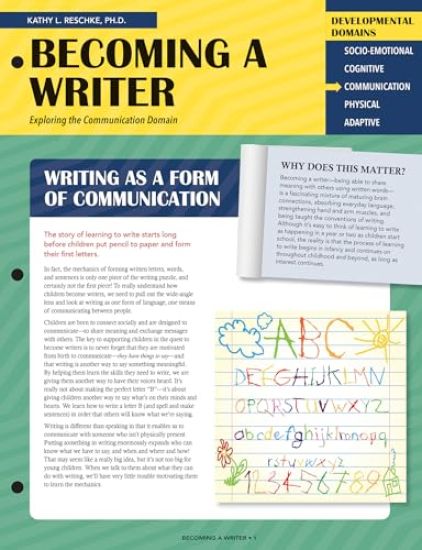
Part of the Quick Reference Guides for Early Childhood Best Practices, this convenient pack of 5 laminated, six-page primers gives early childhood educators practical guidance on how to promote early writing skills in young children. Colorful graphics, lists, and tips instantly engage teachers and give them an at-a-glance understanding of: how oral language provides a strong foundation for written language which common errors children may make on the way to mastering writing skills how to support emerging writing skills in meaningful ways throughout the school day These developmentally appropriate practices are ready to use with children from birth to five across settings: in homes, classrooms, or professional learning environments. Also available as an individual guide! About the Quick Reference Guides for Early Childhood Best Practices Perfect for professional learning, these 16 Quick Reference Guides will put practical knowledge and ready-to-use strategies in the hands of every educator in your early childhood program. Developed by an early childhood expert with more than 40 years of experience in the field, these laminated, six-page primers cover specific topics with explicit links to core developmental domains: cognitive, physical, socio-emotional, communication, and adaptive. Teachers of children from birth to five will get tips they can trust on developmentally appropriate practices—not only within developmental domains, but in other key areas with a broad effect on a child’s life (such as mealtime, friendships, and creativity). Explore all the Quick Reference Guides here!
Made to Move

Made to Move

Kathy L. Reschke

BROOKES PUBLISHING CO
2025
lehtivihko, moniste
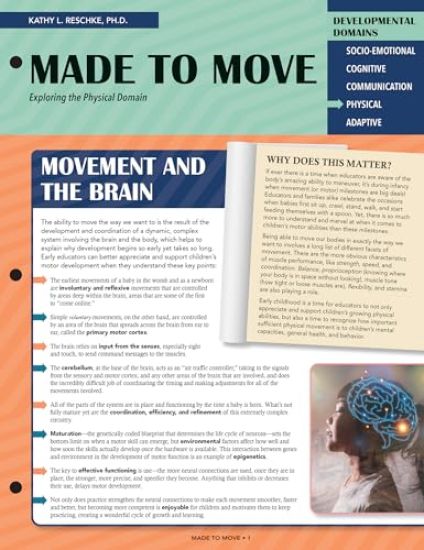
Part of the Quick Reference Guides for Early Childhood Best Practices, this convenient pack of 5 laminated, six-page primers gives early childhood educators practical guidance on how to support children’s growing physical abilities—an important contributor to their mental capacities, general health, and behavior. Colorful graphics, lists, and tips instantly engage teachers and give them an at-a-glance understanding of: which elements of motor development are most important for educators to understand how teachers can promote children’s motor development while taking individual differences into account how to support riskier activity/play while keeping children safe These developmentally appropriate practices are ready to use with children from birth to five across settings: in homes, classrooms, or professional learning environments. Also available as an individual guide! About the Quick Reference Guides for Early Childhood Best Practices Perfect for professional learning, these 16 Quick Reference Guides will put practical knowledge and ready-to-use strategies in the hands of every educator in your early childhood program. Developed by an early childhood expert with more than 40 years of experience in the field, these laminated, six-page primers cover specific topics with explicit links to core developmental domains: cognitive, physical, socio-emotional, communication, and adaptive. Teachers of children from birth to five will get tips they can trust on developmentally appropriate practices—not only within developmental domains, but in other key areas with a broad effect on a child’s life (such as mealtime, friendships, and creativity). Explore all the Quick Reference Guides here!
The Developing Brain

The Developing Brain

Kathy L. Reschke

BROOKES PUBLISHING CO
2025
lehtivihko, moniste
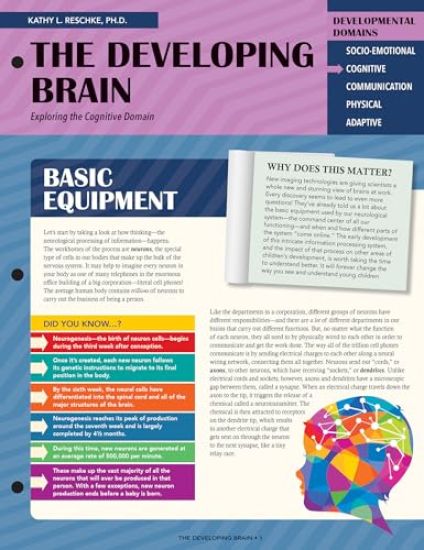
Part of the Quick Reference Guides for Early Childhood Best Practices, this convenient pack of 5 laminated, six-page primers gives early childhood educators practical guidance on how to nurture healthy brain development in young children. Colorful graphics, lists, and tips instantly engage teachers and give them an at-a-glance understanding of: early development of the brain’s intricate information processing system the importance of both novel and familiar experiences to brain development the toll of chronic stress on brain functioning. support strategies for key executive function skills the critical role of nutrition, sleep, and physical activity These developmentally appropriate practices are ready to use with children from birth to five across settings: in homes, classrooms, or professional learning environments. Also available as an individual guide! About the Quick Reference Guides for Early Childhood Best Practices Perfect for professional learning, these 16 Quick Reference Guides will put practical knowledge and ready-to-use strategies in the hands of every educator in your early childhood program. Developed by an early childhood expert with more than 40 years of experience in the field, these laminated, six-page primers cover specific topics with explicit links to core developmental domains: cognitive, physical, socio-emotional, communication, and adaptive. Teachers of children from birth to five will get tips they can trust on developmentally appropriate practices—not only within developmental domains, but in other key areas with a broad effect on a child’s life (such as mealtime, friendships, and creativity). Explore all the Quick Reference Guides here!
Mealtime & Eating

Mealtime & Eating

Kathy L. Reschke

BROOKES PUBLISHING CO
2025
lehtivihko, moniste
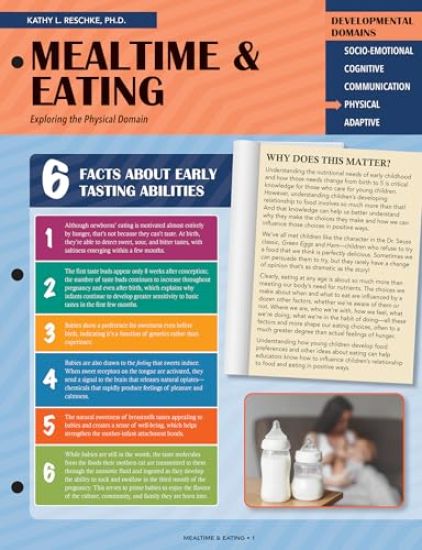
Part of the Quick Reference Guides for Early Childhood Best Practices, this convenient pack of 5 laminated, six-page primers gives early childhood educators practical guidance on how to influence children’s relationship to food and eating in positive ways. Colorful graphics, lists, and tips instantly engage teachers and give them an at-a-glance understanding of: key facts about early tasting abilities physical and social factors that influence eating behavior strategies for making the most of mealtime and encouraging children to try new foods red flags that a child’s eating patterns are a cause for concern These developmentally appropriate practices are ready to use with children from birth to five across settings: in homes, classrooms, or professional learning environments. Also available as an individual guide! About the Quick Reference Guides for Early Childhood Best Practices Perfect for professional learning, these 16 Quick Reference Guides will put practical knowledge and ready-to-use strategies in the hands of every educator in your early childhood program. Developed by an early childhood expert with more than 40 years of experience in the field, these laminated, six-page primers cover specific topics with explicit links to core developmental domains: cognitive, physical, socio-emotional, communication, and adaptive. Teachers of children from birth to five will get tips they can trust on developmentally appropriate practices—not only within developmental domains, but in other key areas with a broad effect on a child’s life (such as mealtime, friendships, and creativity). Explore all the Quick Reference Guides here!
School Readiness

School Readiness

Kathy L. Reschke

BROOKES PUBLISHING CO
2025
lehtivihko, moniste
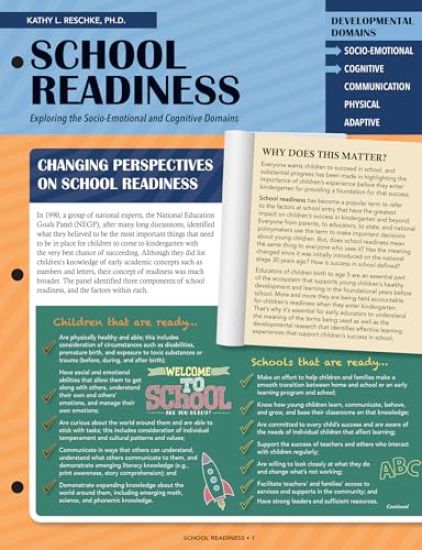
Part of the Quick Reference Guides for Early Childhood Best Practices, this convenient pack of 5 laminated, six-page primers gives early childhood educators practical guidance on how to support young children’s healthy development and learning in the foundational years before school. Colorful graphics, lists, and tips instantly engage teachers and give them an at-a-glance understanding of: changing perspectives on school readiness key facts related to kindergarten entry assessments seven specific ways to support children’s future school success before kindergarten how to decide whether to delay school entry for a late‐birthday child These developmentally appropriate practices are ready to use with children from birth to five across settings: in homes, classrooms, or professional learning environments. Also available as an individual guide! About the Quick Reference Guides for Early Childhood Best Practices Perfect for professional learning, these 16 Quick Reference Guides will put practical knowledge and ready-to-use strategies in the hands of every educator in your early childhood program. Developed by an early childhood expert with more than 40 years of experience in the field, these laminated, six-page primers cover specific topics with explicit links to core developmental domains: cognitive, physical, socio-emotional, communication, and adaptive. Teachers of children from birth to five will get tips they can trust on developmentally appropriate practices—not only within developmental domains, but in other key areas with a broad effect on a child’s life (such as mealtime, friendships, and creativity). Explore all the Quick Reference Guides here!
Curiosity & Scientific Thinking

Curiosity & Scientific Thinking

Kathy L. Reschke

BROOKES PUBLISHING CO
2025
lehtivihko, moniste
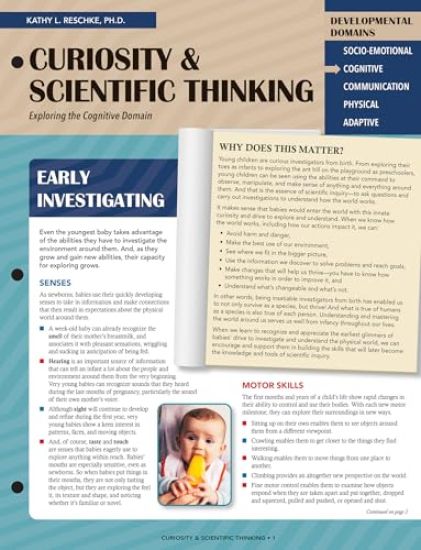
Part of the Quick Reference Guides for Early Childhood Best Practices, this convenient pack of 5 laminated, six-page primers gives early childhood educators practical guidance on how to help children build emerging skills that will become the knowledge and tools of scientific inquiry. Colorful graphics, lists, and tips instantly engage teachers and give them an at-a-glance understanding of: how young children become scientific thinkers how to nurture exploration with infants and toddlers which scientific words should be added to young children’s vocabulary how young children can document their discoveries in multiple ways what prompts you can use to encourage scientific thinking in your classroom These developmentally appropriate practices are ready to use with children from birth to five across settings: in homes, classrooms, or professional learning environments. Also available as an individual guide! About the Quick Reference Guides for Early Childhood Best Practices Perfect for professional learning, these 16 Quick Reference Guides will put practical knowledge and ready-to-use strategies in the hands of every educator in your early childhood program. Developed by an early childhood expert with more than 40 years of experience in the field, these laminated, six-page primers cover specific topics with explicit links to core developmental domains: cognitive, physical, socio-emotional, communication, and adaptive. Teachers of children from birth to five will get tips they can trust on developmentally appropriate practices—not only within developmental domains, but in other key areas with a broad effect on a child’s life (such as mealtime, friendships, and creativity). Explore all the Quick Reference Guides here!
Memory

Memory

Kathy L. Reschke

BROOKES PUBLISHING CO
2025
lehtivihko, moniste
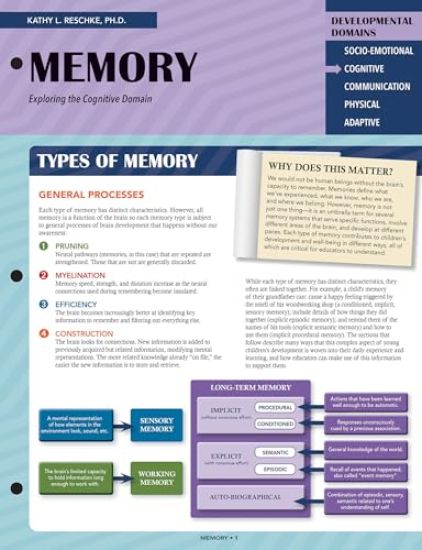
Part of the Quick Reference Guides for Early Childhood Best Practices, this convenient pack of 5 laminated, six-page primers gives early childhood educators practical guidance on how to understand and support different types of memory in young children. Colorful graphics, lists, and tips instantly engage teachers and give them an at-a-glance understanding of: key facts about children’s ability to remember events how children develop working memory, sensory memory, and long-term memory techniques for making information “stickier” for young children These developmentally appropriate practices are ready to use with children from birth to five across settings: in homes, classrooms, or professional learning environments. Also available as an individual guide! About the Quick Reference Guides for Early Childhood Best Practices Perfect for professional learning, these 16 Quick Reference Guides will put practical knowledge and ready-to-use strategies in the hands of every educator in your early childhood program. Developed by an early childhood expert with more than 40 years of experience in the field, these laminated, six-page primers cover specific topics with explicit links to core developmental domains: cognitive, physical, socio-emotional, communication, and adaptive. Teachers of children from birth to five will get tips they can trust on developmentally appropriate practices—not only within developmental domains, but in other key areas with a broad effect on a child’s life (such as mealtime, friendships, and creativity). Explore all the Quick Reference Guides here!
Belonging

Belonging

Kathy L. Reschke

BROOKES PUBLISHING CO
2025
lehtivihko, moniste
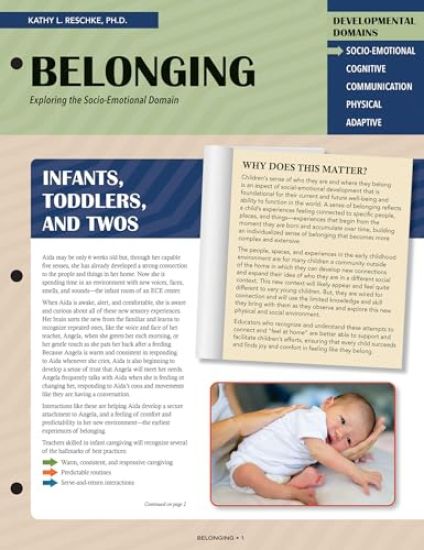
Part of the Quick Reference Guides for Early Childhood Best Practices, this convenient pack of 5 laminated, six-page primers gives early childhood educators practical guidance on how to proactively foster a sense of belonging for every child in the classroom. Colorful graphics, lists, and tips instantly engage teachers and give them an at-a-glance understanding of how to promote belonging by: understanding which developmental characteristics to focus on implementing strategies that intentionally build community in the classroom using the shared classroom environment to promote belonging conducting self-reflections that can help them strengthen their teaching practices These developmentally appropriate practices are ready to use with children from birth to five across settings: in homes, classrooms, or professional learning environments. Also available as an individual guide! About the Quick Reference Guides for Early Childhood Best Practices Perfect for professional learning, these 16 Quick Reference Guides will put practical knowledge and ready-to-use strategies in the hands of every educator in your early childhood program. Developed by an early childhood expert with more than 40 years of experience in the field, these laminated, six-page primers cover specific topics with explicit links to core developmental domains: cognitive, physical, socio-emotional, communication, and adaptive. Teachers of children from birth to five will get tips they can trust on developmentally appropriate practices—not only within developmental domains, but in other key areas with a broad effect on a child’s life (such as mealtime, friendships, and creativity). Explore all the Quick Reference Guides here!
Temperament & Behavior

Temperament & Behavior

Kathy L. Reschke

BROOKES PUBLISHING CO
2025
lehtivihko, moniste
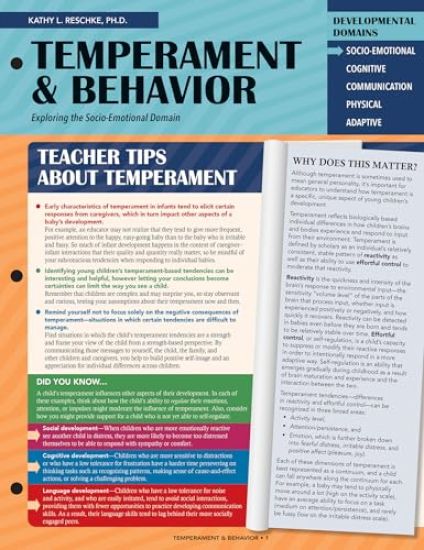
Part of the Quick Reference Guides for Early Childhood Best Practices, this convenient pack of 5 laminated, six-page primers gives early childhood educators practical guidance on how temperament affects early development—and how teachers should consider temperament when caring for and teaching children. Colorful graphics, lists, and tips instantly engage teachers and give them an at-a-glance understanding of: expressions of temperament and how they develop over time the impact of temperament on social, cognitive, and language development ways to provide a “good fit” for the wide range of temperaments in a classroom myths and facts about shyness strategies for supporting emerging self-regulation, regardless of children’s temperament These developmentally appropriate practices are ready to use with children from birth to five across settings: in homes, classrooms, or professional learning environments. Also available as an individual guide! About the Quick Reference Guides for Early Childhood Best Practices Perfect for professional learning, these 16 Quick Reference Guides will put practical knowledge and ready-to-use strategies in the hands of every educator in your early childhood program. Developed by an early childhood expert with more than 40 years of experience in the field, these laminated, six-page primers cover specific topics with explicit links to core developmental domains: cognitive, physical, socio-emotional, communication, and adaptive. Teachers of children from birth to five will get tips they can trust on developmentally appropriate practices—not only within developmental domains, but in other key areas with a broad effect on a child’s life (such as mealtime, friendships, and creativity). Explore all the Quick Reference Guides here!
Humor

Humor

Kathy L. Reschke

BROOKES PUBLISHING CO
2025
lehtivihko, moniste
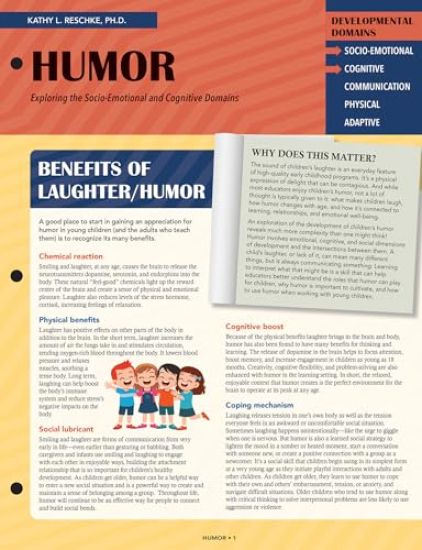
Part of the Quick Reference Guides for Early Childhood Best Practices, this convenient pack of 5 laminated, six-page primers gives early childhood educators practical guidance on leveraging the benefits of humor in the classroom. Colorful graphics, lists, and tips instantly engage teachers and give them an at-a-glance understanding of: the physical, social, and cognitive benefits of smiling and laughter how children’s humor changes and becomes more complex over time how humor is shaped by factors like temperament and family background ways to help ensure that surprising experiences are funny to children and not distressing These developmentally appropriate practices are ready to use with children from birth to five across settings: in homes, classrooms, or professional learning environments. Also available as an individual guide! About the Quick Reference Guides for Early Childhood Best Practices Perfect for professional learning, these 16 Quick Reference Guides will put practical knowledge and ready-to-use strategies in the hands of every educator in your early childhood program. Developed by an early childhood expert with more than 40 years of experience in the field, these laminated, six-page primers cover specific topics with explicit links to core developmental domains: cognitive, physical, socio-emotional, communication, and adaptive. Teachers of children from birth to five will get tips they can trust on developmentally appropriate practices—not only within developmental domains, but in other key areas with a broad effect on a child’s life (such as mealtime, friendships, and creativity). Explore all the Quick Reference Guides here!