Kirjojen hintavertailu. Mukana 11 627 461 kirjaa ja 12 kauppaa.

Kirjahaku

Etsi kirjoja tekijän nimen, kirjan nimen tai ISBN:n perusteella.

6 kirjaa tekijältä Katrin Flikschuh

Kant and Modern Political Philosophy

Kant and Modern Political Philosophy

Katrin Flikschuh

Cambridge University Press
2008
pokkari
In this book Katrin Flikschuh examines the relevance of Kant's political thought to major issues and problems in contemporary political philosophy. She advances and defends two principal claims: that Kant's philosophy of Right endorses the role of metaphysics in political thinking, in contrast to its generally hostile reception in the field today, and that his account of political obligation is cosmopolitan in its inception, assigning priority to the global rather than the domestic context. She shows how Kant's metaphysics of freedom as a shared idea of practical reason underlies the cosmopolitan scope of his theory of justice, and she concludes that despite the revival of 'Kantianism' in contemporary thinking, his account of justice is in many respects very different from dominant approaches in contemporary liberal theory. Her study will be of interest to political philosophers, political theorists, and historians of ideas.

Kant and Modern Political Philosophy

Kant and Modern Political Philosophy

Katrin Flikschuh

Cambridge University Press
2000
sidottu
In this book Katrin Flikschuh examines the relevance of Kant's political thought to major issues and problems in contemporary political philosophy. She advances and defends two principal claims: that Kant's philosophy of Right endorses the role of metaphysics in political thinking, in contrast to its generally hostile reception in the field today, and that his account of political obligation is cosmopolitan in its inception, assigning priority to the global rather than the domestic context. She shows how Kant's metaphysics of freedom as a shared idea of practical reason underlies the cosmopolitan scope of his theory of justice, and she concludes that despite the revival of 'Kantianism' in contemporary thinking, his account of justice is in many respects very different from dominant approaches in contemporary liberal theory. Her study will be of interest to political philosophers, political theorists, and historians of ideas.

Freedom

Freedom

Katrin Flikschuh

Polity Press
2007
sidottu
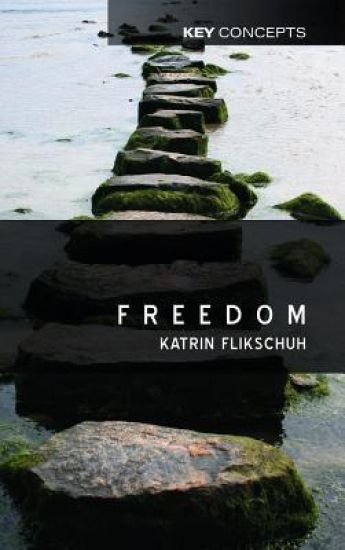
In this engaging new book, Katrin Flikschuh offers an accessible introduction to divergent conceptions of freedom in contemporary liberal political philosophy. Beginning with a discussion of Isaiah Berlin's seminal distinction between negative and positive liberty, the book goes on to consider Gerald MacCallums alternative proposal of freedom as a triadic concept. The abiding influence of Berlin's argument on the writings of contemporary liberal philosophers such as Robert Nozick, Hillel Steiner, Ronald Dworkin and Joseph Raz, is fully explored in subsequent chapters. Flikschuh shows that, instead of just one negative and one positive freedom tradition, contemporary liberal thinkers articulate the meaning and significance of liberal freedom in many different and often conflicting ways. What should we make of such diversity and disagreement? Should it undermine our confidence in the coherence of liberal freedom? Should we strive towards greater conceptual and normative unity? Flikschuh argues that moral and political disagreement about freedom can often be traced back to differences in underlying metaphysical presuppositions and commitments. Yet these differences do not show liberal freedom debates to be confused or incoherent. On the contrary, they demonstrate the centrality of this philosophically elusive idea to the continued vitality of liberal political thinking.
Freedom

Freedom

Katrin Flikschuh

Polity Press
2007
nidottu
In this engaging new book, Katrin Flikschuh offers an accessible introduction to divergent conceptions of freedom in contemporary liberal political philosophy. Beginning with a discussion of Isaiah Berlin's seminal distinction between negative and positive liberty, the book goes on to consider Gerald MacCallums alternative proposal of freedom as a triadic concept. The abiding influence of Berlin's argument on the writings of contemporary liberal philosophers such as Robert Nozick, Hillel Steiner, Ronald Dworkin and Joseph Raz, is fully explored in subsequent chapters. Flikschuh shows that, instead of just one negative and one positive freedom tradition, contemporary liberal thinkers articulate the meaning and significance of liberal freedom in many different and often conflicting ways. What should we make of such diversity and disagreement? Should it undermine our confidence in the coherence of liberal freedom? Should we strive towards greater conceptual and normative unity? Flikschuh argues that moral and political disagreement about freedom can often be traced back to differences in underlying metaphysical presuppositions and commitments. Yet these differences do not show liberal freedom debates to be confused or incoherent. On the contrary, they demonstrate the centrality of this philosophically elusive idea to the continued vitality of liberal political thinking.
What is Orientation in Global Thinking?

What is Orientation in Global Thinking?

Katrin Flikschuh

Cambridge University Press
2017
sidottu
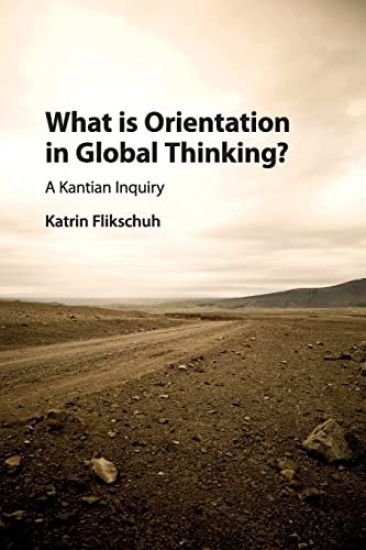
Starting from Kant's striking question 'What is orientation in thinking?', this book argues that the main challenge facing global normative theorising lies in its failure to acknowledge its conceptual inadequacies. We do not know how to reason globally; instead, we tend to apply our domestic political experiences to the global context. Katrin Flikschuh argues that we must develop a form of global reasoning that is sensitive to the variability of contexts: rather than trying to identify a uniquely shareable set of substantive principles, we need to appreciate and understand local reasons for action. Her original and incisive study shows how such reasoning can benefit from the open-ended nature of Kant's systematic but non-dogmatic philosophical thinking, and from reorientation from a domestic to a non-domestic frame of thought. It will appeal to all those interested in global moral issues, as well as to Kant scholars.
What is Orientation in Global Thinking?

What is Orientation in Global Thinking?

Katrin Flikschuh

Cambridge University Press
2020
pokkari
Starting from Kant's striking question 'What is orientation in thinking?', this book argues that the main challenge facing global normative theorising lies in its failure to acknowledge its conceptual inadequacies. We do not know how to reason globally; instead, we tend to apply our domestic political experiences to the global context. Katrin Flikschuh argues that we must develop a form of global reasoning that is sensitive to the variability of contexts: rather than trying to identify a uniquely shareable set of substantive principles, we need to appreciate and understand local reasons for action. Her original and incisive study shows how such reasoning can benefit from the open-ended nature of Kant's systematic but non-dogmatic philosophical thinking, and from reorientation from a domestic to a non-domestic frame of thought. It will appeal to all those interested in global moral issues, as well as to Kant scholars.