Kirjojen hintavertailu. Mukana 11 717 486 kirjaa ja 12 kauppaa.

Kirjahaku

Etsi kirjoja tekijän nimen, kirjan nimen tai ISBN:n perusteella.

6 kirjaa tekijältä Katrin Froese

Rousseau and Nietzsche

Rousseau and Nietzsche

Katrin Froese

Lexington Books
2002
sidottu
Rousseau and Nietzsche: Toward an Aesthetic Morality offers a vivid depiction of the problems and potential of modernity through the words of two of its most poignant voices. The book focuses upon the modern self's desire to individuate while facing the ethical responsibility to integrate into the world. Katrin Froese elegantly juxtaposes Nietzsche's drive for extraordinary individualism with Rousseau's call for the dependable citizen, demonstrating that where Nietzsche's aestheticism embraces the limitless and irreconcilable longings of a divided being, Rousseau's approach emphasizes the imposition of limits to ensure that harmony and contentment prevail. Going beyond conventional scholarship, the work emphasizes the similarities at the heart of Rousseau's notion of morality and Nietzsche's aestheticism: the moral vision that underlies Nietzsche's notion of art and the aesthetic understanding prevalent in Rousseau's moral system. This stunning new work of political philosophy will be of great use to scholars of political thought and readers seeking to understand what made Rousseau and Nietzsche's thought so decidedly modern.
Rousseau and Nietzsche

Rousseau and Nietzsche

Katrin Froese

Lexington Books
2002
nidottu
Rousseau and Nietzsche: Toward an Aesthetic Morality offers a vivid depiction of the problems and potential of modernity through the words of two of its most poignant voices. The book focuses upon the modern self's desire to individuate while facing the ethical responsibility to integrate into the world. Katrin Froese elegantly juxtaposes Nietzsche's drive for extraordinary individualism with Rousseau's call for the dependable citizen, demonstrating that where Nietzsche's aestheticism embraces the limitless and irreconcilable longings of a divided being, Rousseau's approach emphasizes the imposition of limits to ensure that harmony and contentment prevail. Going beyond conventional scholarship, the work emphasizes the similarities at the heart of Rousseau's notion of morality and Nietzsche's aestheticism: the moral vision that underlies Nietzsche's notion of art and the aesthetic understanding prevalent in Rousseau's moral system. This stunning new work of political philosophy will be of great use to scholars of political thought and readers seeking to understand what made Rousseau and Nietzsche's thought so decidedly modern.
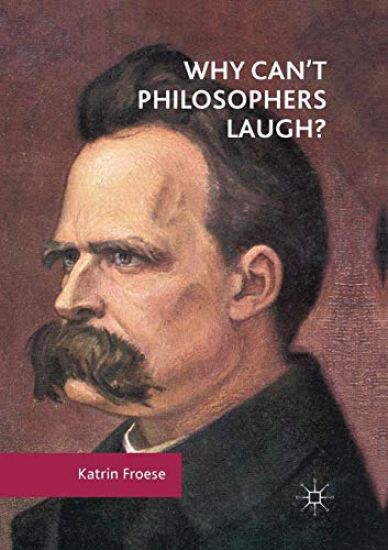
Why Can't Philosophers Laugh?

Why Can't Philosophers Laugh?

Katrin Froese

Springer International Publishing AG
2017
sidottu
This book analyzes Western and Chinese philosophical texts to determine why laughter and the comic have not been a major part of philosophical discourse. Katrin Froese maintains that many philosophical accounts of laughter try to unearth laughter's purpose, thereby rendering it secondary to the intentional and purposive aspects of human nature that impel us to philosophize. Froese also considers texts that take laughter and the comic as starting points, attempting to philosophize out of laughter rather than merely trying to unearth reasons for laughter. The book proposes that continuously unraveling philosophical assumptions through the comic and laughter may be necessary to live well.
Why Can't Philosophers Laugh?

Why Can't Philosophers Laugh?

Katrin Froese

Springer International Publishing AG
2018
nidottu
This book analyzes Western and Chinese philosophical texts to determine why laughter and the comic have not been a major part of philosophical discourse. Katrin Froese maintains that many philosophical accounts of laughter try to unearth laughter's purpose, thereby rendering it secondary to the intentional and purposive aspects of human nature that impel us to philosophize. Froese also considers texts that take laughter and the comic as starting points, attempting to philosophize out of laughter rather than merely trying to unearth reasons for laughter. The book proposes that continuously unraveling philosophical assumptions through the comic and laughter may be necessary to live well.
Ethics Unbound – Some Chinese and Western Perspectives on Morality
This book closely examines texts from Chinese and Western traditions that hold up ethics as the inviolable ground of human existence, as well as those that regard ethics with suspicion. The negative notion of morality contends that because ethics cannot be divorced from questions of belonging and identity, there is a danger that it can be nudged into the domain of the unethical since ethical virtues can become properties to be possessed with which the recognition of others is solicited. Ethics thus fosters the very egoism it hopes to transcend, and risks excluding the unfamiliar and the stranger. The author argues inspirationally that the unethical underbelly of ethics must be recognised in order to ensure that it remains vibrant.
Nietzsche, Heidegger, and Daoist Thought

Nietzsche, Heidegger, and Daoist Thought

Katrin Froese

State University of New York Press
2007
pokkari
This work of comparative philosophy envisions a cosmological whole that celebrates difference. In this book, Katrin Froese juxtaposes the Daoist texts of Laozi and Zhuangzi with the thought of Nietzsche and Heidegger to argue that there is a need for rethinking the idea of a cosmological whole. By moving away from the quest for certainty, Froese suggests a way of philosophizing that does not seek to capture the whole, but rather becomes a means of affirming a connection to it, one that celebrates difference rather than eradicating it. Human beings have a vague awareness of the infinite, but they are nevertheless finite beings. Froese maintains that rather than bemoaning the murkiness of knowledge, the thinkers considered here celebrate the creativity and tendency to wander through that space of not knowing, or "in-between-ness." However, for Neitzsche and the early Heidegger, this in-between-ness can often produce a sense of meaninglessness that sends individuals on a frenetic quest to mark out space that is uniquely their own. Laozi and Zhuangzi, on the other hand, paint a portrait of the self that provides openings for others rather than deliberately forging an identity that it can claim as its own. In this way, human beings can become joyful wanderers that revel in the movements of the Dao and are comfortable with their own finitude. Froese also suggests that Nietzsche and Heidegger are philosophers at a crossroads, for they both exemplify the modern emphasis on self-creation and at the same time share the Daoist insight into the perils of excessive egoism that can lead to misguided attempts to master the world.