Kirjojen hintavertailu. Mukana 11 699 587 kirjaa ja 12 kauppaa.

Kirjahaku

Etsi kirjoja tekijän nimen, kirjan nimen tai ISBN:n perusteella.

4 kirjaa tekijältä Katy Masuga

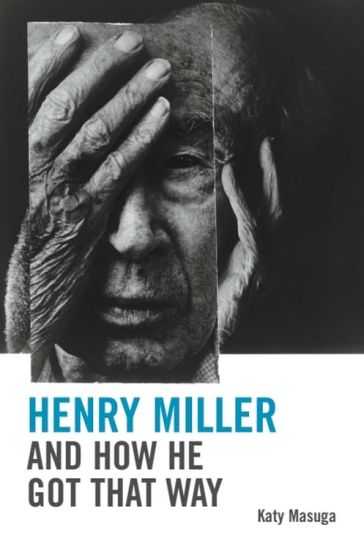
Henry Miller and How He Got That Way

Henry Miller and How He Got That Way

Katy Masuga

Edinburgh University Press
2011
sidottu
Identifying six significant writers - Whitman, Dostoevsky, Rimbaud, Lewis Carroll, Proust and D. H. Lawrence - Katy Masuga explores their influence on Miller's work as well as Miller's retroactive impact on their writing. She explores four forms of intertextuality in relation to each 'ancestral' author: direct allusions; unconscious style; reverse influence; and participation of the ancestral author as part of the story within the text. The study is informed by the theories of Bakhtin, Barthes and Kristeva on polyvocity and of Blanchot, Wittgenstein and Deleuze on language games and the indefatigability of writing. By presenting Miller in intertextual context, he emerges as a noteworthy modernist writer whose contributions to literature include the struggle to find a distinctive voice alongside a distinguished lineage of literary figures. Key Features * Major contribution to rehabilitating an important and often overlooked twentieth-century writer * Places Miller's work in thought-provoking intertextual relationships among a diverse range of writers * Provides an incisive critical approach to Miller's writing
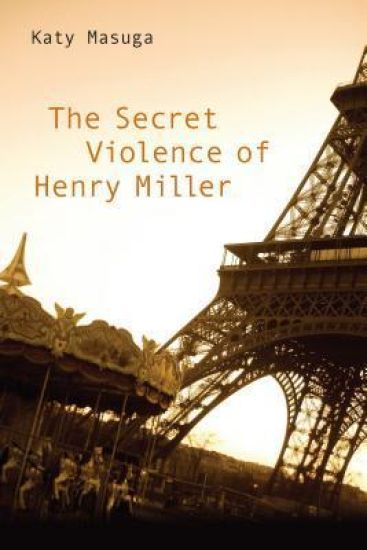
The Secret Violence of Henry Miller

The Secret Violence of Henry Miller

Katy Masuga

Camden House Inc
2011
sidottu
Miller as a writer whose work does something more profound and violent to literary conventions than produce novel effects: it announces the possibility of difference and instability within language itself. Henry Miller is a cult figure in the world of fiction, in part due to having been banned for obscenity for nearly thirty years. Alongside the liberating effect of his explicit treatment of sexuality, however, Miller developed a provocative form of writing that encourages the reader to question language as a stable communicative tool and to consider the act of writing as an ongoing mode of creation, always in motion, perpetually establishing itself and creating meaning through that very motion. Katy Masuga provides a new reading of Miller that is alert to the aggressively and self-consciously writerly form of his work. Critiquing the categorization of Miller into specific literary genres through an examination of the small body of critical texts on his oeuvre, Masuga draws on Deleuze and Guattari's concept of a minor literature, Blanchot's "infinite curve," and Bataille's theory of puerile language, while also considering Miller in relation to other writers, including Proust, Rilke, and William Carlos Williams. She shows how Miller defies conventional modes of writing, subverting language from within. Katy Masuga is Adjunct Professor of British and American literature, cinema, and the arts in the Cultural Studies Department at the University of Paris III: Sorbonne Nouvelle.
The Blue of Night

The Blue of Night

Katy Masuga

Spuyten Duyvil
2020
pokkari
Floating between the shadows of the Eiffel Tower and the rundown shanties of the American west, Katy Masuga takes us on a gutting ride of love and loss, crafting a new vocabulary for the inescapable bonds of kinship and the wounds that make us. The Blue of Night is told with the straightforward ache of a mountain ballad, leavened with the modernist time of Faulkner and Proust. I awoke from the book devastated but clear, lit with courage and hunger, brain tickled, ready to race until my lungs burned.--Lauren Du Graf, award-winning arts critic
Henry Miller and How He Got That Way

Henry Miller and How He Got That Way

Katy Masuga

EDINBURGH UNIVERSITY PRESS
2026
nidottu
Identifying six significant writers - Whitman, Dostoevsky, Rimbaud, Lewis Carroll, Proust and D. H. Lawrence - Katy Masuga explores their influence on Miller's work as well as Miller's retroactive impact on their writing. She explores four forms of intertextuality in relation to each 'ancestral' author: direct allusions; unconscious style; reverse influence; and participation of the ancestral author as part of the story within the text. The study is informed by the theories of Bakhtin, Barthes and Kristeva on polyvocity and of Blanchot, Wittgenstein and Deleuze on language games and the indefatigability of writing. By presenting Miller in intertextual context, he emerges as a noteworthy modernist writer whose contributions to literature include the struggle to find a distinctive voice alongside a distinguished lineage of literary figures.Key Features* Major contribution to rehabilitating an important and often overlooked twentieth-century writer* Places Miller's work in thought-provoking intertextual relationships among a diverse range of writers* Provides an incisive critical approach to Miller's writing