Kirjojen hintavertailu. Mukana 11 717 486 kirjaa ja 12 kauppaa.

Kirjahaku

Etsi kirjoja tekijän nimen, kirjan nimen tai ISBN:n perusteella.

2 kirjaa tekijältä Kaufmann Thomas DaCosta

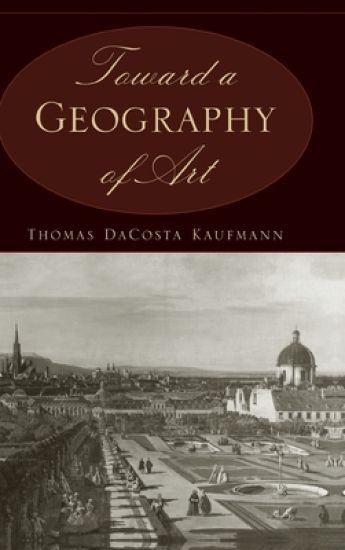
Toward a Geography of Art

Toward a Geography of Art

Kaufmann Thomas DaCosta

University of Chicago Press
2004
sidottu
Art history traditionally classifics works of art by country as well as period, but often political borders and cultural boundaries are highly complex and fluid. Questions of identity, policy, and exchange make it difficult to determine the "place" of art, and often the art itself results from these conflicts of geography and culture. Addressing an important approach to art history, Thomas DaCosta Kaufmann's book offers essays that focus on the intricacies of accounting for the geographical dimension of art history during the early modern period in Europe, Latin America, and Asia. Toward a Geography of Art presents a historical overview of these complexities, debates contemporary concerns, and completes its exploration with a diverse collection of case studies. Employing the author's expertise in a variety of fields, the book delves into critical issues such as transculturation of indigenous traditions, mestizaje, the artistic metropolis, artistic diffusion, transfer, circulation, subversion, and center and periphery. What results is a foundational study that establishes the geography of art as a subject and forces us to reconsider assumptions about the place of art that underlic the longstanding narratives of art history.
Painterly Enlightenment

Painterly Enlightenment

Kaufmann Thomas DaCosta

The University of North Carolina Press
2014
nidottu
Franz Anton Maulbertsch (1724-1796) was an Austrian fresco painter known for his bold use of color. Although he has been recognized in the Central European regions where he worked, Maulbertsch has remained outside the general canon of art history. With Painterly Enlightenment, Thomas DaCosta Kaufmann recovers the story of Maulbertsch, offering the first comprehensive English-language study of the long-neglected artist. Kaufmann situates Maulbertsch as a fresco painter at a time of transition to easel painting, a colorist at a time when color was not fully appreciated by contemporary observers, and an interpreter of religious themes at a time when secular subjects were becoming more popular. In this analysis, he is shown caught between the intellectual forces of the Enlightenment and the waning power of the traditional church, thus helping to illuminate the relationship between the Enlightenment and the arts. Kaufmann provides a thorough foundation for the fresh recognition of one of the great painters of eighteenth-century Europe, a leading fresco painter who is a colorist worthy of comparison to the best of his contemporaries, including the celebrated Venetian artist Giovanni Battista Tiepolo.