Kirjojen hintavertailu. Mukana 11 699 587 kirjaa ja 12 kauppaa.

Kirjahaku

Etsi kirjoja tekijän nimen, kirjan nimen tai ISBN:n perusteella.

7 kirjaa tekijältä Kecia Ali

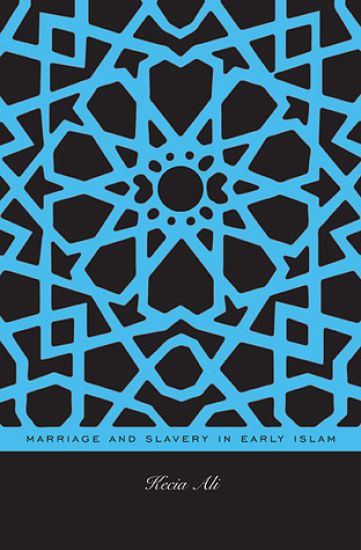
Marriage and Slavery in Early Islam

Marriage and Slavery in Early Islam

Kecia Ali

Harvard University Press
2010
sidottu
What did it mean to be a wife, woman, or slave in a society in which a land-owning woman was forbidden to lay with her male slave but the same slave might be allowed to take concubines? Jurists of the nascent Maliki, Hanafi, and Shafi‘i legal schools frequently compared marriage to purchase and divorce to manumission. Juggling scripture, precedent, and custom on one hand, and the requirements of logical consistency on the other, legal scholars engaged in vigorous debate. The emerging consensus demonstrated a self-perpetuating analogy between a husband’s status as master and a wife’s as slave, even as jurists insisted on the dignity of free women and, increasingly, the masculine rights of enslaved husbands.Marriage and Slavery in Early Islam presents the first systematic analysis of how these jurists conceptualized marriage—its rights and obligations—using the same rhetoric of ownership used to describe slavery. Kecia Ali explores parallels between marriage and concubinage that legitimized sex and legitimated offspring using eighth- through tenth-century legal texts. As the jurists discussed claims spouses could make on each other—including dower, sex, obedience, and companionship–they returned repeatedly to issues of legal status: wife and concubine, slave and free, male and female. Complementing the growing body of scholarship on Islamic marital and family law, Ali boldly contributes to the ongoing debates over feminism, sexuality, and reform in Islam.
The Lives of Muhammad

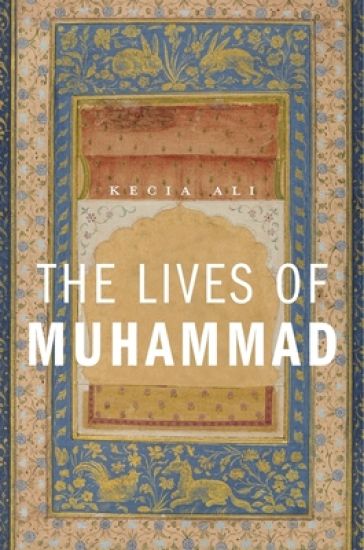
The Lives of Muhammad

Kecia Ali

Harvard University Press
2016
nidottu
Recent outbursts sparked by a viral video and controversial cartoons powerfully illustrate the passions and sensitivities that continue to surround the depiction of the seventh-century founder of Islam. The Lives of Muhammad delves into the many ways the Prophet’s life story has been told from the earliest days of Islam to the present, by both Muslims and non-Muslims. Emphasizing the major transformations since the nineteenth century, Kecia Ali shows that far from being mutually opposed, these various perspectives have become increasingly interdependent.Since the nineteenth century, two separate streams of writing, one hagiographic and the other polemical, have merged into a single, contentious story about the life of Muhammad. Protestant missionaries, European Orientalists, Indian and Egyptian modernists, and American voices across the spectrum, including preachers, scholars, Islamophobes, journalists, academics, and new-age gurus, debated Muhammad’s character and the facts of his life. In the process, texts written symbolically came to be read literally. Muhammad’s accomplishments as a religious and political leader, his military encounters with Meccans and Medinan Jews, and—a subject of perennial interest—his relationships with women, including his young wife Aisha, are among the key subjects writers engaged, repurposing early materials for new circumstances.Many of the ideas about Muhammad that Muslims embrace today—Muhammad the social reformer, Muhammad the consummate leader, Muhammad the ideal husband—arose in tandem and in tension with Western depictions. These were in turn shaped by new ideas about religion, sexuality, and human accomplishments.
The Woman Question in Islamic Studies

The Woman Question in Islamic Studies

Kecia Ali

PRINCETON UNIVERSITY PRESS
2024
sidottu
The interconnected ways that sexism functions in academic Islamic studies and how to shift professional norms toward parityDespite remarkable shifts in the demographics of Islamic studies in recent decades, the field continues to be dominated by men, who often relegate other scholars and their work—particularly research on gender—to its periphery, while treating subfields in which men predominate as more rigorous and central. In The Woman Question in Islamic Studies, Kecia Ali explores the interconnected ways that sexism functions in academic Islamic studies. Examining publications, citations, curricula, and media representations, Ali finds that, despite the growth and depth of scholarship on Islam and gender, men continue to overlook women’s scholarship, even in work that purports to discuss gender issues. Moreover, media and social media dynamics make talking about Islam and Muslims for broader audiences especially fraught for scholars who are not men, particularly when the topic is gender or sexuality.Combining broad surveys with more focused analyses of a smaller set of texts, Ali shows that textbooks and syllabi continue to exclude women as historical actors and scholars and to marginalize gender and sexuality as subject matter. Finally, she provides a “Beginner’s Guide to Eradicating Sexism in Islamic Studies," offering practical strategies to help scholars avoid common pitfalls in their own work and contribute to broader professional transformations.
The Woman Question in Islamic Studies

The Woman Question in Islamic Studies

Kecia Ali

PRINCETON UNIVERSITY PRESS
2024
pokkari
The interconnected ways that sexism functions in academic Islamic studies and how to shift professional norms toward parityDespite remarkable shifts in the demographics of Islamic studies in recent decades, the field continues to be dominated by men, who often relegate other scholars and their work—particularly research on gender—to its periphery, while treating subfields in which men predominate as more rigorous and central. In The Woman Question in Islamic Studies, Kecia Ali explores the interconnected ways that sexism functions in academic Islamic studies. Examining publications, citations, curricula, and media representations, Ali finds that, despite the growth and depth of scholarship on Islam and gender, men continue to overlook women’s scholarship, even in work that purports to discuss gender issues. Moreover, media and social media dynamics make talking about Islam and Muslims for broader audiences especially fraught for scholars who are not men, particularly when the topic is gender or sexuality.Combining broad surveys with more focused analyses of a smaller set of texts, Ali shows that textbooks and syllabi continue to exclude women as historical actors and scholars and to marginalize gender and sexuality as subject matter. Finally, she provides a “Beginner’s Guide to Eradicating Sexism in Islamic Studies," offering practical strategies to help scholars avoid common pitfalls in their own work and contribute to broader professional transformations.
Human in Death

Human in Death

Kecia Ali

Baylor University Press
2017
sidottu
Kecia Ali's Human in Death explores the best-selling futuristic suspense series In Death, written by romance legend Nora Roberts under the pseudonym J. D. Robb. Centering on troubled NYPSD Lieutenant Eve Dallas and her billionaire tycoon husband Roarke, the novels explore vital questions about human flourishing. Through close readings of more than fifty novels and novellas published over two decades, Ali analyzes the ethical world of Robb's New York circa 2060. Robb compellingly depicts egalitarian relationships, satisfying work, friendships built on trust, and an array of models of femininity and family. At the same time, the series' imagined future replicates some of the least admirable aspects of contemporary society. Sexual violence, police brutality, structural poverty and racism, and government surveillance persist in Robb's fictional universe, raising urgent moral challenges. So do ordinary ethical quandaries around trust, intimacy, and interdependence in marriage, family, and friendship. Ali celebrates the series' ethical successes, while questioning its critical moral omissions. She probes the limits of Robb's imagined world and tests its possibilities for fostering identity, meaning, and mattering of human relationships across social difference. Ali capitalizes on Robb's futuristic fiction to reveal how careful and critical reading is an ethical act.
Sexual Ethics and Islam

Sexual Ethics and Islam

Kecia Ali

Oneworld Publications
2016
nidottu
Whether exploring the thorny issues of wives’ sexual duties, divorce, homosexuality, or sex outside marriage, discussions of sexual ethics and Islam often spark heated conflict rather than reasoned argument. In this updated and expanded edition of her ground-breaking work, feminist Muslim scholar Dr Kecia Ali asks how one can determine what makes sex lawful and ethical in the sight of God. Drawing on both revealed and interpretative Muslim texts, Ali critiques medieval and contemporary commentators alike to produce a balanced and comprehensive study of a subject both sensitive and urgent, making this an invaluable resource for students, scholars, and interested readers.
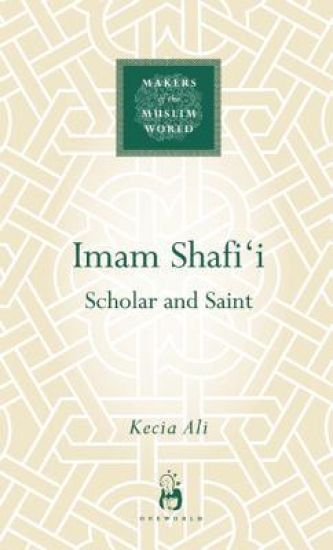
Imam Shafi'i

Imam Shafi'i

Kecia Ali

Oneworld Publications
2011
sidottu
Muhammad ibn Idris al-Shafi'i (767-820) was one of Islam's foundational legal thinkers. Shafi'i considered law vital to social and cosmic order: the key obligation of each Muslim was to obey God, and it was through knowing and following the law that human beings fulfilled this duty. Drawing on the most recent scholarship on Shafi'i's work as well as her own investigations into his life and writings, Kecia Ali explores Shafi'i's innovative ideas about the nature of revelation and the necessary if subordinate role of human reason in extrapolating legal rules from revealed texts. This study sketches his life in his intellectual and social context, including his engagement with other early figures including Malik and Muhammad al-Shaybani. It explores the development and refinement of his legal method and substantive teachings as well as their transmission by his students. It also shows how he became the posthumous "patron saint" of a legal school, who remains today a figure of popular interest and veneration as well as a powerful symbol of orthodoxy.